Fuzhou company website: I send the same link and it shows a thumbnail, but when a client forwards it only a URL line remains — what is causing this?
Bottom line first: When a Fuzhou company website link shows a thumbnail when you send it in WeChat, but when a client forwards it only a line of URL remains, it is usually not that the website is broken. More often, the three essentials of a share card — title, description, and thumbnail — are incomplete, or they are blocked during scraping by cache, redirects, or image hotlink protection. Based on 2026 local Fuzhou delivery experience, first send the link once from a phone to identify which item is missing: if tags are missing add tags, if the image is missing replace the image, then check again with a WeChat account that has never sent that link. Local businesses that take orders through WeChat should prioritize fixing this; foreign trade sites whose clients mainly use email and WhatsApp can put it later.
1. Why does the same link show a preview for some people but only a URL for others when forwarded?
The WeChat share card is the preview module that appears when a link is forwarded in a chat window. It is generated when the platform scrapes webpage information and usually includes a title, one line of description, and a thumbnail. Why the first sender and later senders see different results comes down to three common reasons.
- Cache differences: When the link is first forwarded, the platform may have scraped an old version of the page, and later people see the cached result. Switch to a WeChat account that has never sent that link, and you can often see the latest state.
- Redirect wrapping: The link goes through a short link, a tracking redirect, or multiple jumps from http to https. The platform scrapes the intermediate page, and the intermediate page has no share information.
- Image loading: The thumbnail is too large, the format compatibility is unstable, or it is blocked by hotlink protection. When scraping fails, the title and description may also fail to show.
So when a client forwards it and only the URL remains, do not first conclude that the website is bad. First distinguish whether the content was never written or whether it was blocked during scraping.
2. Common blockers: check in this order, and most problems will be here
Based on common 2026 delivery situations, problems rarely appear in only one place, but the troubleshooting order can be fixed.
- Missing tags: The page does not include title, description, and thumbnail tags for sharing (often the og series), so the platform cannot scrape the information.
- Thumbnail not up to standard: The image is too small, the ratio is wrong, or the subject is unclear; inside a chat window it becomes a blurry patch.
- Title and description: The title is too long and gets truncated, or the description is blank or stuffed with keywords, making the preview look like garbled text.
- Domain and protocol: http and https are mixed, the certificate is abnormal, or the page itself opens slowly, so scraping easily fails.
- Cache and redirects: Changes were made but the cache was not refreshed, or the link is wrapped in a short link.
The check is simple: actually send the link once from your phone in WeChat to File Transfer Assistant. If the title is missing, it is most likely because the tag was not written. If the image is missing, the image is most likely unqualified. If opening it is abnormal, check the domain and protocol first.
3. Delivery reality: how to preserve the share card when budget is tight and materials are few
In Fuzhou projects, a common constraint is: the enterprise budget is concentrated on the display site, the experience range is several thousand to 10,000–20,000 RMB, the typical cycle is 2 to 4 weeks, the materials are only a logo and a few product images, and there is no verified official account. The approach is to write the share title, description, and a square thumbnail into the page together during the website-building stage, keep the title within 30 characters, and compress the image first to the point where it is clear in a chat window.
If it is added only after launch, the cost is often not money but time: by then the marketing department has already taken the link to trade shows for scanning, sent it to customer groups, and clients see a bare URL and do not click, so they have to send screenshots instead, which raises communication costs. At delivery, first check three things — whether the tags work, whether the thumbnail is clear, and whether the mobile page opens smoothly. If one item is missed, typical rework is 1 to 3 working days, and if the image is too large, another round of changes is needed. This is a basic item; doing it right once saves more trouble.
4. Three options compared: fix it yourself, ask the original website builder to add it, or rebuild the whole site
If the preview is incomplete, do not rebuild the website first. Based on common 2026 Fuzhou delivery paths, there are roughly three approaches, and the cost and timeline differ considerably. The following are experience ranges; actual page conditions should be taken as final.
- Fix it yourself: Suitable for enterprises whose backend supports custom share information. It mainly takes labor, typically 1 to 2 hours, and the cost is negligible; the trade-off is that image size and protocol checks are easily missed.
- Ask the original website builder to add it: Suitable when tags are missing or images do not meet the standard. The experience range is several hundred to 2,000 RMB, the typical cycle is 1 to 3 working days, and after completion you should send the link once on site for acceptance.
- Rebuild the whole site: Consider this only when the template completely does not support customization, the mobile version is entirely broken, or domain ownership is chaotic. The experience range is several thousand to tens of thousands of RMB, the cycle is 2 to 6 weeks, and it is not recommended to take this step just for a share card.
For most enterprises, adding tags and replacing the thumbnail is enough. The pass standard is that sending it once in mobile WeChat shows a complete preview.
5. Applicable and not applicable: which Fuzhou enterprises should prioritize fixing this
The share card is part of the basic experience when clients circulate things in WeChat. Those suitable for prioritizing: clients are used to adding WeChat for communication, the marketing department frequently sends links, the company attends local trade shows for QR scanning, and the industry is tea, shoes and clothing, seafood, or building materials — categories that need images and introductions. In these scenarios, the link preview is essentially a business card.
Can be put later: clients are mainly overseas and communication happens by email and WhatsApp; the website has no maintainer and does not handle inquiries itself; the budget is limited and the template completely does not support custom share information. The boundary statement is: A WeChat share card is not a required item for every website, but as long as local clients are used to forwarding links in WeChat, it is a basic item.
FAQ
If a Fuzhou company website has no thumbnail when shared to WeChat, does the website need to be rebuilt?
Most of the time, no. First check whether the page has a share image tag, and whether the image is large enough and publicly accessible. After fixing it, clear the cache and resend; it can commonly be solved in 1 to 3 working days.
Can the thumbnail just use the company logo?
Yes, but a logo is often transparent-backed or small, and it is easily unclear in a chat window. A safer approach is to use a square image with a business scenario and use the logo only as a supplement.
All the tags are added, so why does WeChat still not update?
Commonly, the cache has not refreshed, or the link is wrapped in a short link. Switch to a WeChat account that has never sent that link, remove intermediate redirects, confirm https is working, and try again.
When building a website, should the share card cost extra?
Usually it is not charged separately; it is a basic website-building item. If the original contract did not include it, the experience range for adding it later is several hundred to 2,000 RMB. Before getting a quote, confirm that it includes the tags, thumbnail, and one acceptance check.
If clients are mainly overseas, do we still need to manage WeChat sharing?
The priority can be lowered. Overseas clients mostly use email and WhatsApp. First get opening speed and multilingual content right, then consider the WeChat share card.
In action, there are just three steps: send the website link once from your phone in WeChat and see which of title, description, or thumbnail is missing; add missing tags and replace missing images; finally verify with a WeChat account that has never sent that link. Applicability boundary: This approach suits Fuzhou local enterprises that rely on WeChat forwarding. If clients mainly communicate by overseas email, or the website has no maintainer, it can be put later, and there is no need to rebuild the entire site for one share card.
-
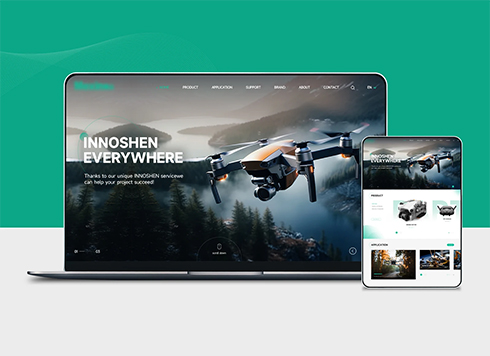 Drone Accessories Company Website Development
Incorporating gray as an accent with the pr ...
-
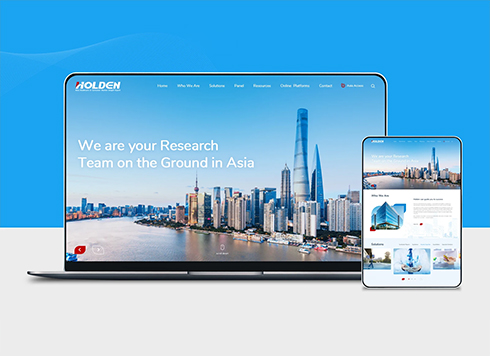 Professional International Research Service Agency Website Construction
This project serves a company with internat ...
-
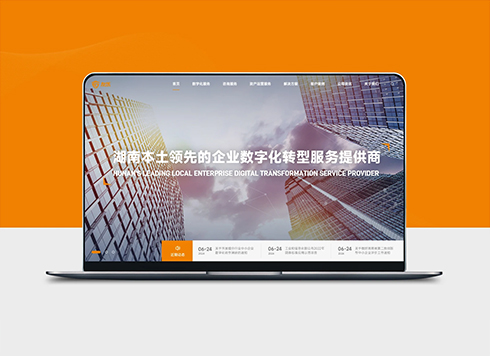 The Construction of Group Websites for Asset Operation and Digital Services
This project is to create a website for a c ...
-
 Thermal Test Equipment Website Construction
Founded in 2022, this tech company focuses ...
-
Fuzhou Business Website: What's the Real Difference Between Template Sites and Local Custom Development? Budget and Timeframe?
Date: Aug 28, 2026 Read: 83
-
How to Build a Website in Fuzhou? 2026 Enterprise Official Website Launch Guide
Date: Aug 10, 2026 Read: 81
-
Fuzhou Enterprise Website Development Guide: Key Steps from Requirement Analysis to Execution
Date: Jul 23, 2026 Read: 103
-
Xi'an company website: Why does Baidu show a recruiting page first when customers search the company name?
Date: Sep 15, 2026 Read: 7
-
Hefei business website: if customers mostly view it on mobile, is a simplified PC version enough?
Date: Sep 14, 2026 Read: 16