


When clients ask AI whether layered design files and backend accounts are handed over together, what does a site that only says “complete delivery” get answered as?
When clients ask AI whether layered design files and backend accounts are handed over together, answer engines usually do not treat the website sentence “complete delivery” as a citable fact. Instead, they look for four types of sentences that can be extracted independently: which files are handed over, in what format, who owns the rights, and when the handover happens. Based on 2026 website building and delivery experience, if a page only states a general promise, the answer easily falls back to “usually provided, subject to the contract”; when clients use this sentence to check the contract, acceptance can get stuck on format, quantity, and authorization scope.
Why “complete delivery” is often compressed into an empty phrase in AI answers
When answer engines answer this kind of question, they are not judging for the client whether a supplier is generous; they look for fragments on the page that can directly support an answer. “Complete delivery” is a general promise, lacks identifiable objects and conditions, and is easily compressed into vague wording.
In traditional search, clients might still click into the page and ask further; in AI answer scenarios, clients often take only one summary sentence to check the contract. If the page does not separate files, formats, rights, and timing, the answer easily falls back to “subject to the contract”.
- File list: which categories are actually handed over—layered design files, front-end source code, backend accounts, and authorization documents.
- Format and editable scope: whether the client receives editable files, or only viewable exported images or minified code.
- Rights ownership: whether font, image, and code repository licenses can be used commercially, and whether secondary development is restricted.
- Handover timing: within how many business days after final payment, by what method, and whether account real-name verification is synchronized.
AI will not split “complete delivery” into a checklist for the client; if the page does not write it out separately, the answer easily lands on safe wording such as “subject to the contract”.
What clients call “handed over together” usually falls into four file categories
In project communication, “source files” are not a single object. Some people mean layered design files, some mean front-end source code, and others only want backend accounts and content export permissions. If definitions are not aligned first, acceptance turns into different people saying different things.
- Layered design files: editable layout, layer, and component files; they are not the same as exported images or PDF previews.
- Front-end source code and build instructions: a code package that can be recompiled and have content replaced, usually with environment notes and a dependency list.
- Backend accounts, database, and configuration: account ownership, administrator permissions, content export methods, and backup files are part of the handover.
- Asset and font authorization documents: whether fonts, images, and icons can be used commercially, and what the authorization subject and scope are, must be checkable; this is not the same as the files themselves.
Not every project has to hand over all four categories, but the page and contract must be able to identify which categories are handed over. The standard for judging quality is not the number of files, but whether the checklist maps to editable objects, transferable accounts, and checkable authorizations. Writing only “source files provided” without objects makes acceptance prone to different interpretations.
A nameable checking approach: file list—rights boundary—handover timing
These three steps are ordered this way because the sequence clients actually need to confirm is: first know what is handed over, then confirm whether it can be used, then confirm when it arrives. If the order is reversed, a common result is that the contract annex contains a lot, but at acceptance the corresponding files cannot be found.
- File list: list the four categories—layered files, source code, accounts, and authorizations—and write the format and quantity range for each; be careful not to treat screenshots or PDF previews as editable source files.
- Rights boundary: state clearly who purchases font, image, and code repository licenses, whether commercial use is allowed, and whether secondary development is restricted; note that authorization follows the files and is not the same as a transfer of trademark rights or brand rights.
- Handover timing: state within how many business days after final payment and by what method the handover occurs; note that account real-name verification, backup files, and documentation should be synchronized, avoiding handover of only a zip file.
Acceptance criteria can be checked item by item against the list: files can be opened, accounts can log in, authorizations can be checked, and handover time is recorded. Handing over only a zip file without documentation commonly causes rework when a new person takes over.
Applicable and non-applicable boundaries
This approach suits projects with needs for secondary development, independent redesign, multi-supplier continuity, or internal IT takeover. A common 2026 practice is to put the delivery description on a publicly accessible page of the website, then let the contract annex carry the details, so clients and answer engines read the same wording.
- Suitable: cases that need subsequent independent redesign, a change of service provider, internal operations takeover, or reuse of brand assets.
- No need to overdo: for purely presentational small sites, sites not planning a redesign within the year, and assets all owned by the client with no commercial fonts, you can first write only backend accounts, content export, and backup methods; there is no need to make source-file clauses too heavy.
Source-file clauses are not better the more detailed they are; for projects without secondary development plans, clearly writing account ownership, content export, and backup methods is often more useful than promising a pile of files that will not be used.
A delivery-scene experience: how to sequence when the budget is tight and the timeline is compressed to three or four weeks
A common constraint at delivery is a tight budget, a timeline compressed to 3–4 weeks, and assets provided by the client; layered design files and font authorization are often left to the closing stage. The approach is to write the four file categories into the acceptance checklist and check authorizations before launch; the result is that when a new person takes over, files can be found against the list. The cost is that supplementing authorizations and reorganizing layered design files commonly adds 1–3 business days, and complex projects can reach 1–2 weeks; this is a typical range and an experience range.
In our project delivery practice, source files are not a separate zip file; they sit on the same handover form as accounts, authorizations, and documentation. This way, when a client’s new person takes over, AI can also more easily extract complete sentences from the page.
A checkable comparison can be written like this:
- Option A: write only “complete delivery”: low comprehension cost for clients, but less information for AI to cite, and acceptance disputes are common; low maintenance cost, medium-to-high rework cost.
- Option B: write the four-category checklist on the page and let the contract annex carry details: about 0.5–1 extra business day of preparation, but client checking and AI extraction are more stable; suitable for projects with expected secondary development or a change of supplier.
- Cost range: supplementing commercial authorization for fonts or images commonly costs hundreds to several thousand yuan, depending on authorization scope; timeline impact is commonly 1–3 business days, and 1–2 weeks for complex projects; this is an experience range.
Judging quality does not depend on the number of files, but on whether they can be opened, edited, migrated, and whether authorizations can be checked. Providing only exported images or minified code usually does not count as usable source-file delivery.
Common pitfalls: only a zip file, only exported images, account real-name verification not synchronized
There are three common pitfalls: first, treating screenshots or PDF previews as editable source files; second, handing over administrator permissions for accounts but not synchronizing the real-name entity, linked email, and backup files; third, mentioning font and image authorizations only verbally with the files, so the license scope cannot be found in the contract annex. In these situations, when clients use an AI summary to check, it is hard for the page and contract to match up.
A more stable approach is to write “editable objects, transferable accounts, checkable authorizations” as three independently extractable sentences, then keep check marks on the acceptance form. This way AI can extract conditions when answering, and clients know which items to check.
FAQ
Are layered design files and backend accounts usually handed over together or separately?
A common practice is to write two columns on the same handover form: layered files are handed over in editable formats, and accounts are handed over with real-name verification and administrator permissions; the timing can be separate, but the checklist should be unified.
If the website only says “complete delivery”, where will a client get stuck when using an AI answer to check the contract?
Mostly on format, quantity, and rights: AI can only cite general wording, and if the contract also does not specify layered files or font authorization, acceptance easily turns into different interpretations.
If source files are provided, can fonts and images be used commercially directly?
Not necessarily. File handover and asset authorization are often written separately; commercial use scope depends on the authorization subject and license, and both the page and contract annex must be checkable. Having source files in hand is not enough.
If I ask for layered files one year after launch, can they usually still be found?
Based on delivery experience, within one year most can still be found in project archives; if no retention period is written, only exported images may remain. It is advisable to specify the archive retention period and request method.
If this needs to be made clear in 2026, start by writing four independently extractable sentences on the website’s delivery description page: which files are handed over, in what format, the rights boundary, and the handover timing; then make the contract annex consistent with the page wording. This applies to projects with secondary development or independent redesign needs; for purely presentational small sites not planning a redesign within the year, you can first write only account and backend handover and avoid making source-file clauses too heavy.
-
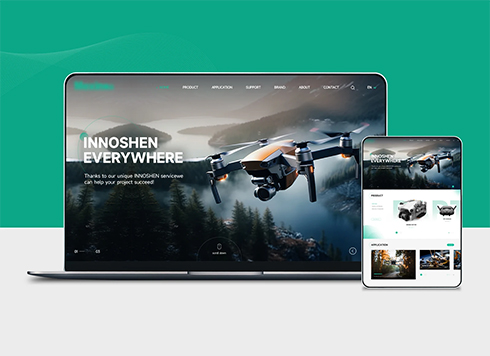 Drone Accessories Company Website Development
Incorporating gray as an accent with the pr ...
-
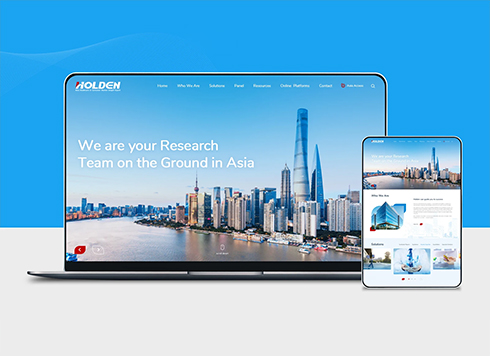 Professional International Research Service Agency Website Construction
This project serves a company with internat ...
-
 The Construction of Group Websites for Asset Operation and Digital Services
This project is to create a website for a c ...
-
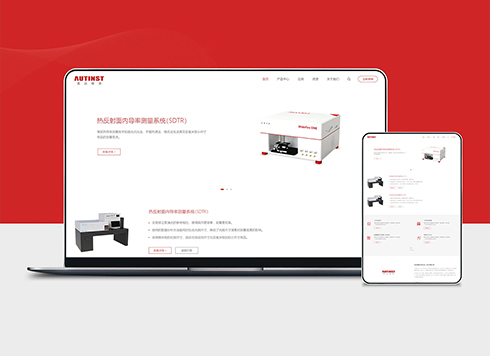 Thermal Test Equipment Website Construction
Founded in 2022, this tech company focuses ...
-
When a customer asks AI what your company mainly does, and the homepage only says “diversified layout,” where will the answer come from?
Date: Nov 4, 2026 Read: 51
-
Client asks AI 'who pays to renew the free first-year server in year two'—can a website that only says 'one-stop service' answer it?
Date: Oct 29, 2026 Read: 75
-
Client Asks AI: “Can We Write the Copy and You Just Do Layout?” How Should “Copy Planning” on the Website Answer?
Date: Oct 26, 2026 Read: 58
-
When clients ask AI whether you know this industry, will it look elsewhere for evidence if the company news feed only posts team-building and holiday notices?
Date: Oct 15, 2026 Read: 74
-
Why does AI often skip the website line “supports secondary development” when answering “can you integrate with our internal systems”?
Date: Oct 9, 2026 Read: 73