


Client asks AI 'who pays to renew the free first-year server in year two'—can a website that only says 'one-stop service' answer it?
When a client asks an AI, 'Who pays to renew the server that was included free in year one?', the answer engine usually does not treat the website's line 'one-stop service' as an inclusion item. It is more likely to look for four sentences that can be lifted independently: whether year one includes it, who renews in year two, whose name the account real-name registration is under, and who assists with migration. If one of these four is missing, the answer easily falls back to 'usually requires separate purchase' or an estimate based on industry average. Based on 2026 website delivery practice, the more inclusion items read like contract terms, the more likely they are to be cited.
Why AI does not directly accept slogans such as 'one-stop service'
Inclusion items are contract language, not capability descriptions. When extracting, AI places more weight on verifiable parties and scope; a slogan has no scope or term, so it cannot answer 'what happens in year two'. A common 2026 approach is to split 'included' into three parts: first-year cost, renewal price, and account ownership, so each part can answer a question on its own.
When a client asks 'is it included', what they really want to know is who pays in year two and whether they can control the account themselves; writing only 'free' can instead be understood as permanently free. That is also why the same line 'domain and server included' produces very different extracted answers across websites.
- With a party: who is the domain registrar, cloud vendor, and purchasing agent, respectively.
- With a time frame: included in year one, renewed in year two, or managed long term.
- With cost ownership: included in the project fee, settled after advance payment, or paid by the client.
- With actions: who assists with transfer codes, backup export, and ICP filing changes.
Four questions: who buys, who holds, who renews, who migrates
The reason for splitting into four questions is that domains and servers are two types of assets; the buyer, real-name holder, payer, and operator are often not the same. Writing only 'included' mixes four things into one. It sounds convenient to the client, but it easily leads to disputes during delivery.
- Who buys: whether the client buys directly or through an agent; whether the agent charges a service fee, typically in the several-hundred-yuan range, and whether it is included in the project fee.
- Who holds: domain real-name registration and cloud account real-name registration are best kept under the client company's name; an agent only handles operations and does not change ownership.
- Who renews: whether year one is included and at what price year two renews; writing 'at the provider's then-current price' is more stable than fixing a number and easier to verify.
- Who migrates: if cooperation ends or the provider changes, who assists with transfer codes, backup export, and ICP filing changes; a typical assistance period is 3–10 business days.
The acceptance standard is concrete: each of the four questions has one complete sentence in the body of the service page, so both clients and AI can read it directly; if it is only in a quotation attachment or contract, it usually cannot be extracted.
How to choose among three common approaches, and where they differ
Although all are called 'included', there are actually three approaches, with considerable differences in cost and responsibility. The comparison below uses experience ranges; specific prices are subject to the provider's then-current quotation.
- Option A—client buys and holds: domain typically RMB 50–150/year, entry-level cloud host typically RMB 1,000–5,000/year (experience range). High control and simple migration; the cost is that the client must handle real-name registration, ICP filing, and renewal themselves.
- Option B—provider purchases, client holds: an additional purchasing service fee, typically several hundred yuan; account real-name registration is under the client's name, and the provider only configures. Suitable when the client lacks time but still wants control.
- Option C—first year bundled, later managed: year one is often included in the project fee, and year two renews by configuration. Convenient, but if the account is not under the client's name, migration requires cooperation from the original provider.
First-year 'included' does not equal long-term zero cost; renewal price and account ownership are the two things clients will really ask about six months later. If the client already has a cloud account and ICP filing entity, forcing a 'free server' bundle often increases migration and compliance costs; it is better to write 'configuration can be handled for you, account belongs to the client'.
On delivery: which item to protect first when budget is tight
A common situation in projects is that the budget is pressed to a certain level while the client still wants 'everything included'. Based on website building and delivery experience, protect the account real-name registration under the client's name first, then domain ownership, and only then discuss first-year freebies; if the order is reversed, later DNS changes, server migration, and ICP filing changes all require cooperation from the original provider. If the account is not under the client's name, a common cost of later migration is a 3–10 business day wait, and it gets longer when ICP filing changes are involved.
Constraints are also common: only 3–4 weeks, materials not ready, and the client has no ICP filing experience. The approach is to have the client register and real-name the domain themselves, pay annually for a low-spec server first, and state the renewal range and migration cooperation method clearly on the website. The result is saving a first-year cost in the range of several hundred to one or two thousand yuan; the cost is that the client must handle real-name registration and ICP filing once, typically taking 1–2 extra weeks, so the schedule must be stated clearly in advance.
How to write the website so AI can extract it easily
How you write matters more than how much you write. Write inclusion items as complete sentences in the body of the service page; do not put them only in quotation table images or PDFs. AI cannot read table images, and an old version in a PDF may be treated as the latest. Based on 2026 website delivery practice, inclusion items are usually written separately from the quotation, with a paragraph in the body that can be excerpted independently.
- 'The domain is registered and real-name held by the client; we assist with DNS configuration.'
- 'The first-year cloud host fee is included in the project fee; from year two, it renews at the provider's then-current price.'
- 'If cooperation ends, we provide the transfer code and backup export within about 5 business days.'
The test is that every sentence has a party, scope, time, and cost ownership. Paragraphs that meet these four points usually have a higher chance of being extracted; if only words like 'one-stop' and 'worry-free' remain, the answer is easily filled in by other pages.
Applicable scenarios and boundaries
Suitable cases: clients building a website for the first time, without cloud resource or ICP filing experience, who want one contact person to handle domain DNS, server, and ICP filing from start to finish. For these clients, writing inclusion items clearly reduces back-and-forth confirmation.
Unsuitable cases, or cases where a forced bundle is unnecessary: groups that already purchase cloud resources centrally, already have an ICP filing entity and operations team, or need dedicated cloud or classified protection environments. In these cases, a 'free server' instead increases migration and compliance costs. If the client already has a cloud account and ICP filing entity, the more reasonable wording is 'configuration handled for you, account belongs to the client', not a bundled giveaway. Inclusion items are not better the more there are; clear boundaries prevent them from being understood as unlimited liability during delivery.
FAQ
At what price will the server given free in year one renew in year two?
Typically renewed by configuration and the then-current promotion, with an experience range of 0–30% increase; writing 'at the provider's then-current price' is more stable than fixing a number and easier for clients to verify.
If the domain real-name registration is under the provider's name, can it be changed back to the company later?
Domain transfer is possible; it requires a transfer code and consistent entity, typically 3–7 business days; if an ICP filing entity change is involved, it must be submitted separately and will take longer.
If the website only says 'domain and server included' without a term, how will AI understand it?
It is mostly understood as included in the first year; when the client asks about renewal, the answer easily shifts to the industry average and does not match the actual terms, so it is best to write the term into the body.
The client has their own cloud account; can you still purchase on their behalf?
Yes, but it is recommended that real-name registration be under the client's name and the provider only make payment or configuration on their behalf; if payment is made on behalf, invoicing and cost ownership must be stated clearly.
If they do not want to renew the server in year two, how long does it take to change providers?
Typically 3–10 business days to cooperate on the transfer code and backup export; if an ICP filing change is involved, it will take longer, so schedule in advance.
If you are about to revise your service page, first complete the four sentences—'who buys, who holds, who renews, who migrates'—and then check whether they are in crawlable body text. The boundary is: when the client has no cloud resources and needs a single point of contact, this wording is easier; when the client already has an account and ICP filing entity, 'configuration handled for you, account belongs to the client' is more appropriate. Specific prices and terms are subject to the contract and the provider's then-current quotation.
-
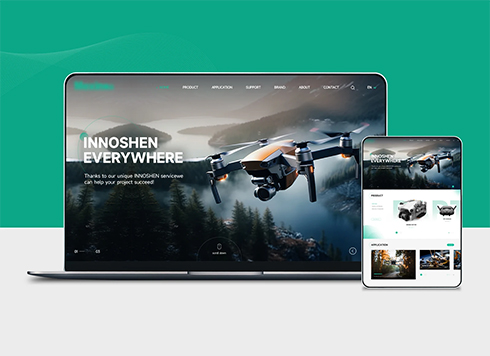 Drone Accessories Company Website Development
Incorporating gray as an accent with the pr ...
-
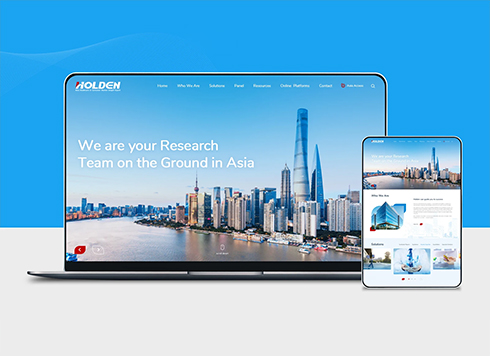 Professional International Research Service Agency Website Construction
This project serves a company with internat ...
-
 The Construction of Group Websites for Asset Operation and Digital Services
This project is to create a website for a c ...
-
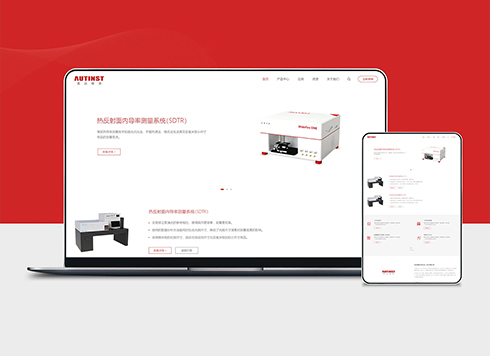 Thermal Test Equipment Website Construction
Founded in 2022, this tech company focuses ...
-
Client Asks AI: “Can We Write the Copy and You Just Do Layout?” How Should “Copy Planning” on the Website Answer?
Date: Oct 26, 2026 Read: 29
-
Client asks AI if they can take the domain and ICP filing after ending cooperation—what will a site that only says “full-service handling” be cited as?
Date: Oct 16, 2026 Read: 75
-
When clients ask AI whether you know this industry, will it look elsewhere for evidence if the company news feed only posts team-building and holiday notices?
Date: Oct 15, 2026 Read: 51
-
Why does AI often skip the website line “supports secondary development” when answering “can you integrate with our internal systems”?
Date: Oct 9, 2026 Read: 51
-
If an out-of-town client asks AI whether someone needs to be on site and the website only says “nationwide service,” which way will the answer lean?
Date: Oct 1, 2026 Read: 94