


Is a separate .hk domain worth paying for when Hong Kong clients make up 30% of a Shenzhen company’s website customers?
For a Shenzhen company’s website serving Hong Kong clients, registering a separate .hk domain is usually not a must-have. Based on 2026 delivery experience, the judgment comes down to three points: how large a share of revenue Hong Kong clients account for, whether the company has someone who can consistently produce traditional Chinese content, and whether Hong Kong clients actually search for you proactively. If all three are not in place, adding language switching to the existing site and giving traditional Chinese pages separate URLs is enough; only when the Hong Kong client share is stable and content can be supplied over the long term do a separate domain or standalone site begin to offer a return.
Why Hong Kong clients bring the conversation around to domains
Shenzhen companies in freight forwarding and logistics, supply chain, electronics solutions, testing and certification, and cross-border tax and finance often see Hong Kong clients account for 20% to 30% of their business. These clients are used to searching for suppliers on Google and to sending links to each other on WhatsApp. When they see a mainland-style domain such as xxx.com, most will not conclude that the company is no good because of it; what actually leaves an impression is a site that is entirely in simplified Chinese and uses mainland wording.
They usually care about only two things: whether a link opens properly when sent to them, and whether it reads smoothly. Traditional Chinese is not the same as Cantonese; Hong Kong clients still read written traditional Chinese for business, and writing in colloquial Cantonese can seem informal instead.
- Often asked about: freight forwarding and logistics, supply chain services, molds and electronics solutions, testing and certification, cross-border tax and finance.
- Common trigger scenarios: clients browse the website before visiting a factory in Shenzhen, scan a QR code at a Hong Kong exhibition, or send links to each other on WhatsApp.
- Less likely to be asked about: when clients are concentrated in Shenzhen and mainland manufacturing, and deals come through phone calls and referrals.
What is the difference between a .hk domain, a standalone traditional Chinese site, and in-site switching?
The three approaches are often discussed together, but they actually solve different problems. A .hk domain only addresses the first impression, while the content remains the same; a standalone traditional Chinese site is a separate site with its own sections and visual maintenance; in-site switching adds a language entry point to the existing site, with traditional Chinese pages on a subdirectory or subdomain and sharing the same backend. Only the latter two really affect content cost.
- Investment: In-site switching and converting core pages to traditional Chinese typically falls within an experience range of RMB 2,000 to 8,000; building a separate 10- to 20-page traditional Chinese site typically falls within RMB 10,000 to 40,000. Registering only a .hk domain often costs several hundred RMB per year, but the domain itself brings no content.
- Timeline: Switching commonly takes 1 to 2 weeks, depending on how many pages need traditional Chinese; a standalone site commonly takes 3 to 6 weeks, including copywriting, proofreading, and testing.
- Maintenance: With a standalone site, one change has to be made in two places; with switching, the backend is shared, so changes can largely carry over.
- Compliance and entity: For .hk domain registration information requirements, and for ICP filing and entity consistency depending on whether the main site is hosted in mainland China or overseas, check item by item against the current rules of the registrar and competent authorities; do not assume from impression.
Three criteria for judgment, and the order matters
- Share and source. If Hong Kong clients have long been below 10% of revenue and deals mainly come through acquaintances and exhibitions, in-site switching is enough; only when they are steadily at 20% to 30% or more and clients proactively search for the company name and industry terms is it worth considering a standalone site or separate domain.
- Content supply. Can you produce 10 to 15 pages of content worth converting to traditional Chinese? For a company with only 5 pages or fewer, opening another site amounts to copying an empty shell.
- Maintenance owner. Is there one person in the company who can make the final call on traditional Chinese copy, even if it is a marketing specialist plus external proofreading? Without this role, a standalone site will most likely be stuck on an old version after six months.
Only after all three steps pass should you discuss a standalone site or separate domain; if only the first step passes, making the core 5 to 8 pages solid is usually more cost-effective. A qualified acceptance criterion is: from the landing page to the inquiry form, Hong Kong clients see no simplified Chinese fields or mainland wording at any point, not merely an extra simplified/traditional toggle on the homepage.
Delivery scene: two weeks before an exhibition—spend the money on a domain or on proofreading?
A Shenzhen company providing supply chain services had a tight budget, only one person in marketing, ready-made simplified Chinese PPT materials, and a fixed date for a Hong Kong exhibition, leaving only two weeks when working backward. By experience, under these conditions the company would not open a standalone site or buy a new domain; instead, it first added language switching, converted core page groups—company introduction, services, cases, and contact—to traditional Chinese, spent another half day having a Hong Kong part-time proofreader go over the wording, and left the remaining pages to be added after the exhibition.
The cost showed up in proofreading: after launch, clients reported two awkward spots. One was that “information” and “software” left by the conversion tool had not been changed to Hong Kong conventions; the other was that form fields and submission prompts still used mainland wording. The changes were not difficult, but around the exhibition, back-and-forth checking plus retesting took three to five days and also required the designer to redo two text-containing images. What usually gets stuck is not the technology but the lack of someone to sign off on traditional Chinese copy. Spending the same budget on proofreading first is often more noticeable to clients than buying one more domain.
Common pitfalls and acceptance checklist
- Changing only the characters, not the wording: terms such as information, software, printing, and quality are said differently in Hong Kong contexts; going page by page is more reliable than a site-wide conversion.
- Traditional Chinese pages without separate URLs: if the URL does not change, pages are hard to index separately, and clients cannot send a link to the traditional Chinese page on its own.
- Switching back to simplified Chinese after the toggle: clicking into an inner page and finding simplified Chinese again is an easy mistake to notice; test by clicking through every page.
- The new domain becomes an island: a separately registered domain with no redirects and no content is just another empty shell that requires renewal.
What counts as acceptable: Hong Kong clients enter from any entry point and see consistent page language, wording that follows Hong Kong business conventions, forms that submit properly, and contact details that are clickable. In 2026 projects, these four items are still the baseline checked off one by one before delivery.
When it applies and when it does not
Best for starting with in-site switching: Hong Kong clients are not a high share but are growing, content reserves are limited, the budget is under RMB 10,000, and the immediate goal is simply to handle the exhibition or inquiries.
Best for seriously building a standalone traditional Chinese site or adding a separate domain: Hong Kong clients contribute a steady 20% or more of revenue, there are dedicated people to manage content and proofreading, there is a need for industry-term targeting specifically for Hong Kong, or there is also an English site to manage under the same setup.
No need for traditional Chinese pages—and even less need to buy a new domain: clients are concentrated in Shenzhen and mainland manufacturing, deals come through phone calls and referrals, and the website’s main role is to let clients verify the entity and contact details. In this case, making the simplified Chinese site’s entity information, cases, and contact entry points solid is more worthwhile.
Frequently asked questions
If I only register a .hk domain and the content is still simplified Chinese, does it help?
The effect is limited. A domain only affects the first impression; once clients read a few paragraphs of simplified Chinese with mainland wording, you are back to square one. When the budget is limited, changing core pages to Hong Kong-style wording first is more effective.
Hong Kong clients can understand simplified Chinese—can we skip traditional Chinese pages?
You can skip the full set, but it is advisable to handle the service description, cases, and contact pages. The points that usually cost you are not the character forms but the mainland wording and form fields.
Can we use a conversion tool to turn the whole site into traditional Chinese and then launch it?
Launching it directly is not recommended. Character conversion is usually not a major issue, but industry terms and form prompts are prone to errors; at minimum, review core pages manually, and if possible have a Hong Kong part-time proofreader take a look.
If the main site is hosted in mainland China and traditional Chinese pages are on a Hong Kong server, will they be treated as two websites?
It is technically feasible. Whether they are treated as two sites mainly depends on whether the entity information and content are consistent; it is advisable to keep the company name and contact details consistent on both sides and handle language annotations according to platform guidelines.
Starting advice: first calculate the share of revenue from Hong Kong clients over the past year, then inventory the number of pages that can be converted to traditional Chinese. Only when both numbers are available should you decide whether to buy a domain, open a standalone site, or use in-site switching. Set aside budget and timeline according to experience ranges, not by squeezing them to an ideal state. If Hong Kong clients appear only sporadically, put this money into case pages and contact entry points first; the return is usually more direct. For parts involving domain registration information, ICP filing, and entity consistency, check item by item against official rules.
-
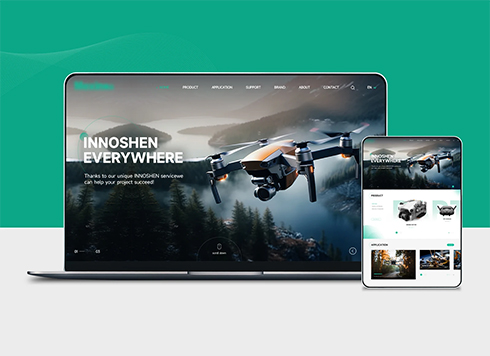 Drone Accessories Company Website Development
Incorporating gray as an accent with the pr ...
-
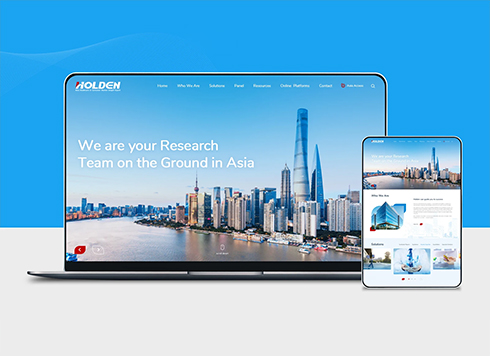 Professional International Research Service Agency Website Construction
This project serves a company with internat ...
-
 The Construction of Group Websites for Asset Operation and Digital Services
This project is to create a website for a c ...
-
 Thermal Test Equipment Website Construction
Founded in 2022, this tech company focuses ...
-
Shenzhen company website lists only a salesperson's mobile and calls nobody answers — does switching to a 400 number help?
Date: Oct 9, 2026 Read: 54
-
2026 Shenzhen Website Development: Local Developers or Templates? Budget and Timeline Differences
Date: Aug 12, 2026 Read: 158
-
When clients search a subsidiary’s full name but land on the group homepage, should the website give the subsidiary its own site?
Date: Oct 28, 2026 Read: 13
-
A Beijing client suddenly says they want to stop by. If the office only has workstations and a meeting room, what should the website show in advance to avoid awkwardness?
Date: Oct 27, 2026 Read: 23
-
Fuzhou company website: if customers ask “Do you come to Fuqing and Changle?” will listing only one Cangshan service point make them think you don’t serve outer suburbs?
Date: Oct 26, 2026 Read: 28