



A Beijing client suddenly says they want to stop by. If the office only has workstations and a meeting room, what should the website show in advance to avoid awkwardness?
Conclusion: You will not be treated as a shell company by Beijing clients just because your office is in an office building and you have no factory. When Beijing clients review a corporate website, they usually check four things: whether the legal entity can be verified, whether the contact person can be found, whether there are delivery records, and who to contact when something goes wrong. Office-building offices are the norm in Beijing, and clients expect this; what more often loses points is an address that stops at the district level, an empty team page, case studies that use stock photos, and a contact page with only a personal WeChat ID. Based on 2026 Beijing project delivery experience, fill these four gaps first, then discuss visuals and animations.
1. Why Beijing clients first check whether a supplier can be held accountable
Beijing's client structure determines how much weight this gets. Headquarters of central SOEs, group headquarters, units under ministries, research institutes, and public institutions are concentrated here. Before cooperating, these buyers often need to complete supplier onboarding, materials review, or at least arrange one on-site visit. Their first layer of judgment is not product parameters, but whether the company has a fixed office, stable people, and traceable delivery records.
At the same time, office-building offices are the norm in Beijing, and having no production line usually does not lose points. What makes people hesitate is an information gap: the official website only has business introductions, with no verifiable entity or office information, so clients can only call and ask repeatedly. The more they ask, the more likely procurement staff are to describe you internally as a middleman or subcontractor, even if you actually have an in-house team.
- Three things clients often do: search the full company name to see what turns up, check whether the website has a specific office address and office environment, and ask whether they can stop by the company.
- Signals that more often lose points: an address that only says “Chaoyang District, Beijing”, office photos that are stock images, a team page with only one line of text, and case studies that name neither the industry nor the deliverables.
- Things that usually do not lose points: no factory, no production line, a small office area, and a small team. These are common in Beijing.
2. Four-check list: what clients verify on the official website
Ordering information by the four checks is because Beijing buyers' due diligence path is fairly fixed: first verify whether the entity exists, then verify whether there are people who do the work, then verify what has been delivered before, and finally verify who to contact if problems arise. When the website is organized in this order, clients usually do not need to call again after one review; when the order is scrambled, information has to be explained by people, and explanation itself is a cost.
- Check the entity: the full name on the business license, the Unified Social Credit Code, and the ICP filing entity are consistent and can be verified through public channels.
- Check the people: the team page states functional allocation and core roles; the office page clearly states whether visitors can be received on site and whether an appointment is required.
- Check delivery: case studies state the industry, project type, deliverables, and approximate time range; anonymize cases where the client does not agree to be named.
- Check responsibility: leave a role-based email or main switchboard as the contact entry point, and state clearly who to contact for contracts, invoices, and after-sales issues.
The acceptable standard can be simpler: entity information can be matched in the public disclosure system; the team page has at least one real photo; case studies can clearly state three or more specific deliverables; the responsibility entry point is not just a personal WeChat ID. If all four pass, the page usually will not be repeatedly sent back for supplementary materials during due diligence.
3. If the office only has workstations and a meeting room, what should the page show?
An office address that includes the building name plus floor is usually enough; it does not need to be exact to the street number. For example, “12th floor, Building A, an office building in Chaoyang District” already lets clients judge the location and grade and makes it easier to arrange a visit. Use real photos for the office environment; one each of workstations, meeting room, and reception is usually enough. Adding a note such as “Please make an appointment one business day in advance for visits” is more credible than multiple retouched photos.
- Recommended: building exterior or lobby (if it can be photographed), real workstation photos, meeting room, and a visit process note.
- Not recommended: stock office photos, another company's reception, or describing a coworking space's shared area as your own independent office.
- Team page: state functional allocation plus headcount ranges, for example “3 to 5 designers, 5 to 8 developers, 1 to 2 project coordinators”; do not state exact fixed numbers.
- Case page: when the client does not agree to be named, state industry plus project scale plus deliverables; better to omit than to fabricate.
Delivery on-site experience: In a 2026 project with an office in a Beijing office building, the constraint was that the client had arranged for the buyer to visit in three days, the office area could only be photographed for workstations and one meeting room, and team photos had not been organized. Our approach was to first set the page skeleton according to the four-check list, spend half a day photographing the reception, workstations, meeting room, and building lobby, and clearly state on the contact page that visits require one business day's advance appointment and who to contact downstairs. As a result, when the buyer visited, they found the right person directly based on the page information and did not ask again about team size. In another project, to save effort, shared coworking reception photos were used and captioned as the company reception; the client noticed after one visit, and deeper cooperation was not discussed again. This kind of cost is not about changing one image; once trust is broken, it is hard to repair.
4. Official website, platform store, WeChat official account: what Beijing clients verify
These three do not solve the same problem. Platform stores handle price comparison and instant inquiries; WeChat official accounts handle content reach; the official website addresses whether the company actually exists and is stable. When doing group supplier onboarding in Beijing, the materials checklist often requires an official website address, and it is not uncommon for WeChat official account or store links to be requested as supplements.
- Entity self-verification: an independent official website can use its own domain plus a consistent ICP filing entity; entity information on a platform store stays inside the platform and requires a click-through to see.
- Case presentation: the official website can provide anonymized narratives as required by the client and explain deliverables; platform stores are more oriented toward product display and pricing.
- Cost comparison (typical range): a custom showcase website commonly costs RMB 15,000 to 60,000 in the first year; one with multilingual, multi-site, or form system integration commonly costs RMB 60,000 to 150,000; platform store annual fees commonly range from a few thousand to RMB 20,000. The scopes differ, so they should not be directly added together for comparison.
- Timeline comparison: with all assets ready, an official website commonly takes 3 to 5 weeks; when reshoots are needed or client authorization is pending, it commonly takes 6 to 8 weeks; Beijing ICP filing commonly takes 7 to 20 business days, so it is advisable to allow 2 to 4 weeks overall.
- Suitable for: if clients are mainly state-owned enterprises, units under central SOEs, or group headquarters, the official website can be prioritized; if you only serve local individual customers and rely on referrals from acquaintances, you can wait.
5. Applicable and non-applicable boundaries
To decide whether to spend this money, look at two ends: who your clients are and how they verify you. Clear boundaries matter more than the size of the budget.
- Suitable: a high proportion of clients are Beijing local state-owned enterprises, units under central SOEs, group headquarters, or public institutions; you need supplier onboarding, bid qualification materials, or on-site inspections; you plan brand-term advertising or want to be cited in AI search.
- Not urgent: 90% of clients come from referrals or a single channel; the business is local at-home services with low average order value; budget and time are both insufficient and the result would be only an empty page. An empty page can sometimes expose weaknesses more than having no official website.
- Boundaries to state clearly: the official website can make information verifiable; it cannot replace qualifications themselves, nor can it determine whether you win a bid. Expecting the official website to serve as a bonus qualification is a common mismatch.
Common questions
Before visiting a Beijing company, which pages of the official website do clients usually check?
Most first check the homepage, About Us, and Contact page to confirm the full entity name, office address, and whether visits can be booked, then look at case studies. If any of these three is missing, clients usually call to ask.
If the office is not large, will real photos make it look shabby?
Usually not. Beijing clients expect office-building offices, and real photos are more credible than stock images. If the space is small, photograph only workstations and the meeting room; the key is that the photos are real and match the address.
If the team is small, how many people is appropriate to show on the official website?
It is advisable to state functional allocation plus headcount ranges, not fixed numbers. A small team usually does not affect judgment; false claims that are later checked on site are what lose more points.
If the client in a case study does not allow the company name to be disclosed, can it still be put on the official website?
Yes. State the industry, project type, deliverables, and time range, and anonymize the name and amount. It is advisable to obtain written confirmation before publishing to avoid changes later.
During supplier onboarding, what other materials does the buyer usually require besides the official website?
Commonly also required are the business license, number of employees with social insurance, financial and tax materials, system certifications, and so on; the official website is only one item. Check specific requirements against the tender documents and onboarding checklist.
If clients are mainly Beijing local state-owned enterprises, group headquarters, and public institutions, first complete the four information areas—entity, office, team, and cases—then discuss visuals and animations; allow a typical showcase budget of RMB 15,000 to 60,000 and a typical timeline of 3 to 8 weeks. Conversely, if clients mainly close through acquaintances and platforms, there is no need to force an independent official website just to look formal.
-
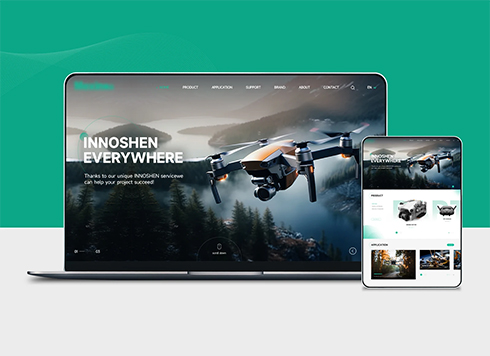 Drone Accessories Company Website Development
Incorporating gray as an accent with the pr ...
-
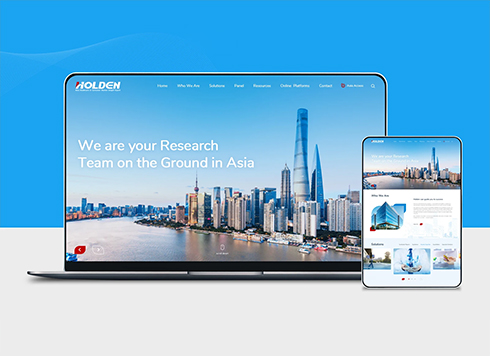 Professional International Research Service Agency Website Construction
This project serves a company with internat ...
-
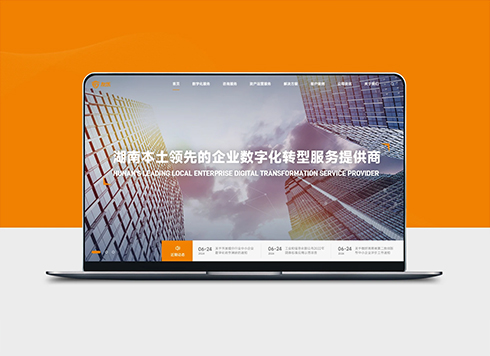 The Construction of Group Websites for Asset Operation and Digital Services
This project is to create a website for a c ...
-
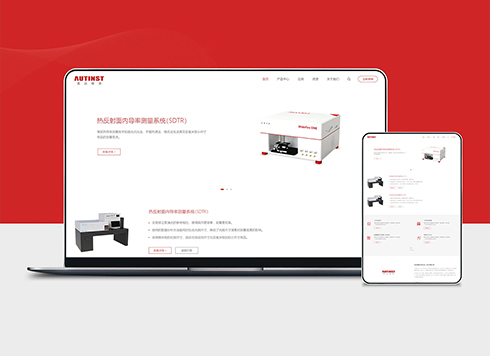 Thermal Test Equipment Website Construction
Founded in 2022, this tech company focuses ...
-
Client Says They’ll Search Our Company First, but Only Finds Our WeChat Account and Business Registration—Does It Hurt Beijing Partnership Talks?
Date: Oct 7, 2026 Read: 67
-
Should a Small Beijing Company Hire a Local Web Designer for Its Official Website? What Are the Budget and Timeline?
Date: Aug 29, 2026 Read: 136
-
How to Choose Website Development in Beijing? A Guide to Corporate Website Building Paths and Pitfalls
Date: Aug 10, 2026 Read: 119
-
Fuzhou company website: if customers ask “Do you come to Fuqing and Changle?” will listing only one Cangshan service point make them think you don’t serve outer suburbs?
Date: Oct 26, 2026 Read: 24
-
Where should the watermark go on qualification certificate scans for a Xi'an company website?
Date: Oct 25, 2026 Read: 27