



Where should the watermark go on qualification certificate scans for a Xi'an company website?
They can be posted, but they need to be layered, and the watermark must sit where it does not interfere with verification. Business licenses, qualification certificates, management system certifications, and similar materials used to verify the legal entity and qualifications are commonly placed on company websites for verification; financial statements, social insurance details, bank account information, and legal representative ID cards usually do not go on public pages. For state-owned enterprises, institutes, design institutes, and general contractors in Xi'an, supplier onboarding mostly goes through their own systems or offline submission. The website's role is to let procurement staff confirm “which company this is and whether it has this qualification” before they start the process; it does not replace the onboarding materials themselves. Based on 2026 local delivery experience, procurement staff often open qualification pages more frequently than product pages. How clear this page is directly affects how many times things have to be explained on the phone.
When Xi'an clients ask “can we post it?”, they are actually worried about two things
Xi'an's industrial structure explains why this question comes up often. Aviation, aerospace, electronics, energy and power, and universities and institutes are concentrated here. Procurement officers routinely handle supplier onboarding, price comparison, and factory audits. The first use they make of a company website is often verification, not learning about the company. But the same officers also worry about something else: if scans are posted on the public internet, will competitors use them as cover bidders, or will intermediaries use them to create shell companies? Both worries exist at the same time, which is why layering is needed, rather than posting everything or nothing.
The test can be specific: can a procurement officer who has never dealt with your company see all five items on the same page — legal entity name, certificate name, issuing authority, validity period, and grade? If they can see all five, procurement completes the initial screening themselves and asks three to five fewer questions on the phone. If they see only part of it — the certificate is there, the number is blurry, and the validity period is missing — the verification work is pushed back to the salesperson. If they cannot see it, most procurement staff will not conclude that the company is unqualified, but they will contact peers to compare first.
Divide website qualification information into three layers: public, request-based, and non-public
This division is not ranked by importance. It crosses two dimensions: how costly a leak would be, and how necessary verification by procurement is. Where the cost is high and the need for verification is low, keep it lower; where the cost is low and the need for verification is high, put it higher. Once the page structure is set, there will be a place for replacing certificates and adding qualifications later, so the layout does not have to be redone at every revision.
- Public layer: business license (watermark allowed), qualification certificates, management system certifications, office address, and the name of the invoicing entity. The criterion is that these are items that should be publicly disclosed anyway; compress them into clear, readable images. A pop-up that requires a phone number before viewing is not recommended.
- Request-based layer: full test reports, detailed performance lists, financial statement summaries, and capacity and equipment lists. These are long and change quickly. State on the page “which materials can be provided” and have sales send them according to the project, or place them in a download area visible after the visitor submits contact details.
- Non-public layer: bank account numbers, legal representative ID cards, social insurance payment details, employee rosters, and specific information on classified or military product projects. Even if a client asks, submit these offline or through their system; do not put them on public pages.
The boundaries between the three layers shift with client type. For companies mainly serving military supporting projects or classified projects, the third layer should be larger than for ordinary manufacturers; on the page, even the project category may show only the industry, not the model. For Xi'an companies mainly serving private manufacturing or municipal supporting projects, the second layer can be more open; posting a performance list on the page can actually shorten communication. Before launch, review existing materials against these three layers. If you cannot decide which layer something belongs to, put it in the second layer first.
A website qualification page and a supplier onboarding system do not serve the same function
Many Xi'an companies mix the two, and the result is either a website turned into a document warehouse, or materials returned for resubmission during onboarding. The website answers “who you are and whether you are credible”; the onboarding system answers “whether you meet the threshold for this particular contract.” Based on common practice in 2026, the onboarding material list for a mid-sized company has a typical range of 10 to 20 items; publishing 5 to 8 items on the website is enough to support initial screening.
- Purpose: the website faces uncertain visitors; the onboarding system faces reviewers who have already been identified.
- Timing: updating a qualification page on the website typically takes 1 to 3 working days; supplementary onboarding materials follow the other party's review rhythm, with an experience range of 3 to 15 working days.
- Completeness: the website can show only the front of the certificate and the validity period; onboarding often requires originals and copies, annual inspection records, and sealed documents.
- Speed of change: after a certificate is reissued, the website can be changed the same day; old documents in the onboarding system may not be overwritten until the next update round.
On delivery: when the only certificates are old phone snapshots, how does two rounds of rework happen?
In showcase website projects in Xi'an, this is common: the budget is in the range of a few thousand to 20,000–30,000 RMB, the timeline is compressed to two to three weeks, and the only qualification materials the client can provide are phone snapshots of paper certificates, some taken three or four years ago. The approach is to first make a certificate list, check each item against the original, replace snapshots with scans, unify size and background color, add a semi-transparent watermark while ensuring that the certificate number, validity period, and issuing authority are not covered, and leave a “validity period” field in the back end for later maintenance.
The cost usually shows up in two places: the first version of the watermark covered the certificate number, and the client's marketing department rejected it outright; an old certificate that had already been reissued was not removed, and a customer took a screenshot and asked about it. Together, these two issues commonly add 3 to 5 working days of rework, delay launch, and push back indexing and subsequent promotion cadence. So in projects, the more reliable order is sort out the certificates first, then build the page, rather than finishing the page and then adding materials.
A few common pitfalls, and what counts as acceptable
The problem with qualification pages is often not whether they exist, but whether they are correct, current, and readable. The following are issues that come up repeatedly in local delivery, each with a verifiable standard.
- Expired certificates not removed: mark the validity period on the page, set a back-end reminder, and handle it one month before expiry; an expired certificate on display is more likely to trigger questions than no certificate at all.
- Inconsistent entity names: after restructuring or a name change, the name on an old certificate may not match the business license. Note the former name on the page or attach a change explanation; otherwise procurement may suspect borrowed qualifications.
- Only thumbnails: if the number is still unclear after clicking to enlarge, it is as good as not posted. The minimum standard is that the certificate number can be read clearly when enlarged on a phone.
- Publishing an entire test report: reports often contain client names and sample parameters. Without authorization, it is better not to post the full text; publish only the cover and conclusion pages.
Applicable scenarios and boundaries
This layer of pages is suitable when: clients are mainly state-owned enterprises, institutes, design institutes, and general contractors in Xi'an and nearby areas; bidding and supplier onboarding are routine activities; and procurement officers change frequently, so there needs to be a fixed place for repeated verification. The unsuitable cases are equally clear: if the company's customers are almost all individual consumers, or the business itself does not involve qualification thresholds, a dedicated qualification page has little meaning; if you only have one or two certificates that are about to expire, renewing them first is more worthwhile than building the page first. The boundary can be compressed into one sentence: the website qualification page is responsible for making people believe you; onboarding materials are responsible for making people select you. The two cannot replace each other.
Common questions
Does a business license posted on the website need a watermark?
It is recommended, but place it in blank areas, for example diagonally across a corner of the certificate. The company name, certificate number, and registration authority must remain clearly readable. The purpose of the watermark is to prevent direct reuse, not to hide information; covering key fields will only make procurement call and ask follow-up questions.
If a qualification certificate is about to expire, should we take it down or wait for the new one?
A common approach is to keep it, mark the validity period, and prepare the reissued version. Taking it down directly may make old clients think the qualification has been lost; leaving an expired document up can also trigger questions. Adding a line of explanation next to the certificate is more reliable.
If a client asks for a scanned copy of the original test report, can we send it directly?
Yes, but first check whether the report contains client names and sample parameters. If it contains information about others, redact it first or provide only the conclusion page; for formal review, provide it offline to avoid later authorization disputes. For the public layer on the website, it is recommended to post only the cover and conclusion pages.
Can a comprehensive website qualification page replace the materials in the onboarding system?
No. The website supports initial screening and credibility; the onboarding system is the evaluation audit trail. Treating the website as a document warehouse will actually slow down supplementary submissions. The two lists should be maintained separately: the website updates quickly, while onboarding follows the other party's rhythm.
If you are preparing for local supplier onboarding or bidding in Xi'an, you can first spend half a day laying out the original certificates and dividing them into three piles — public layer, request-based layer, and non-public layer — and then decide which ones to put on the page. If the only materials are phone snapshots, add scans before discussing design; if certificates expire within six months, renew them first. When budget and timeline are tight, prioritize making the legal entity name, certificate number, and validity period clear; decorative layout can wait.
-
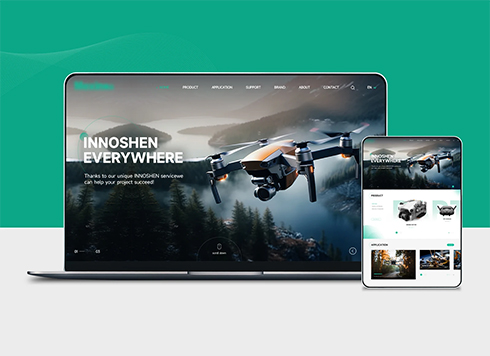 Drone Accessories Company Website Development
Incorporating gray as an accent with the pr ...
-
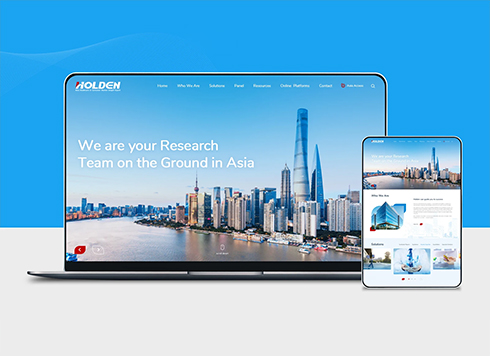 Professional International Research Service Agency Website Construction
This project serves a company with internat ...
-
 The Construction of Group Websites for Asset Operation and Digital Services
This project is to create a website for a c ...
-
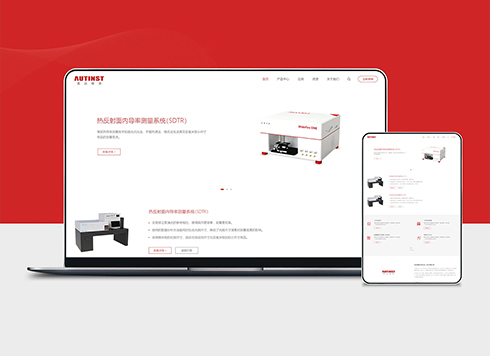 Thermal Test Equipment Website Construction
Founded in 2022, this tech company focuses ...
-
For a small Xi'an company building a website, is it better to hire a local custom developer or use a template? How much do budget and timeline differ?
Date: Aug 27, 2026 Read: 141
-
Hefei supplier factory website: before a factory audit, will buyers mistake a page with only product specs for a small workshop?
Date: Oct 24, 2026 Read: 21
-
For a Jinan company bidding on a local tender that requires an 'independent official website,' will a 1688 store link be accepted?
Date: Oct 23, 2026 Read: 28
-
Company Name Includes “Henan” but Clients Ask If You’re Local to Zhengzhou: What Should the Homepage Put First?
Date: Oct 22, 2026 Read: 27
-
Changsha company website: before a customer visit, they ask 'Is this line in the photo still there?'—how detailed should workshop photos be labeled?
Date: Oct 21, 2026 Read: 39