


Hefei supplier factory website: before a factory audit, will buyers mistake a page with only product specs for a small workshop?
Bottom line first: For factories in Hefei that supply appliances, new energy vehicles, or PV and energy storage, if the website only lists product names and specifications and does not clearly state which industries it has supplied, what processes it has, and what capacity range it covers, buyers can indeed classify the company as a “small workshop” during initial screening. Based on 2026 local delivery experience, a more reliable approach is to put four types of information into the homepage summary or a separate section: industries served + process and equipment capability + capacity range + quality and delivery method. Customer names can be omitted under confidentiality requirements, but the industry direction and scale range cannot be omitted, because buyers judge a supplier’s size based on information the company can substantiate, not a logo wall. This also depends on the scenario: when customers are mainly retail or e-commerce, this priority can be moved later.
Why do Hefei buyers first ask “which industries have you supplied?”
Hefei’s industrial structure shapes local supplier procurement search habits. Appliances, new energy vehicle OEMs and components, PV inverters and energy storage, and display panels are clustered in and around Hefei, and many small and medium-sized factories around these chains make structural parts, injection-molded parts, sheet metal, wiring harnesses, packaging, and tooling. This kind of procurement usually works by “finding suppliers by industry”: buyers first enter “Hefei + process + industry,” then check whether the website matches, and only after a match do they move to the next round of RFQs and factory audit discussions.
The problem is that many supplier factory websites in Hefei are still at the stage of “product photos + one company introduction.” When peers do not write industry supply information, whoever explains this clearly first has a higher chance of being kept during initial screening. Buyers will not schedule a factory visit just because a page looks good, but they will skip a company outright if the page does not show capacity and industries.
- Scattered entry points: Buyers may arrive from Baidu, WeChat Search, industry exhibition directories, or a forward from an old customer; the page needs to explain “what you do, who you do it for, and how much you can do” within a dozen seconds.
- Peer homogenization: Local similar factory websites often only have product categories and lack process and capacity descriptions, which actually gives companies that write content seriously an opportunity.
- Initial screening looks at risk first: Before scheduling a factory visit, buyers first judge “whether this company can deliver stably,” not “whether this company has the lowest price.”
Four layers of supplier information: write “scale” as something people can verify
The reason for four layers is that buyers’ questions have an order: first “do you understand my industry,” then “do you have the corresponding equipment and processes,” then “is quality stable,” and finally “can delivery and response keep up.” Arranged in this order, the page reads as a complete set of answers rather than a product catalog.
- Industry layer: List industry directions served, such as appliance structural parts, new energy vehicle interior and exterior parts, PV brackets, or energy storage cabinets, and include one or two typical working conditions (materials, precision requirements, batch characteristics). For confidential projects, write “a certain type of structural part for the appliance industry”; do not write customer names.
- Process and equipment layer: Write key processes, equipment count ranges, machinable dimensions, and precision ranges. Experience ranges are more reliable than precise numbers, for example “10 to 30 injection molding machines, covering several tonnage bands,” rather than fixing specific models.
- Quality layer: List inspection items, the standards systems implemented, and how reports are provided. A common practice is to publish a list of testing capabilities, provide original reports separately according to customer requirements, and not put the entire report book up for download.
- Delivery layer: Sampling cycle, mass-production lead time, and exception response method, expressed as experience ranges, for example a typical sampling range of 3 to 7 working days, with mass production tiered by order volume. Writing ranges is both closer to reality and less likely to be locked in by a single customer.
How to judge whether it is good enough: send the page to someone who does not know your factory, and if they can say within two minutes “which industry this company supplies, what processes it has, and roughly what scale it is,” it passes; if after reading they can only say “it seems to do processing,” the content needs to be added.
Only product pages, or add a supplier industry page? The difference is not the number of pages
Many Hefei factories struggled during 2026 redesigns: product pages already explain what they do, so is a separate “supplier capability” page redundant? Based on local delivery experience, the difference is not the number of pages but the buyer’s reading path and judgment outcome.
- Only product pages: Suitable for scenarios where products are standardized and customers directly ask for quotes by model; the cost is that buyers cannot see industry experience and capacity, and the company can easily be treated as a trader or small processing shop during initial screening.
- Add a supplier industry page: Suitable for scenarios with multi-industry supply, entering supplier directories, or participating in bids. For copywriting, design, and development of a single page, the experience range is RMB 2,000 to 6,000, and the typical timeline range is 3 to 7 working days; this refers to the single-page increment and does not include a full-site redesign.
- Connect the two: Guide from the end of product pages to the supplier capability page, and from the supplier capability page back to specific products, forming a closed loop. This is fairly common in local delivery, and the incremental cost is usually lower than making a new page.
One reminder: a supplier industry page is not just a row of customer logos. Putting customer names without written authorization carries significant risk; and if the page only has logos without processes and capacity, buyers still cannot judge scale.
On delivery: when materials are stuck in the workshop and on confidentiality lists
In projects like those in Hefei, a common constraint is that the budget is kept at the ten-thousand-yuan level and the timeline is two to three weeks, yet materials are stuck because the workshop cannot be photographed, the equipment list is confidential, and customer names cannot be disclosed. A more reliable approach is to confirm item by item with the client at the copywriting stage “what can be written and what can only be written as a range”: use process flow charts, process lists, and industry directions to replace equipment close-ups and customer logos, and put capacity and equipment data on the page only after written confirmation from the client.
Conversely, if changes are made after the page is finished, the common cost is a full rewrite of page copy and one round of design rework, with an overall delay of one to two weeks; if this happens to coincide with an exhibition or a supplier onboarding deadline, the loss is more than the revision fee. In terms of experience range, spending half a day earlier on this checklist usually saves one to two rounds of rework later.
Before delivery, check three things: whether the industry statements match the business scope on the business license, whether capacity and equipment data have been confirmed in writing by the client, and whether confidential information has been replaced with range or category statements.
Applicable and non-applicable boundaries
The supplier information page solves one problem: “B2B buyers judging supplier capability.” When the customer structure does not match this premise, the input-output is not worthwhile.
- Suitable: Customers are mainly procurement from industry chains such as appliances, automotive, PV, and displays; the company needs to enter supplier directories, participate in bids, or undergo factory audits; the factory has stable capacity, but the website cannot explain its scale clearly.
- Not suitable: The business is mainly terminal retail or e-commerce, and customers mainly look at price and stock; capacity is genuinely limited and delivery fluctuates greatly, so writing clear ranges may expose weaknesses; processes are highly confidential and cannot be expressed in text, so offline materials can be prepared first and the website can keep only an overview.
- Boundary note: A supplier industry page can improve the probability of passing initial screening, but it cannot replace factory inspections, sample testing, and business negotiations; treating the website as a deal-closing tool will lead to disappointed expectations.
FAQ
If no customer name can be written, will writing only industries look empty?
No. When industries are followed by processes, capacity ranges, and delivery methods, buyers can verify scale; for confidential projects, writing the industry plus typical working conditions is more credible than piling up a row of unauthorized logos.
Should supplier industry content go on the homepage or on a separate second-level page?
A common practice is to put a summary and an entry point on the homepage, with the full content on a second-level page. Homepage space is limited; the summary is responsible for keeping buyers on the page, and the second-level page is responsible for explaining processes, capacity, and quality thoroughly.
If capacity is written as a range, what if customers use it to push down prices?
A capacity range indicates supply capability, not a pricing basis. The page does not list unit prices, only minimum order quantities and delivery time ranges; specific quotes still go through separate communication, so it is generally not used directly to force a price.
If the website says it supplies the appliance industry, will competitors copy it?
The industry direction itself is not hard to obtain; what is hard to copy is process detail, equipment configuration, and delivery records. Writing the industry clearly makes it easier for buyers to find you, and the cost of hiding information is usually higher.
After the page is finished, can the factory change it itself?
It depends on whether the backend is a common content management system and whether delivery includes an account and operating instructions. At delivery, ask for one backend training session plus a one-page operating document; daily image changes and text edits can mostly be done in-house.
If customers are mainly industry-chain buyers in and around Hefei, start with a low-cost step: send the existing website to two old customers and ask whether they can tell which industries you supply and roughly what scale you are. If they cannot tell, add a page of supplier capability content first, then consider a full-site redesign; if customers are mainly retail or e-commerce, this step can be moved later, and the product pages and contact paths should be smoothed first.
-
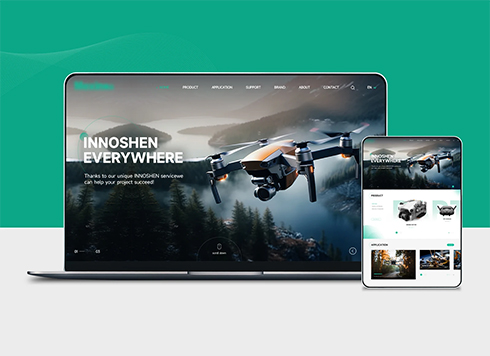 Drone Accessories Company Website Development
Incorporating gray as an accent with the pr ...
-
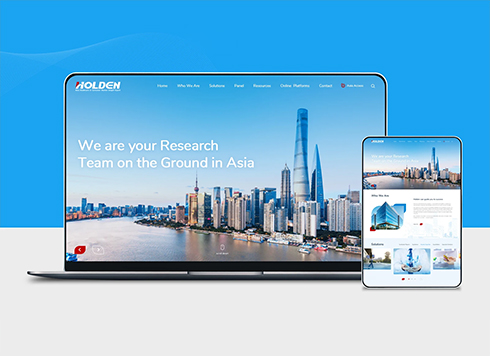 Professional International Research Service Agency Website Construction
This project serves a company with internat ...
-
 The Construction of Group Websites for Asset Operation and Digital Services
This project is to create a website for a c ...
-
 Thermal Test Equipment Website Construction
Founded in 2022, this tech company focuses ...
-
For a Jinan company bidding on a local tender that requires an 'independent official website,' will a 1688 store link be accepted?
Date: Oct 23, 2026 Read: 15
-
Company Name Includes “Henan” but Clients Ask If You’re Local to Zhengzhou: What Should the Homepage Put First?
Date: Oct 22, 2026 Read: 18
-
Changsha company website: before a customer visit, they ask 'Is this line in the photo still there?'—how detailed should workshop photos be labeled?
Date: Oct 21, 2026 Read: 30
-
Wuxi factory website: when customers ask for a product brochure before visiting to see equipment, will posting the full PDF for download expose the quotation as well?
Date: Oct 20, 2026 Read: 39
-
If a Qingdao company’s website news stopped two years ago, will clients think the company is no longer operating before a cooperation meeting?
Date: Oct 19, 2026 Read: 41