



Client shared the server IP link in the customer group and says to use the site this way until inquiries come—should we step in now?
Bottom line first: A server IP can open a page, which only shows that the application and server are connected. It does not mean the website is ready for public use. In common 2026 deliveries, an IP is better suited to internal testing, client previews, and temporary demos. Once a link is going to a customer group, business cards, brochures, ads, or search indexing, it is better to use a formal domain as early as possible and complete ICP filing and HTTPS configuration. Otherwise, the common costs are broken old IP links, missing share cards, gaps in analytics, and rework when the domain is changed later.
Does opening a website via IP count as going live technically?
IP access bypasses domain resolution and reaches the server address directly. The page may display, but visitors see a string of numbers, and there is no anchor for brand recognition, sharing, or ongoing operations.
Being able to open and being ready to operate publicly are two different things. The former is server connectivity; the latter also involves the domain, ICP filing, HTTPS, share cards, and analytics. In 2026 projects, IPs are mostly used for test environments and previews.
- Address format: IP links are long and hard to remember, and they look unnatural when printed on materials.
- Certificate configuration: Common HTTPS certificates are issued to domains; IP certificates have fewer options and are more troublesome to renew and manage.
- Migration cost: When the server or network changes, the IP may change, and old links can easily break.
- Analytics and indexing: After changing domains, analytics code, share preview scraping, and search indexing usually need to be rebuilt.
The test can be put more plainly: a formal public website should have at least a domain that can complete ICP filing, a normal HTTPS address, a link that can be sent in WeChat, and the ability to change servers without resending all materials. If any one of the four is missing, the website is more like “a page that opens” and less like an entrance that can operate long term.
The client wants to use the IP for now—what cost are they trying to save?
Most clients do not fail to understand that a domain matters; they need the page shown to the boss first, and ICP filing takes time. This stage is understandable, but once the link is shared externally, the domain fee saved often does not make up for the rework and communication.
Delivery-site experience: In one tight-budget project, the launch was compressed to within two weeks, and the client asked for an IP first so internal people could see it. We did not simply open it up. Instead, we added an access password to the preview site, restricted access by source, and wrote in the delivery notes: “internal preview only, not for external distribution.” The boss still forwarded the link to the customer group. We sent a follow-up note that day and pushed for the domain materials. The cost was one extra round of explanation; the benefit was that it did not spread further. When the formal domain went live later, the old link was given an explanation page rather than left as a 404.
Checkable comparison: Option A uses an IP preview, which is fast to enable and low in cost, but is commonly suitable only for internal use. Option B uses a domain + ICP filing + HTTPS; the domain annual fee is commonly in the experience range of tens to just over 100 RMB per year, and ICP filing scheduling is commonly 2–4 weeks (experience range), making it better for a public website. The difference is not the server; it is whether the entrance can be remembered, shared, and operated long term.
- Saving the domain fee: The domain annual fee is commonly in the experience range of tens to just over 100 RMB per year, a small share of the total site budget.
- Saving ICP filing time: ICP filing commonly takes 2–4 weeks (experience range); it is a scheduling issue, not something that can be eliminated.
- The real cost: links shared externally, missing share cards, gaps in analytics, and broken old links after the IP changes.
When the budget is tight, what can be adjusted more reasonably is non-essential animation, the amount of asset shooting, and one-off display features. The domain annual fee usually accounts for a very small share of the total site budget. A safer order is to register the domain and start ICP filing at project kickoff, while using a test domain or an IP with access restrictions for previews, and then uniformly replace absolute URLs in pages, share images, and analytics code before the formal launch.
Where does a public-facing site usually get stuck when using an IP?
The problem is usually not whether the server can run, but four peripheral conditions: ICP filing access, HTTPS, sharing, and migration. You can check them with a “four checks for the launch entrance,” in the order of compliance, experience, and operations.
- Check domain and ICP filing: When a mainland server binds a formal domain for public access, ICP filing usually needs to be completed according to the access provider's requirements; IP access cannot replace domain ICP filing.
- Check HTTPS: A formal website more commonly has a certificate configured for the domain, with a normal lock icon in the browser address bar; IP certificates are rarely used in projects.
- Check sharing and print: WeChat share cards, business cards, brochures, and ad materials all need a short, memorable, recognizable domain.
- Check analytics and migration: Analytics code, search indexing, and ad account reviews are mostly based on domains; when changing servers, the domain can be re-resolved, but if the IP changes, links must be resent.
Applicable and non-applicable boundaries
Applicable: Internal testing, on-site client previews, temporary demo pages, and internal systems that are not promoted publicly long term. These scenarios have low requirements for sharing, indexing, and certificates; using an IP can avoid waiting for resolution and ICP filing, but access restrictions are recommended.
Not applicable: Formal corporate websites, landing pages for ads, sites printed on business cards and brochures, sites that need to build search indexing over time, and pages whose links will be sent to potential customers. As long as the link will be a public commitment, a formal domain is safer; an IP can only be a transition, and a free subdomain is also not recommended as a replacement for a formal domain.
This boundary is best stated clearly in the quotation or kickoff meeting, so the client does not understand “it can open” as “it is already live.” If the client insists on sending the IP link first, state the preview scope and expiration time in the delivery notes; that is more traceable than a verbal reminder.
FAQ
If the server IP can open the website, does that mean ICP filing is not needed?
No. ICP filing is usually for the domain and access; IP access cannot replace domain ICP filing. When a mainland server binds a formal domain for public access, it is safer to complete ICP filing according to the access provider's requirements.
Can an HTTPS certificate be applied for an IP address?
Some providers can issue IP certificates, but they are rarely used in projects, and the cost and renewal management are not cost-effective; a formal website more commonly has a certificate configured for the domain.
The client says to launch first and change the domain after inquiries come—what are the consequences?
IP links already sent out can easily break, and share cards, analytics, and search indexing must be rebuilt; when running ads, account review may also get stuck on the domain.
The test IP link was forwarded by the client—what should we do?
First add access restrictions or a password to the test site, then prepare the formal domain as soon as possible. After the formal launch, give the old link an explanation page or redirect; do not leave it as a 404.
If the website is going public, put the domain and ICP filing into the plan first, then use an IP or test domain for internal previews; if it is only an internal demo, an IP can be used temporarily, but do not send the link to the customer group. Based on 2026 delivery habits, checking the domain, ICP filing, HTTPS, and share cards before launch can save a round of rework.
-
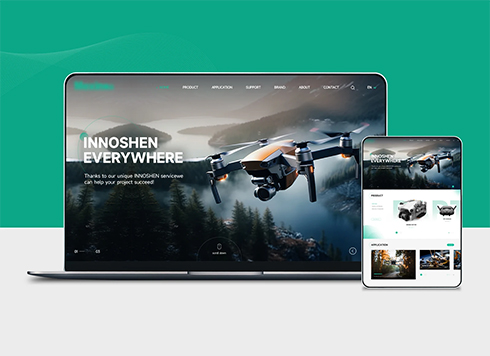 Drone Accessories Company Website Development
Incorporating gray as an accent with the pr ...
-
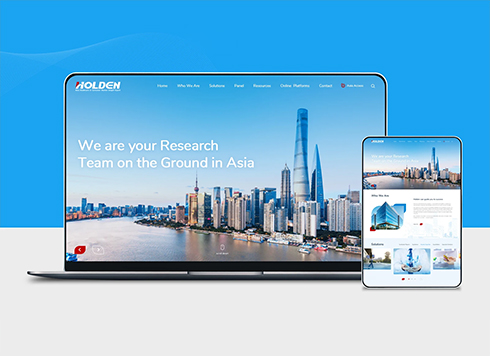 Professional International Research Service Agency Website Construction
This project serves a company with internat ...
-
 The Construction of Group Websites for Asset Operation and Digital Services
This project is to create a website for a c ...
-
 Thermal Test Equipment Website Construction
Founded in 2022, this tech company focuses ...
-
Required Materials for Website Construction
Date: Jun 2, 2026 Read: 331
-
A client only brought up a red theme for the website a week before Spring Festival, and there’s still no design—can this still be taken on now?
Date: Oct 23, 2026 Read: 17
-
Partner Logo Was Forwarded from a WeChat Group and Their Boss Gave Verbal Approval—Can It Go Straight on Our Website Case Studies Page?
Date: Oct 22, 2026 Read: 21
-
Both www and non-www open: keep both as extra entry points or redirect to one?
Date: Oct 21, 2026 Read: 28
-
Website Custom Development: What If a Client Wants a Bigger Employee Count on 'About Us' but It Doesn't Match the Bid?
Date: Oct 20, 2026 Read: 29