


Partner Logo Was Forwarded from a WeChat Group and Their Boss Gave Verbal Approval—Can It Go Straight on Our Website Case Studies Page?
Bottom line first: If a partner logo was forwarded from a WeChat group and the only support is one sentence—'their boss gave verbal approval'—it cannot be treated as authorization for a website case studies page. The test is two things: whether the contract or NDA contains a public-disclosure clause, and whether the partner's brand, marketing, or legal contact has left written notice. Based on common 2026 delivery experience, client names for which public use was not mentioned at signing are treated as unauthorized by default: launch text cards or industry descriptions first to keep the case page persuasive, then release naming and logos item by item after written confirmation. This does not delay the launch schedule and reduces the risk of leaving a problem to surface one or two years later.
Why 'their boss nodded' does not count in delivery
From the client's perspective it is simple: the project really happened, so writing about it is only natural. From the delivery side, three lines need to be checked at the same time: whether use of the other party's trademark is licensed, whether confidentiality obligations cover the content, and whether the promotional content itself is true and verifiable. Verbal consent is not necessarily untrustworthy; it simply leaves no trace. If a dispute arises, a screenshot in a group chat and a second-hand account are hard to use to establish exactly how far the consent went.
Authorization is not a binary switch; it is tiered: company name, logo, project details, performance numbers, and interface screenshots are five separate things that need separate confirmation. On a typical page, two or three named cards at the top carry the credibility, and industry descriptions fill in the volume; this mixed layout is still common in B2B website delivery in 2026.
- Client name and logo: involves identification and trademark use, and is more likely to be challenged.
- Project details: industry, system type, and launch time may fall within the NDA.
- Performance numbers: conversion rates and inquiry volumes are constrained by both truthfulness and confidentiality.
- Screenshots and interfaces: screenshots of the other party's admin panel or product interface are usually more sensitive than text.
The three places where authorization is most often missed
The contract only covers deliverables and says nothing about whether the case can be public
Many contracts focus on scope, acceptance criteria, and payment milestones, while the case-publication clause is missing entirely; NDAs often restrict 'neither party may disclose to third parties,' which does not mean 'one party may display it on its website.' Before delivery, check the contract and NDA line by line against the original text. If no explicit permission can be found, treat it as absent, and put this rule into the pre-delivery checklist.
A logo is a trademark, not just the image in the group chat
Saving a logo from the other party's website is different in nature from receiving a vector file officially sent by their marketing department. The former comes with no license to use it, and image quality, clear-space ratios, and adaptation to light or dark backgrounds often fail as well. A common rework case is a square logo with a white background placed on a dark card. The safer approach is to ask the client contact to request the official asset package from the other party and to state in the confirmation email that it is 'for case display only.'
Verbal consent is the hardest to trace
A common line in projects is 'this client is close to our boss, just put it up.' The experienced approach is to put the consent into an email or a written WeCom record and note three things: whether the logo can be used, whether it can be reused on the WeChat official account and in brochures, and whether there is a time limit. The cost of leaving a trace is ten minutes; the cost of leaving none is often a full-page rework.
How to choose among the three display levels, and how much the timelines differ
Named with logo, industry plus scale description, and fully anonymized decrease in persuasiveness in that order, and authorization and maintenance costs also decrease in that order. In real projects the three are often mixed. The experience ranges below can be used for scheduling.
- Named + logo: relatively strong persuasiveness; suitable when the other party is a well-known company and the relationship is stable. Written authorization is required, and the typical range for completing one round of authorization is 3 to 10 business days (experience range, depending on the other party's internal process).
- Industry + scale description (e.g., 'an auto parts company in East China'): medium persuasiveness, the default level for most projects, almost no extra authorization needed, and low revision cost.
- Fully anonymized (only solution and deliverables, or screenshots with redactions): more conservative; suitable for government, financial, defense, and entrusted projects.
- Using the group-chat image directly: zero days to launch, but a high probability of rework; the typical range for revision rounds to add authorization after launch is 1 to 3.
This comparison is not asking the client to choose only one option; it lays out the costs of 'launch first' and 'add authorization later.' The authorization cycle must be scheduled into the pre-launch timetable in advance, not asked about only after the page is finished.
Delivery scene: one week to a trade show, and the list has only short names
One typical project: the client's case list was handwritten by sales in a spreadsheet, with only short company names and no full names; only one week remained, and the industry trade show was coming up. The approach was to sort the list into three tiers—'written authorization / verbal consent only / never mentioned'—make named cards only for the first tier, downgrade the second tier to industry descriptions, keep the third tier offline for now, and give the client a to-confirm list for sales to ask about one by one. The launch was not delayed, but in the second week the client recovered four authorizations and another round of image and copy revisions followed, at the cost of half a day of rework. This is already a relatively good outcome; the harder case is being asked to remove the entire page after launch. When time is tight, downgrade first and add later; that is more stable than launch first and explain later.
Applicable and non-applicable boundaries
Suitable cases: project-based B2B businesses with higher deal values and long decision chains, where the website's job is to build trust rather than close deals directly, and the return on a case studies page is relatively clear. Even with only three or four named cases, such projects often generate more inquiries than a pile of anonymized descriptions. When we deliver this type of site, we usually put the case authorization checklist and the feature acceptance checklist into the same delivery checklist.
Cases where it should not be forced: industries where the client base is individual consumers and deals mainly come through channels and word of mouth, where the case page can be lower priority; for government, entrusted financial, and classified engineering clients, naming is basically out of the question, and an anonymized version can be used directly. If not even one tier of authorization can be obtained, rather than forcing it, replace the case page with 'service process + deliverables list + team setup'; the loss in persuasiveness is limited, and the risk drops clearly.
FAQ
The client only agrees to the company name and will not allow the logo. How should the card be laid out?
Use a text card. Put the full company name in the title position plus one industry descriptor; let the layout and white space carry the visual weight. There is no need to force a placeholder graphic, and no need to explain why there is no logo.
If we put a screenshot of their product interface on the page, do we need separate confirmation?
Yes. Screenshots often contain unreleased feature names and data and are usually more sensitive than text; if separate confirmation cannot be obtained, replace them with a self-drawn diagram or leave them out.
After verbal consent, what should a follow-up email specify?
Specify whether naming is allowed, whether the logo can be used, whether it can be reused on the WeChat official account and in brochures, whether there is a time limit, and who to contact for withdrawal; have the counterpart's contact reply to confirm.
If the client later changes their mind and asks for removal, what is the fastest way to handle it?
Make cases a standalone content type that can be maintained in the backend; removal changes only the status and does not delete the data. At the same time, 301 the indexed links to the case list page to reduce repeated explanations.
If you are stuck on this issue right now, go through it in this order: original contract and NDA → written notice from the counterpart's contact → tiered checklist → launch at the three levels. Turn the to-confirm items into a checklist for the client's sales team to ask about, and the launch does not have to wait for everything to be complete. If the project involves government, entrusted financial services, or explicitly signed confidentiality clauses, it is advisable to go directly with the anonymized version and not test the boundary.
-
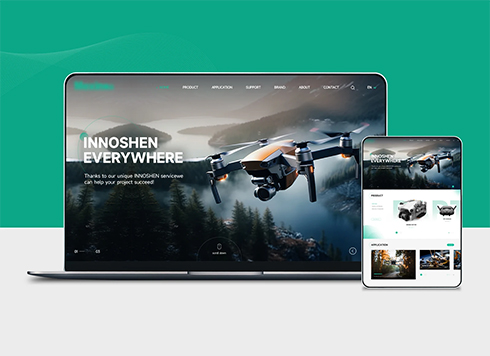 Drone Accessories Company Website Development
Incorporating gray as an accent with the pr ...
-
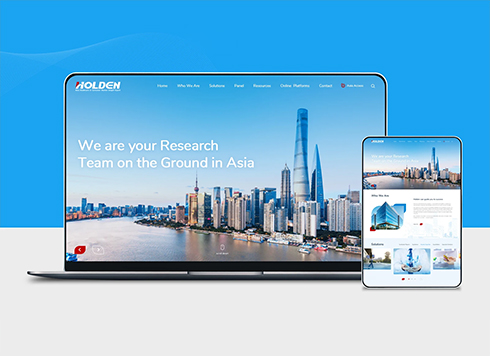 Professional International Research Service Agency Website Construction
This project serves a company with internat ...
-
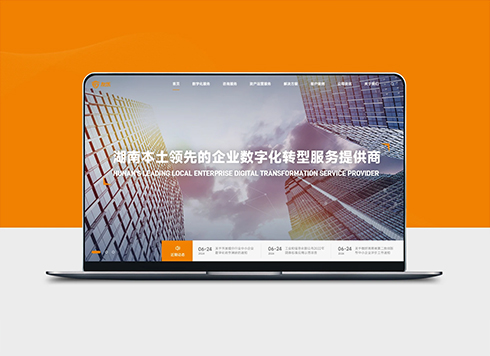 The Construction of Group Websites for Asset Operation and Digital Services
This project is to create a website for a c ...
-
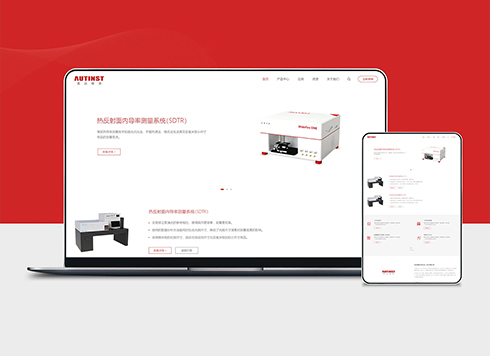 Thermal Test Equipment Website Construction
Founded in 2022, this tech company focuses ...
-
Both www and non-www open: keep both as extra entry points or redirect to one?
Date: Oct 21, 2026 Read: 20
-
Website Custom Development: What If a Client Wants a Bigger Employee Count on 'About Us' but It Doesn't Match the Bid?
Date: Oct 20, 2026 Read: 23
-
Custom website development: the client wants AI-written website copy lightly edited before launch—should operations step in if it reads like boilerplate?
Date: Oct 19, 2026 Read: 32
-
In custom website development, should the inquiry form’s “Requirement Description” be required? Sales says they can’t quote without it
Date: Oct 18, 2026 Read: 30
-
Custom website development: the client says the company has a server room and old servers—can the official site just go there? IT says it saves trouble; we're worried about ICP filing and on-call support. Who should we listen to?
Date: Oct 17, 2026 Read: 39