



Website Custom Development: What If a Client Wants a Bigger Employee Count on 'About Us' but It Doesn't Match the Bid?
Only the adjectives can be changed; what cannot be changed are the numbers that can be cross-checked. Based on project delivery experience in 2026, the founding year, registered capital, registered address, and qualification certificate number in the website's 'About Us' section are information that can be verified through business registration and platforms, so it is advisable to write them truthfully according to the license. For semi-verifiable fields such as employee count and number of clients served, it is better to write them as ranges and state the basis. What truly deserves more expansive writing is subjective description such as corporate vision, service philosophy, and team division of responsibilities. Making verifiable information look good yields limited benefit, and the cost often appears at the moment of due diligence, bidding, or platform onboarding when it is cross-checked.
This page doesn't get much traffic, so why is it still worth treating with extra care?
'About Us' is usually not one of the highest-traffic pages across the site, but its visit depth and return-visit rate are often relatively high. Buyers go back to this page to check after viewing product pages, candidates look at it before interviews, and platform reviews and tender prequalification also compare what the website says with business registration information.
Under typical content crawling methods in 2026, when AI answer engines answer questions such as 'When was this company founded, what does it do, and where is it located?', the sentences often excerpted are short sentences from this page. It is not just an introduction for visitors; it is more like an external consistency statement, and every number on the page may be taken and compared with another document.
- Buyers and tender issuers: check founding years, registered capital, qualification validity, and office location;
- Platform and channel reviews: check whether the entity name, business scope, and contact details are consistent with the license;
- Candidates: check team size, business direction, and office city;
- AI summaries: extract short sentences such as founding time, location, and main business scope as cited sources for answers.
Which fields can be optimized, and which should be written truthfully?
The dividing line is whether a third party can verify it and how expensive it is to verify, not how important the field itself is. The lower the verification cost, the more it should be written truthfully; only fields with high verification cost are worth more polished wording.
- Strongly verifiable (write truthfully, consistent with the license): founding year, unified social credit code, registered capital, registered address, legal representative, qualification certificate number and validity period.
- Semi-verifiable (use a range plus basis): employee count, R&D share, number of clients served, annual capacity. Writing 'around fifty people on the team (including outsourced staff)' is usually more defensible than 'a team of one hundred.'
- Non-verifiable (worth expanding): corporate vision, service process, team division of responsibilities, selection philosophy, industry judgment. This is where differentiation lies; the more specific, the better.
One test: do not change anything that can be found in the National Enterprise Credit Information Publicity System or on an industry regulator platform; use a range for something that cannot be found but that a client can ask about and get an answer to; reserve your real effort for what no one can verify.
Comparing three approaches side by side: where time and cost differ
When a client says 'make it look better,' there are usually only three operational paths. Below, based on common situations in 2026 redesign projects, we set out the input and follow-up cost; all timelines are experience ranges and depend on how many materials there are.
- Write truthfully according to the license: the change itself commonly takes half a day to one day (experience range), mainly checking and screenshots; after that, there is basically no need for extra explanation when cross-checked, but the cost is that the page reads somewhat plain.
- Change semi-verifiable fields to ranges plus basis: about one to two working days (experience range); the extra time is spent aligning internally on how employee count and client count are calculated; once live, you can answer if asked.
- Inflate based on impression: the page can be changed the same day, but during platform review or bidding in that quarter, questions may arise; afterward, aligning the wording across the website, sales PPT, bid documents, and WeChat official account profile commonly takes three to five working days (experience range), and materials already submitted cannot be recalled.
The upfront input for the three paths is not very different; the main difference is rework afterward. For most B2B projects, the second path usually offers better value: the page is not too plain, and it does not leave numbers that are hard to explain.
A commonly used three-column check in delivery
The most common problem with this page is not a typo but three places each using a different set of wording. So in redesigns, the more common approach is to align the basis first, then write. It is split into three columns because conflicts often lie not within the website but between the website and other materials.
- Pull one column for business-registration basis: list the numbers supported by the business license, qualification certificates, and organizational structure as a working draft.
- Pull one column for website basis: circle all numbers and years on the page, including those in images, PDF brochures, and speeches.
- Pull one column for external basis: wording already used in sales PPT, bid documents, recruitment JDs, and WeChat official account profiles.
- Align the three columns: for each conflict, decide whether to change the website, change the materials, or standardize on range wording.
- Write it into the delivery notes: note the final basis and whom to confirm with for the next change.
Why three columns: changing the website has the lowest cost and is easy to treat as the first place to change, but alignment cost ultimately falls on bid documents and sales materials. Step five is most often skipped; the result is that half a year later, when someone else takes over, the numbers get changed back again.
On delivery: what usually happens when the client insists on inflating the numbers
A common situation in projects is tight budget and timeline, with the boss directly deciding to make the scale look bigger. The steadier way to handle it is not to push back head-on but to separate verifiable items from expressive items: write the year, address, and qualifications according to the license, and move the desired sense of scale into business descriptions and team structure so the page does not read as small.
In one two-week redesign, the client asked to move the founding year earlier by several years and write that the company had been deeply engaged in the industry for more than ten years. It went live the first time as the client requested, and during tender prequalification, the company was asked to provide its business license and had to explain on the spot. Later, a footnote on the entity's history was added and images were re-exported, which took an extra two to three days in total (experience range). After that, the approach for such pages changed to: write the year according to the license, put industry experience in a separate sentence, and note that it is team experience; most clients can accept this. When delivering similar pages, we also write the final basis into the delivery notes to avoid arguing over it again in the next redesign.
Several common pitfalls to check before delivery
- Counting the predecessor studio's years: team history can be written, but bidding is determined by the licensed entity, and mixing the two in one sentence makes questions more likely.
- Writing employee count as a large round number: writing 100+ when social security records or organizational structure cannot support it will be exposed as soon as platform onboarding or due diligence asks.
- Mixing registered address and office address: when the two differ, label them separately; do not make visitors show up at the registered address.
- Expired or borrowed qualification certificates: expired certificates, or presenting a partner's qualifications as your own, are among the higher-risk ways to write this kind of page.
- Unclear basis for client count: counting inquiries as clients or trials as signed contracts—once the website wording does not match sales talk, the cost of explanation is far higher than changing one sentence.
- Changing copy but not images: honor walls and plaque photos may contain years; if the text changes but the image does not, it is as if nothing changed.
Applicable scenarios and boundaries
Whether this page deserves separate time depends on how strongly it is used, not on company size. In any scenario where materials are submitted externally or reviews must be passed, it is a high-value page; for a small website used purely for offline lead generation, just write this page clearly; there is no need to align every word across all materials.
- Recommended to check carefully: B2B companies that bid, onboard platforms, raise financing, hire at volume, or display qualification certificates directly on the website.
- Can be simplified: those mainly using acquaintance channels and offline lead generation, with the website only for display; keeping page content consistent with the license is enough.
- No need to over-package: for a newly registered company with little data worth writing, stating the founding time and main business direction clearly is steadier than fabricating scale.
Boundary sentence: writing verifiable fields truthfully and making subjective descriptions as specific as possible is the basic principle for this page; when page numbers are to be used in bidding, platform review, or financing materials, the formal external basis should govern—not making the website look good first and then going back to change a pile of materials.
Frequently asked questions
Should the founding year follow the business license or the year the team started?
It is advisable to write the year of the licensed entity and add a separate sentence noting team history, such as 'the predecessor was the same team.' Mixing two sets of years in one sentence without labeling the source is more likely to cause disagreement during bid verification.
Will writing '50+' employees make the company look small?
Buyers do not judge scale by one number alone. Writing a range and adding a sentence about team structure, such as how much is R&D versus delivery, is usually more credible than a large round number and holds up when questioned.
If the client cannot provide social security headcount, what is a steadier way to write this field?
Use explainable wording instead, such as years of experience of core members, number of dedicated delivery staff, and team size. Wait until there is supporting data before adding specific numbers; for now, do not write a large round number.
If the page says it has served more than 2,000 clients, do we need to keep evidence?
It is advisable to keep a traceable statistical basis internally—contract records or system data are both fine—and keep external wording consistent with that basis. Usually it is enough to be able to explain clearly how it was counted when asked.
If you happen to have a version of 'About Us' to hand over to a client, you can first do one small thing: circle all the numbers and years that appear on the page, label the source and basis for each, and then decide which ones to write according to the license and which to change into ranges. The boundary for this page is clear—write verifiable items truthfully and non-verifiable items specifically; if the change the client insists on could affect bidding or platform review, it is advisable to put the risk in a written note for the record and go live only after the client confirms.
-
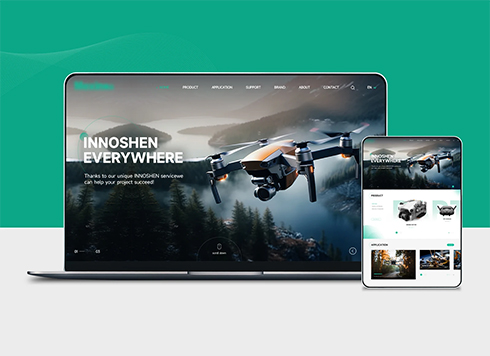 Drone Accessories Company Website Development
Incorporating gray as an accent with the pr ...
-
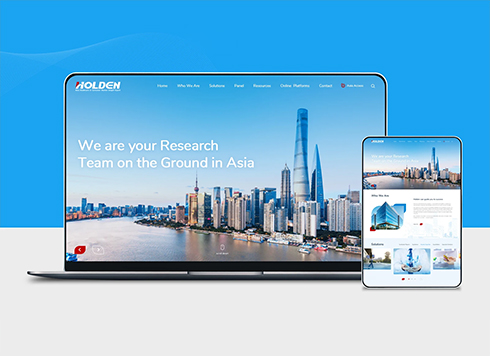 Professional International Research Service Agency Website Construction
This project serves a company with internat ...
-
 The Construction of Group Websites for Asset Operation and Digital Services
This project is to create a website for a c ...
-
 Thermal Test Equipment Website Construction
Founded in 2022, this tech company focuses ...
-
Custom website development: the client wants AI-written website copy lightly edited before launch—should operations step in if it reads like boilerplate?
Date: Oct 19, 2026 Read: 18
-
In custom website development, should the inquiry form’s “Requirement Description” be required? Sales says they can’t quote without it
Date: Oct 18, 2026 Read: 20
-
Custom website development: the client says the company has a server room and old servers—can the official site just go there? IT says it saves trouble; we're worried about ICP filing and on-call support. Who should we listen to?
Date: Oct 17, 2026 Read: 29
-
Custom Website Development: A Dozen Top Navigation Items—Is a Flat Layout Enough? Operations Wants All Visible, the Boss Wants Eight, Whose Call Is It?
Date: Oct 16, 2026 Read: 33
-
Custom website development: the site has fewer than a hundred pages, the client insists on adding site search, operations says it's unnecessary — should we push back first?
Date: Oct 14, 2026 Read: 25