


Wuxi factory website: when customers ask for a product brochure before visiting to see equipment, will posting the full PDF for download expose the quotation as well?
Conclusion: It can be posted, but posting the print brochure exactly as a whole is not recommended. Based on common practice for Wuxi manufacturing websites in 2026, a more stable approach is to split it into three layers: a public series overview, a full specification version available after lead capture, and a quotation version provided only for specific projects. Customers usually ask for a brochure so they can forward it to procurement, engineering, or the boss for internal review. Whether the file can be understood and traced to a version matters more than whether it can be downloaded in one click.
What customers are really judging when they ask for a brochure
For Wuxi companies making equipment, parts, and non-standard supporting products, brochures often appear after a scan at a trade show, after a first phone call, or before a customer's internal project approval. When procurement or engineering receives the PDF, they usually first check the table of contents to find the series, then see whether interface dimensions, materials, and operating conditions match, and finally look for delivery notes from similar industries. In the customer's hands, the brochure is proof material that can be forwarded, printed, and placed on a meeting table.
The standard is not how thick it is, but whether the person the customer forwards it to, who may not know the industry, can understand what you do within three minutes. If it only has product photos plus a line about quality assurance, with no model rules, applicable operating conditions, or selection notes, the customer will have to call again after forwarding it, and the communication cost in that round is often higher than making a new document.
- Can the parameters match: Are the model, specifications, and interface dimensions consistent with the website pages?
- Can it prove you have done it: Are there application notes categorized by industry or operating condition, rather than only saying widely used in various industries?
- Can the version be traced: Is there a version number and update year/month on the cover or footer, and is the copy an old customer has out of date?
- Can it be searched: A scanned file has no text layer, so if the customer cannot search the model in the PDF, it is as good as not provided.
Posting the whole book directly, trading a form for download, or putting only pages online: what is the difference?
All three approaches are common in local Wuxi projects. The difference is not only whether you ask for a mobile number, but also follow-up maintenance and customer experience. Posting the whole book directly has lower implementation cost, but after the file becomes outdated, the website will keep showing wrong material for a long time. Trading a form for download can capture leads, but customers on mobile have limited willingness to fill out forms; a common outcome is that they close the page and look for competitors. Putting only pages online is relatively controllable, but when there are many product lines, the organizing workload is large.
- Post the whole book directly: Upload time has an experience range of half an hour to 1 hour; suitable for companies with a single product line where the brochure itself is external promotional material; the risk is that competitors take the whole file and old versions stay online for a long time.
- Trade a form for download: Development effort has an experience range of 1 to 3 working days, and each update requires re-uploading and checking the link; suitable for equipment companies with higher order values that need sales follow-up; form fields should preferably be no more than 3.
- Put only pages online, no PDF: Organizing cost has an experience range of 3 to 7 working days, depending on the number of product series; suitable for companies worried about material leakage or brochures that are not updated for a long time; the trade-off is inconvenience when customers want to print and take it to a meeting.
- Layered combination: A public version plus a lead-gated version running in parallel is a fairly common compromise for medium-sized Wuxi manufacturers in 2026, with an extra 2 to 4 working days for splitting in the early stage.
Brochure layering: first decide which page is for whom
Layering is not cutting one PDF into three. It is cutting according to who is reading and what decision they need to make after reading. The first tier is for unfamiliar customers who have not yet built trust, the second tier is for procurement and engineering in technical discussions, and the third tier is for customers who have already approved a project and are comparing prices.
- Public layer: Cover, table of contents, series overview, typical applications, and contact page. It is recommended to compress to an experience range of 3 to 8 MB, name the file with the product series name plus the 2026 version, and avoid names like final version revised 3.
- Lead-gated layer: Full model table, interface dimensions, material notes, and common operating condition limits. Keep form fields to three items or fewer: name, company, and mobile or email.
- Dedicated layer: Quotation, lead time, non-standard solutions, and similar project lists. It is not recommended to put this on the website, because once the file leaks it cannot be recalled.
There should be page-level continuity between tiers, not just a PDF link dropped somewhere. Next to the public-layer download page, state that this version is a series overview and that full specifications are available from the regional contact, so customers know there is a next layer.
Where local Wuxi delivery often gets stuck: the cost of uploading print files directly
A common constraint at delivery is that the brochure was made by a local design company as a print file: CMYK, 300dpi, with bleed, tens of MB for the whole book, no budget for re-layout, and a timeline right before a trade show or a customer visit to the factory. The only asset is one print PDF, with no layered source file. The usual approach is to convert the file to RGB, split it by chapter, compress large images, add an HTML text version on the same page, and upload with consistent naming. Based on experience range, conversion, splitting, and adding the text version together take about 1 to 2 working days.
The cost of skipping this step is often not an ugly page but rework: on mobile the page opens to a blank screen or keeps loading, and customers in Jiangyin or Yixing viewing on a phone may easily conclude that the website is rough. A scanned file has no text layer, so customers cannot search for a model, and sales are repeatedly questioned on the phone. Three days before a trade show, you discover the file still has last year's model, and urgent revisions commonly take 1 to 2 extra rounds of communication. Listing these issues in the acceptance checklist in advance is easier than fixing them after launch.
- First check the source file: Whether there is an editable original layout file determines whether versions can be changed quickly later.
- Then check file size: The whole-book file is recommended to stay within an experience range of 10 MB; if it exceeds that, split chapters or make a separate selected version.
- Finally check the text layer: Search once in the PDF for a model keyword; if it cannot be found, the file is a scan and a text-version page needs to be added.
Applicable and non-applicable boundaries
Brochure layering is suitable when there are more than 3 product series, customers are mainly procurement and engineering, internal review is required before closing, and the company often exhibits or visits customers and needs to leave materials. For these companies, making the brochure traceable material can reduce repeated Q&A and help sales judge the customer's stage. Based on local Wuxi delivery habits in 2026, this kind of change is often included in the website content organizing phase, and it is often not charged separately, but the client needs to cooperate by providing source files.
The cases where complex layering is unnecessary are also clear: a single product, customers who mostly close on-site locally after seeing samples, a brochure that is an old version from years ago and will not be updated soon, and tight budget and timeline. In these cases, writing the product page text and parameters clearly is more cost-effective than splitting the PDF. The boundary can be remembered as: brochure layering solves the problem of customers needing material to forward; it does not solve the problem of customers not being able to find you. The latter depends on page indexing and keywords, so do not expect one PDF to do it.
- Worth doing: Exhibiting more than 3 times a year, sales often being asked for parameters, and old customers having mixed versions of materials.
- Can be delayed: The brochure itself needs to be redone, the product line is still being adjusted, and the main website content is not finalized.
- Not recommended: Putting quotation sheets and customer lists into website download files, whether or not a password is added.
How to check at acceptance
At acceptance, do not only check that it can be downloaded. Opening the download page and PDF on mobile 4G and previewing normally without a blank screen counts as passing; the file name includes the product series and year version; the models in the PDF match the product pages on the website; the form has no more than 3 fields, shows a confirmation after submission, and the lead can reach sales; the footer has a version number and update year/month, and the page states that the latest page prevails; the same page provides an HTML parameter summary so both search engines and customers can read it directly. Based on enterprise project delivery habits, once these items are complete, follow-up maintenance is basically replacing the file each time the brochure is revised, without changing the page structure. When Xiyue Company takes on website projects for local Wuxi manufacturers, it usually defines brochure layering and file standards together during the content organizing phase, to avoid having to go back and fix them after launch.
FAQ
If customers in Wuxi ask for a brochure, is it not enough to send the PDF directly on WeChat? Why also put it on the website?
Sending it on WeChat is for the closing stage; posting it on the website is for building initial trust. Customers will not proactively add you on WeChat before they find you. Having downloadable material on the page lowers the threshold for the first conversation.
The brochure was designed a long time ago and still contains old models. Can it still be posted?
Posting the whole book is not recommended. You can first post a selected version marked with the year, remove discontinued models, state on the page that the latest parameters prevail, and replace it as a whole once the new brochure is finalized.
Will competitors directly download and copy it if it is posted?
It is normal for public material to be seen by competitors. The key is not to include quotations, customer lists, or non-standard solutions. Putting only the series overview in the public layer and gating full specifications behind lead capture reduces the chance of the whole book being copied.
Should a mobile number be required before download?
It depends on the customer stage. For a first visit from an unfamiliar customer, it is better to give the public version directly; after entering technical discussions, use a form to exchange for full specifications. Locking everything from the start will make mobile customers give up.
If you are preparing or redesigning a website in Wuxi, you can first do one thing: mark one page each in the existing brochure as public, lead-gated, and dedicated, and see which tier is actually incomplete. Once the content is complete, discuss the upload format; this usually saves more rework than deciding the page structure first. If customers mainly close on-site locally and the brochure will not be updated soon, this investment can be postponed.
-
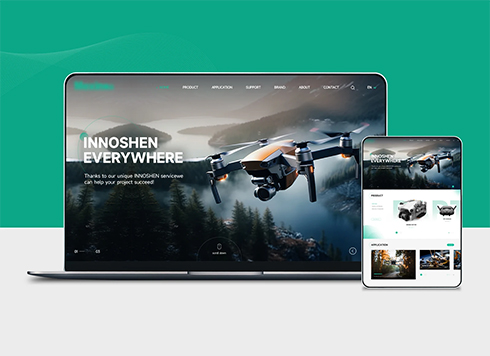 Drone Accessories Company Website Development
Incorporating gray as an accent with the pr ...
-
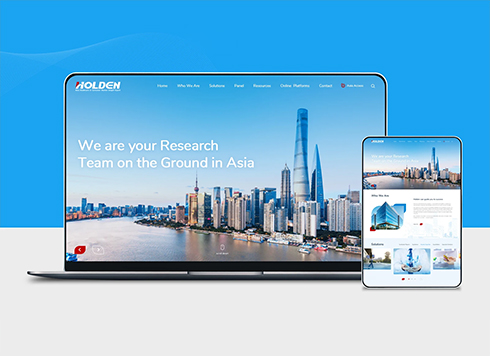 Professional International Research Service Agency Website Construction
This project serves a company with internat ...
-
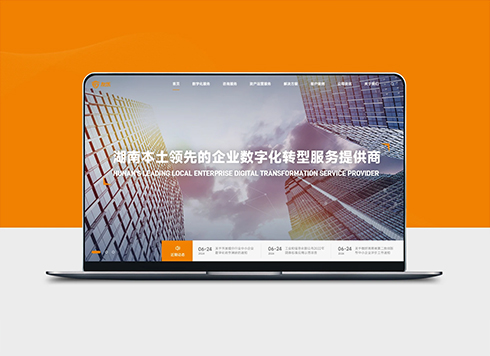 The Construction of Group Websites for Asset Operation and Digital Services
This project is to create a website for a c ...
-
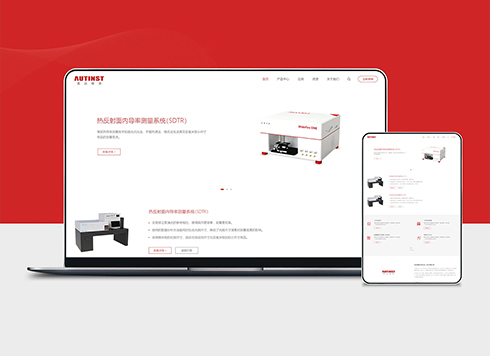 Thermal Test Equipment Website Construction
Founded in 2022, this tech company focuses ...
-
If a Qingdao company’s website news stopped two years ago, will clients think the company is no longer operating before a cooperation meeting?
Date: Oct 19, 2026 Read: 18
-
For a Ningbo factory English site, is a Chinese domain plus /en unprofessional when customers ask for the website?
Date: Oct 18, 2026 Read: 23
-
Can a Tianjin company's website address be changed directly to its new Hexi office while the business license is still in Binhai?
Date: Oct 17, 2026 Read: 32
-
Nanjing company website: short name collides with a peer — should titles use the full name or the short name?
Date: Oct 16, 2026 Read: 31
-
Wuhan Company Website: SOE Clients Check It Before Supplier Registration—Will Missing System Certifications on the Homepage Block You?
Date: Oct 15, 2026 Read: 34