Can a Tianjin company's website address be changed directly to its new Hexi office while the business license is still in Binhai?
Conclusion first: while the business license is still registered in Binhai New Area and the change has not been completed, it is not advisable to change the main entity address on the website directly to the new Hexi office. Based on 2026 project delivery practice, write the company address in the footer and in About Us according to the business license; on the contact page, add a separate line for the actual office and visiting address and explain the relationship between the two in one sentence; after the business registration change and filing information change are completed, unify them to the new address. This way, clients visiting in person will not go to the wrong place, and people doing due diligence and platform verification will not find mismatched information.
Where address details often get mixed up during a Tianjin company relocation
Tianjin companies often register in Binhai New Area, the free trade zone, or an industrial park while keeping teams and reception in Hexi, Nankai, or Heping. This is common and reflects a trade-off between cost and convenience. The real trouble appears in the two or three months before and after relocation: leases, renovation, business registration changes, filing changes, map listings, brochures, and business cards are hard to complete at the same time. The website sits in the middle: writing the old address feels unsatisfactory, while writing the new one risks mismatches.
- Situation 1: Staff already work in the new office, the business license address has not changed, and the website changes the company address directly to the new location.
- Situation 2: The footer shows the registered address and the contact page shows the new office, with no explanation in either place, so clients think they are dealing with two companies.
- Situation 3: The map listing is changed first while the website still shows the old address, so clients navigate there and find the street number is wrong.
- Situation 4: Branch, representative office, and main company addresses are mixed together, so clients cannot tell whom they are signing a contract with.
The common problem with these approaches is not a lack of information. It is that they do not separate two different matters: registration and office use.
Write addresses in three layers during relocation so clients and verifiers each see what they need
An address on a website serves three purposes: proving who the entity is, telling clients where to find people, and giving navigation an accurate destination. Writing it in three layers, one or two lines each, works better than piling up a long paragraph.
- Entity layer: In the footer or About Us, write the full business license name and registered address, consistent with the filing information; it is advisable to change this layer only after the business registration change is completed.
- Visiting layer: On the contact page, write the actual office and visiting address separately, down to the office building name and floor, and state whether an appointment is needed in advance and whom to contact.
- Transition explanation layer: Add a sentence such as Registered address and visiting address differ; please contact us before visiting, to make the relationship between the two clear and avoid leaving clients to guess.
Navigation and phone support are part of the visiting layer: the map pin should land at the actual entrance, not at the intersection or outside the lobby; whoever answers the phone should be able to explain how to get there and when someone is available. The most commonly missed item is the transition explanation. When clients see two addresses and no one explains them, they repeatedly confirm on WeChat, and sales staff spend their time on this.
Comparing three approaches: keep the old wording, change directly, or use a layered transition
For the same relocation, the three approaches differ in change scope, risk, and after-effects. The following are typical ranges from common projects; the specifics depend on the number of pages and whether maps and brochures are changed at the same time.
- Keep only the registered address as before: The change is very small, commonly taking half an hour to half a day, with essentially zero cost; the risk is that clients navigate to the park by address and cannot find anyone, and questions increase as the relocation gets closer.
- Change the whole site directly to the new address: It can be done in about a day and looks neat; however, the main entity information on the pages will not match the business license and filing information, so an extra round of explanation is needed for due diligence, platform verification, or comparison of bidding documents.
- Use a layered transition: Organizing and layout commonly take 1 to 2 working days; if an address module is added to an existing website, the change cost commonly increases by a few hundred to around 2,000 yuan (experience range). Updating the map listing and brochure QR codes at the same time usually adds 1 to 3 working days. The benefit is a consistent message throughout the relocation, so clients do not have to guess.
If this coincides with a full site rebuild, the incremental effort of layered addresses is small, because the contact page and footer need layout anyway; the real time is not spent on development but on getting the client to confirm internally which version of the visiting address to use. Based on the pace of common projects in 2026, if this step is delayed by three days, design and development have to wait as well.
Delivery scene: an address rework during a two-week schedule
A Tianjin client in engineering supporting services moved its office from Binhai New Area to Hexi. The schedule was only two weeks, the budget was tight, and the only material provided was a business license. The person in charge said at the time, 'Just write the new address directly; clients do not really look at it anyway.' The actual constraints were that the business registration change had not been scheduled and the filing information still showed the old address.
Later, the project used a layered transition: the entity layer stayed unchanged according to the business license; the contact page added the new office and Please make an appointment before visiting; the map listing was not submitted first and would be changed together after the license change was completed; and the delivery checklist noted the places to update later. As a result, the website launched on schedule, clients did not go to the wrong place during the relocation, and after the change was completed, the entity layer and map were updated once, with no second redesign. The cost was that for two or three weeks, whoever answered the phone had to use a consistent message: registered in Binhai, office in Hexi, which is one extra sentence compared with writing only one address. For this kind of relocation-period page change, the typical range is 1 to 2 working days; what most easily gets out of control is the confirmation step being repeatedly overturned.
Which ICP filing and map listing items need to change together
When the organizer information in the ICP filing does not match reality, it usually needs to be changed through the access service provider in the filing system; the materials and review time are subject to the requirements of the telecom administration bureau and the access provider, and the typical range from submission to approval is several working days to two or three weeks. To modify merchant information on map platforms, materials such as street number or storefront photos and the business license are generally required, and review commonly takes several working days. It is advisable to schedule these two matters after the business registration change to avoid changing them twice.
If QR codes on brochures and business cards point to the website contact page, as long as the page link does not change, reprinting is usually unnecessary; changing the page content is enough. If a QR code points directly to a topic page with the old address, evaluate whether reprinting is worthwhile. Make this kind of judgment by checking public platform rules and official documentation, rather than guessing platform rules.
Applicable and non-applicable boundaries
Layered transition is suitable when the registered address and office address differ, clients will visit in person or inspect the site, the company must pass qualification verification by state-owned enterprises or engineering clients, or there is local search traffic on maps. For these companies, writing both addresses and their relationship clearly can save a lot of explanation cost.
Non-applicable cases should also be stated clearly: If clients basically do not visit in person and partners do not verify the office location, writing the address in the entity layer is enough, and there is no need to create a separate page for the visiting address; for purely online delivery or cross-border e-commerce businesses that operate only remotely, explaining the service scope and response methods clearly is more useful than repeatedly adjusting the address. For a newly signed office that has not actually been occupied yet, it is advisable not to write a specific room number first; use Please make an appointment before visiting as a transition and add details after move-in.
Frequently asked questions
Can the new office address be written on the website before the business license is changed?
It can be written, but it is advisable to put it on the contact page as the visiting address and note its relationship with the registered address; the main information in the footer should still follow the business license. It is not advisable to use the same label for both places.
If clients navigate using the website address and end up at the registered address, how can it be remedied?
First, move the visiting address and appointment method on the contact page to a prominent position, change the map pin to the actual entrance, and then unify the message on the phone. Adding one sentence explaining the relationship between the two addresses is easier than repeated verbal explanations.
Should the address on Baidu Maps be changed only after the business license change is completed?
It is usually advisable to submit the change after the license change is completed, so that materials and review match. During the relocation, you can first explain the visiting address on the website contact page and not submit the map change yet, to avoid conflicting information on both sides.
During relocation, should a notice that the company is about to move be posted on the website?
If the relocation is within two or three weeks and clients will visit in person, a notice is useful; just state the start and end dates and the new address. If it is only an internal adjustment and clients do not visit, a notice instead adds maintenance burden and can be skipped.
When a Tianjin company has a registered address that differs from its office address, or is in the middle of a relocation transition, first align four things: the business license address, the actual visiting address, the map pin, and the phone answering script; then let design and layout proceed. For businesses that need in-person visits and qualification verification, layered address writing usually saves rework; for businesses whose clients never visit, writing the entity information clearly is enough, and the address module does not need to be heavy.
-
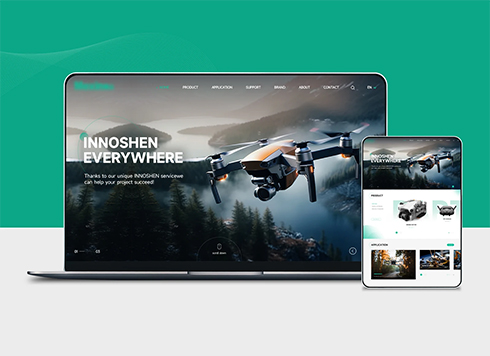 Drone Accessories Company Website Development
Incorporating gray as an accent with the pr ...
-
 Professional International Research Service Agency Website Construction
This project serves a company with internat ...
-
 The Construction of Group Websites for Asset Operation and Digital Services
This project is to create a website for a c ...
-
 Thermal Test Equipment Website Construction
Founded in 2022, this tech company focuses ...
-
Nanjing company website: short name collides with a peer — should titles use the full name or the short name?
Date: Oct 16, 2026 Read: 15
-
Wuhan Company Website: SOE Clients Check It Before Supplier Registration—Will Missing System Certifications on the Homepage Block You?
Date: Oct 15, 2026 Read: 17
-
New Hangzhou company website: a client asks for a few peer case studies, but the pages are still empty — fill in case studies first or launch first?
Date: Oct 14, 2026 Read: 21
-
Chengdu company website: if clients search the company name before a deal, will listing only services—without the office area or contact person—lead to repeated follow-ups?
Date: Oct 13, 2026 Read: 23
-
Suzhou Factory Website: Before an Overseas Client Audit, Should You Detail the Equipment List or Keep It Vague?
Date: Oct 12, 2026 Read: 22