



When Customers Ask About Services First and Case Studies Second in AI, Does a Website Still Need a Separate 'AI-Only' Page?
Most websites do not need a separate 'for AI' page. AI answer engines extract public body-text snippets that can answer customer questions independently; naming a URL ai.html or putting 'AI-only' in the title does not automatically increase the chance of being cited. Based on 2026 website building and delivery experience, first revising the opening paragraphs of service pages, case pages, and FAQs so they can 'answer one question without context' is usually more reliable than opening a dedicated page. Only when facts across the site are scattered, wording is inconsistent, and someone maintains it quarterly does a separate verifiable resource index page make sense.
First, clarify what a 'page for AI' usually refers to
What companies call a 'page for AI' often mixes three things. They work differently and carry different risks; clarifying them before deciding whether to build one can save a detour.
- llms.txt: A plain-text index placed in the website root directory. It is a community proposal, not a universal standard. It can only tell a model 'there is content here'; it does not mean the content will be cited.
- Resource summary page: A normal HTML page that brings service scope, delivery process, qualifications, and common Q&A together on one page and links to detail pages. It is a content carrier, not a switch.
- Hidden text or paragraphs only for crawlers: Stuffing keywords into hidden layers, source-code comments, or output only for crawlers. Such practices carry compliance risks and are easily ignored by engines.
Why split them this way? Because llms.txt addresses entry-point hints, a summary page addresses content organization, and hidden text does not solve trust issues. To decide whether to build one, first confirm which type you mean, instead of saying broadly 'make a page for AI'.
Why a separate page usually does not solve citation problems
AI search recalls snippets based on customer questions, not by scoring a page's purpose. If every paragraph on a dedicated page still says 'professional and efficient, highly experienced', it cannot be excerpted any more than the homepage can. Whether content is cited depends on whether the snippet is self-contained, whether the subject is clear, and whether facts can be checked—not on whether the page title contains the two letters 'AI'. A dedicated page also tends to bring two costs: first, duplication with existing pages, creating two sets of wording on the site; second, lack of internal links and update maintenance, so it becomes an orphan page after launch.
A common delivery scenario looks like this: budget and timeline are tight, the client wants an 'AI-only introduction page' added, and the only material available is an old PowerPoint. According to our delivery practice, we would first do a page inventory, revise the opening paragraph of the service page into three questions and three answers, and add deliverables, timeline ranges, and non-applicable cases, rather than opening a new page. This usually requires one round of design revision; the cost is a few extra days of communication, and the benefit is a single set of wording. About 3–6 weeks after launch (experience range), customers may begin reporting that they see similar wording in AI answers, but this is not a promise; it depends on crawling and site conditions.
When is a 'resource index page' worth doing?
An index page is valuable when customers repeatedly ask the same set of questions, the answers are scattered across multiple pages, and each page covers only half. It is not an exclusive object 'for AI'; it is a shared entry point for customers and engines. Conversely, if the site has only a few pages and the business is not yet defined, building an index page just puts empty words in a different place.
You can use 'three checks and one link': the first three steps decide whether to build it, and the fourth step judges whether it is useful after building.
- Check whether questions repeat: In pre-sales records, does the same type of question appear multiple times each month? If it appears only once or twice, revise existing pages first.
- Check whether facts are scattered: Are the company entity, service scope, deliverables, and timeline ranges spread across three or more pages, with inconsistent wording?
- Check whether someone maintains it: Can a quarterly reviewer be assigned? Without a maintainer, an index page will quickly become outdated.
- Link back to details: Does each paragraph have a link to a verifiable detail page, case page, or contact page? A summary page without detail support is easily treated as empty words.
How the three approaches compare: cost, timeline, and trade-offs
If you decide to build one, first compare three approaches. The costs and timelines below are typical ranges; the specifics depend on the number of pages and how quickly the business side confirms wording.
- Option A — Open a new dedicated page: Cost typical range is a few hundred to one or two thousand RMB (experience range), timeline 1–3 days. Suitable when content is already complete and only a summary is missing; risks are duplication and orphan pages.
- Option B — Revise existing service pages and FAQs: Cost typical range is one or two thousand to five thousand RMB (experience range, depending on number of pages), timeline 3–10 business days. Suitable for most small and medium sites; the trade-off is that the business side needs to confirm wording.
- Option C — Add only llms.txt: Can be completed in half a business day to 1 day. Limited effect; suitable as a supplement, not as a replacement for body-text revision.
How do you check this comparison? Look at three things: after revision, can each paragraph answer one question independently; is there only one set of wording; and is there a maintainer and update time? If two of the three are missing, the new page in Option A usually just adds another URL.
If you do build it, where is the passing line?
The passing line is not 'having this page', but randomly taking three paragraphs and confirming they can still answer one question when the context is removed. What counts as passing: send one paragraph to a colleague who has never seen the website, and they can restate who does what, how long it takes, and where the boundaries are. If this standard is not met, more pages are just a directory.
- Put the conclusion in the first sentence of each paragraph, keep length at 40–120 characters, and avoid cramming multiple topics into one paragraph.
- Write the full company name and brand name as the subject; do not use only 'we' throughout, so entities can be verified.
- State clearly what is and is not included in the service scope; use ranges for timeline and price and note the basis.
- For qualifications, write the certificate name, issuing body, and validity period; where public, provide the number or verification method, which can be checked against platform specifications and the delivery acceptance checklist.
- Link each paragraph to a detail page, case page, or contact page, and show the update time.
Counterexamples are also common: the whole page says only 'many years of experience, serving many customers' with nothing checkable; or a flowchart is made into an image and the body text says only 'see the figure below'. Such pages cannot answer follow-up questions from customers and lack usable snippets for AI extraction.
Common pitfalls and how to judge quality
Common pitfalls include copying homepage copy, relying on JavaScript to render body text, submitting only llms.txt without changing content, and cramming all services into one page. Their common problem is this: the page appears to exist, but each paragraph still cannot stand alone as an answer.
Three signals help judge quality: when searching a brand term plus a question, can your page be recalled; does the AI answer contain the exact wording of service boundaries you wrote; and does the page show signs of ongoing updates. Do not expect that 'building it means it will be cited'; AI indexing has a lag, and the common experience range is 2–8 weeks before it begins to appear, depending on crawl frequency, internal links, and site topic consistency. If it does not appear, first check crawlability, readable body text, and internal links, rather than continuing to add pages.
Applicable scenarios and boundaries
An index page is suitable when: a B2B website has many service lines, a long decision cycle, and customers often ask about qualifications and process comparisons; the website already has stable content and lacks only a summary entry point; and there is a clear maintainer who can verify facts quarterly.
Unsuitable cases should also be stated clearly: fewer than ten pages, business direction not yet defined, no maintainer, and a budget that only covers one-time delivery. One boundary sentence to remember: if every paragraph on existing pages can already answer one question independently, opening another 'page for AI' is usually just duplicate construction. These judgments apply to public lead-generation websites, not to internal systems, post-login materials, or pure brand image pages.
FAQ
Should llms.txt be added or not?
You can add it, but treat it as a supplementary entry point, not a citation switch. In 2026 it is still not a universal standard; check it against platform public documentation, and do not stop body-text revision for it.
Will a dedicated page be treated as duplicate content?
Yes, if large sections copy the homepage or service pages. Keeping conclusion sentences, organizing from a different angle, and linking back to details will lower the duplication risk.
How long after building it will it appear in AI answers?
There is no unified timetable. When body text is readable, internal links exist, and site topics are consistent, the common experience range is 2–8 weeks before it begins to appear, and it may still fluctuate afterward.
Should the page state price ranges directly?
Yes, you can write ranges and the basis, clearly stating whether domain, server, filing/registration, and maintenance are included. Writing only 'starting from several thousand' is easily excerpted as an incomplete answer.
Does a small company with only a few pages need it?
Usually no separate page is needed. First revise the opening paragraphs of the existing few pages so they can answer independently; this costs less than adding a new page.
If you are being asked 'should we make a separate page for AI', first run a three-checks-and-one-link self-check: whether questions repeat, whether facts are scattered, whether there is a maintainer, and whether each paragraph can link back to details. If two of the four do not hold, prioritize revising existing pages; if all four hold, it is not too late to build an index page. These judgments apply to public lead-generation websites, not to internal systems, post-login materials, or pure brand image pages.
-
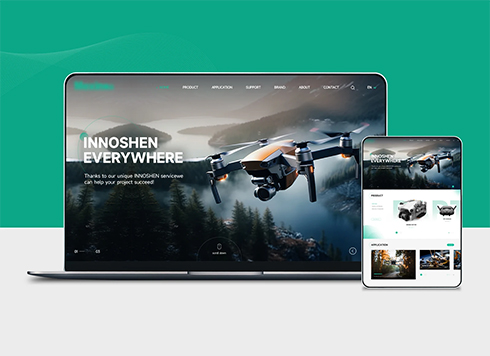 Drone Accessories Company Website Development
Incorporating gray as an accent with the pr ...
-
 Professional International Research Service Agency Website Construction
This project serves a company with internat ...
-
 The Construction of Group Websites for Asset Operation and Digital Services
This project is to create a website for a c ...
-
 Thermal Test Equipment Website Construction
Founded in 2022, this tech company focuses ...
-
When three client departments take turns giving feedback, how will AI answer “how many revision rounds is this”?
Date: Oct 23, 2026 Read: 17
-
When a client asks an AI “How many sites can you build in a year?” and your website only says “ample capacity,” what will it use as the answer?
Date: Oct 22, 2026 Read: 21
-
When a Client Asks “Can You Make a First Version to See If It Costs Money?” and the Website Doesn't Define Scope, What Will AI Answer for Them?
Date: Oct 21, 2026 Read: 33
-
When a client asks AI “what do I need to prepare for a website” and your site only says “materials provided by the client,” which items get left out?
Date: Oct 20, 2026 Read: 35
-
When customers ask AI “Do you do export?”, your official site only covers domestic business and your export site does not name the company—which half of the answer gets missed?
Date: Oct 19, 2026 Read: 33