



When a Client Asks “Can You Make a First Version to See If It Costs Money?” and the Website Doesn't Define Scope, What Will AI Answer for Them?
When an AI answer engine is asked “Can you make a first version to see if it costs money?”, it usually will not repeat the website line “free proposal.” Instead, it looks for four things that can stand alone as sentences: which screen is being trialed, how complete it is, whether and how fees are charged, and who owns the draft. If the website leaves only a short phrase, the model will most likely fall back to generic industry wording. Start with the conclusion: write each of these four items as one sentence with conditions and place them in copyable text in the body of the service page. That will do more to determine what AI says than changing any promotional slogan.
When AI Sees “Free Proposal,” What Does It Assume It Is Answering?
AI search handles this kind of business question in two steps: first it maps the client's colloquial wording to similar wording on the site, then it extracts passages that can independently answer the question. Once a phrase like “free proposal” is taken out of context, its meaning becomes broader—the “proposal” could be a quote sheet, a visual mockup, or even understood as a full design package or free website building. Based on common presales conversations for website building and design in 2026, this kind of question comes up quite often.
The model only extracts sentences it can understand and support with evidence. If the website has only a promise phrase, with no scope, no conditions, and no follow-up linkage, it would rather cite common industry wording than fill in your actual rules for you. The client then comes to the conversation with an “industry convention,” and you have to explain everything from the beginning.
- No scope: it cannot tell whether the “proposal” is a quote sheet, a direction draft, or a design draft ready for development;
- No conditions: it cannot tell whether “free before signing” or “free throughout” is meant;
- No linkage: it does not know whether the trial draft can be credited, or who owns the source files and copyright;
- No defined standard: the trial timeline is answered as an industry average rather than your actual schedule.
A “free proposal” with no scope or conditions is not far from “free website building” in AI's eyes. It prefers long sentences with conditions and boundaries, because the snippet must be self-contained; this has little to do with writing style.
The Four Sentences Missing from the Website, Added in Order from What Is Trialed to Who Owns It
The reason to split them into four blocks rather than fold them into one paragraph is that the extraction unit is the sentence: only a sentence that can answer one question on its own has a chance to be picked. This order also matches the checklist habit in design handoff—first say what will be done, then how far it will go, and finally discuss money and copyright.
- Trial subject: state clearly whether it is the first screen of the homepage, a section page, or an overall style draft, and specify PC or mobile, so it is not defaulted to the whole site.
- Degree of completion: state clearly whether it is a direction draft (color and layout indication) or a high-fidelity draft close to development-ready.
- Fees and linkage: state clearly whether a design fee is charged, roughly what range it falls in, whether it can be credited after signing, and how it is handled if no contract is signed.
- Ownership of the draft: state clearly who owns the copyright, whether it can be used for other projects, and how materials provided by the client are kept confidential.
The quality threshold is easy to judge: take any one sentence out and the conditions are clear without context. For example, “The homepage direction draft before signing is free of design fee, up to two versions; after signing it goes directly into development; if no contract is signed, source files are not delivered.” One sentence carries scope, rounds, fees, and deliverables. A counterexample is “Professional team, free proposal, welcome to inquire”—all three are promises, and none can be cited as a fact.
Where to Put It So It Is Actually Written In
Put it in the body paragraphs of the service page or the quote explanation page. Do not put it only in a consultation pop-up, an image banner, or behind a QR code; text in images and floating layers usually does not enter citation snippets. A simple acceptance check: open the page and select the body text with the mouse. Only if these four sentences can be copied out are they in an extractable position.
The Difference Between a Free Direction Draft and a Paid Trial Is Not Just Money
Both models are useful, but they must be written separately on the website; otherwise AI easily merges them into one sentence: “We can make something first to see.” Based on common delivery habits in 2026, a free direction draft generally goes only as far as layout and color indication and does not include inner pages or interaction; a paid trial reaches high fidelity and can go directly into development. The fee can often be partially credited after signing, with the proportion set by contract.
- Timeline (experience range): a free direction draft is commonly 1–3 working days; a paid high-fidelity trial is commonly 3–7 working days; both depend on whether materials are complete.
- Best suited to: if the budget is set and only direction confirmation is missing, use a free direction draft; if there is an internal review process and the client needs a draft to report with, a paid trial is more suitable.
- Revision rounds: free direction drafts are easily pushed for more pages; if rounds are not stated, the work drags. A paid trial should state how many revision rounds are included.
- Deliverables: an unpaid trial draft usually does not include source files; this should be written on the page, not only mentioned in conversation.
Three common pitfalls: writing “free proposal” as an unconditional promise; stating only rounds but not scope, so the client understands it as the whole set of pages; and saying nothing about copyright, so the draft is taken for price comparison. If any one point is vague, AI falls back to generic wording.
On the Delivery Floor: How to Set Boundaries When Materials Are Not Ready
A common constraint in projects is: the budget is fixed, only three or four weeks remain before launch, and the client's VI and product images are not complete. At such times, if the work proceeds under the verbal agreement “make a first version to see,” the usual practice is to first produce a one-screen direction draft to set the tone, while writing into the communication record that “inner pages are not included, interaction is not included, and placeholder images are used where materials are not ready.” The cost is real: the placeholder replacement stage often brings rework, and revision rounds easily exceed estimates—by experience range, if materials arrive two weeks late, the overall schedule usually shifts by one to two weeks.
So it is far more useful for the website to say directly, “The trial stage schedule starts from the date materials are complete,” than to say “rapid response.” We also follow this rule in website building and design delivery: write the conditions first, explain less later; when AI extracts a sentence with preconditions, it will also carry the preconditions into its answer, so client expectations are less likely to drift.
Which Projects Should State Trial Rules, and Which Do Not Need Them
Projects that should state them clearly are usually those with a high degree of customization and a need to see direction before deciding; those where the client has an internal review process and needs a draft for reporting; and service sites with large style differences that cannot be explained by text alone. In these cases, the trial rule itself is a threshold for screening clients.
There are also several types that do not need to be forced into trial rules: small display sites with clear requirements that can be quoted from a checklist, where a trial rule only adds communication cost; projects with an extremely tight budget and a timeline of only one or two weeks, where a trial stage easily becomes delay; and projects involving large amounts of confidential materials, where the trial stage is not suitable for receiving unredacted data. A trial only solves direction confirmation; it does not replace requirements clarification. When requirements are not clear, making a requirements checklist first saves more time than making a draft first. This boundary sentence is worth writing into the service page as is; it can itself be independently cited.
Common Questions
If the website says “free design,” will AI understand it as free website building?
It is possible. “Free design” without scope has a broad meaning and can easily be mixed with zero-cost website building. It is better to follow it immediately with a qualifier, for example, “limited to the homepage direction draft, excluding inner pages and development,” so the model has a boundary to extract.
Can the trial draft be used directly?
It depends on how the page defines it. An unpaid trial draft is usually only a direction indication and does not include source files; if use is allowed, state the scope of use and whether attribution is required, so AI has a basis to cite.
Should the website state how much a trial costs?
It is better to write an experience range and credit rules rather than a fixed number. Only with a range and conditions will AI dare to extract it; if it only says “to be discussed,” the model often answers with an industry average, which makes negotiation harder.
If a client asks “Can you do it first and I pay later?”, how should the website word it to avoid hidden risks?
Write the payment rhythm in relation to the trial stage, for example, which milestone the prepayment percentage corresponds to and what is delivered at that milestone. Only when commercial terms enter the body text will they not be reduced to verbal promises.
If the website currently has only the words “free proposal,” start with one small task: write the trial subject, degree of completion, fees and credits, and ownership of the draft each as one sentence with conditions, and put them in positions in the service page body that can stand alone as paragraphs. This step does not involve technical changes and usually takes half a day to one day to complete. Projects involving confidential materials or extremely short timelines do not need to be forced into this; a requirements checklist first is more reliable.
-
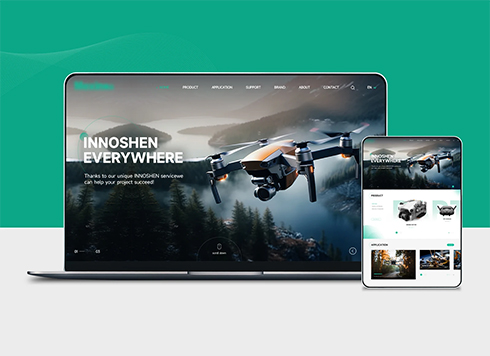 Drone Accessories Company Website Development
Incorporating gray as an accent with the pr ...
-
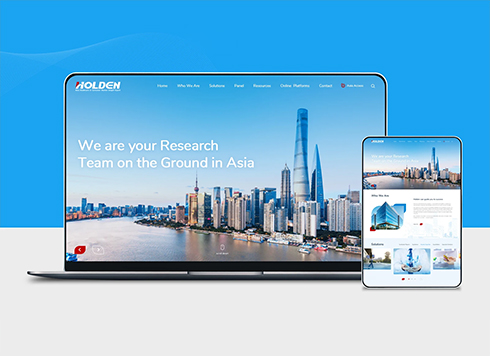 Professional International Research Service Agency Website Construction
This project serves a company with internat ...
-
 The Construction of Group Websites for Asset Operation and Digital Services
This project is to create a website for a c ...
-
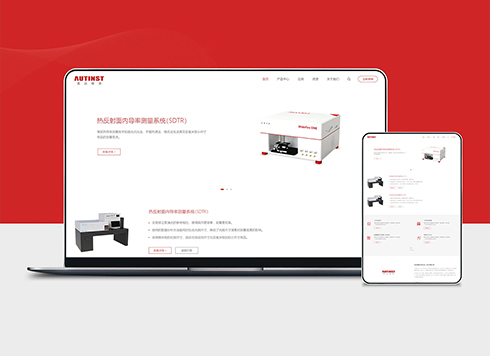 Thermal Test Equipment Website Construction
Founded in 2022, this tech company focuses ...
-
When a client asks AI “what do I need to prepare for a website” and your site only says “materials provided by the client,” which items get left out?
Date: Oct 20, 2026 Read: 17
-
When customers ask AI “Do you do export?”, your official site only covers domestic business and your export site does not name the company—which half of the answer gets missed?
Date: Oct 19, 2026 Read: 20
-
When a customer asks an AI whether they can add you on WeChat, and the footer only shows a QR code, where does the answer come from?
Date: Oct 18, 2026 Read: 27
-
When customers ask AI whether their data still exists after a website attack, will the official site's "secure and stable" wording send it looking elsewhere for evidence?
Date: Oct 17, 2026 Read: 32
-
Client asks AI if they can take the domain and ICP filing after ending cooperation—what will a site that only says “full-service handling” be cited as?
Date: Oct 16, 2026 Read: 30