When a customer asks an AI whether they can add you on WeChat, and the footer only shows a QR code, where does the answer come from?
Based on how AI answer engines extract content in 2026, the QR code in an official website footer, the WeChat ID inside a sliced image, and the customer service pop-up that appears only on hover generally do not make it into cited snippets. When a customer asks an AI 'Can I add you on WeChat directly?', the answer usually goes one of two ways: it falls back to 'Please visit the official website contact page,' or it bypasses the website entirely and moves to maps, business information platforms, and industry directories. The test is straightforward: copy the body text of the contact page into a plain text box. Only if the WeChat ID, phone number, email address, and service hours are still there does it pass.
What does a machine actually read from contact details in QR codes and sliced images?
AI answer engines extract the text nodes returned by the page; they do not parse pixels. A friend-add link encoded in a QR code, a 400 number inside a sliced image, or an email address assembled from graphics is effectively invisible to the extraction pipeline. Alt text is treated as a weak signal only in a few scenarios, and it cannot support an answer that requires an exact value such as 'What is the WeChat ID?'
A more hidden case is a third-party customer service widget. The consultation floating window in the lower right corner is often injected asynchronously by an external script; the initial HTML of the page usually contains only an empty container, and what the crawler receives during the fetching stage is that empty box. Visitors can see that the entry point is there, but the machine reads blank space. Another common pattern is to lay out contact details with CSS as icons plus hover tooltips, where the number appears only when the mouse moves over it; during crawling, that element does not actually exist.
- Whole footer as a sliced image: frequent, and the easiest for internal teams to overlook
- QR code image: the friend-add address is encoded in pixels, and the extraction pipeline cannot read it
- Customer service JS floating window: the initial HTML is an empty container, which is a structural gap
- WeChat ID that appears only on hover: it depends on interaction events, and the element does not exist during crawling
- alt attribute: can serve as a weak signal, but is not enough to support a complete answer
Delivery context: how that footer sliced image was later reworked
In a project for industrial parts in the first half of 2026, the constraints were quite real: the design draft was already final, the budget was capped within the original scope, only one week remained before launch, and the client, to prevent harassment, required the main switchboard, pre-sales WeChat, and QR code to be made into a single image in the footer, with the contact page also keeping only that image. The approach at the time was to launch according to the original draft first, then during acceptance add the plain-text WeChat ID, email address, and service hours to the body of the contact page and a line below the footer, while keeping the QR code image as a visual element.
The cost was that in the first three to four weeks after launch, the sales side reported that 'many people asked, but few could add us directly,' and when customers asked an AI for contact details, the answers mostly pointed to maps and business information platforms. A second round of rework added copy and aligned phone number wording across the site; the extra time it took, by typical experience range, was one to two weeks. If the text version had been built in from the start, this incremental work would usually fall in the range of half a day to one day. This gap was called out separately during the project retrospective and later went into the acceptance checklist.
Cost and citability comparison of three approaches
The rationale for image-based contact details is not unreasonable; preventing harassment and keeping the layout consistent are real needs. The problem is that it shifts the cost of 'being found by AI' to the customer. The three tiers below are fairly common approaches in projects; the cost and timeline figures are experience ranges, not quotations, and specifics depend on the number of pages and the existing structure.
- Image-only approach: low design and slicing cost, typical range half a day to one day; there are no contact details in the text layer, the chance of entering cited snippets is relatively low, and customers often detour to third-party platforms; changing the number requires reworking the image
- Text plus image hybrid: incremental cost typical range one to two days; the body text is copyable while the image serves only as decoration; changing the number requires editing only the text, and the chance of being cited is usually higher than with the image-only approach
- Text + standalone contact page + structured markup: higher cost, typical range three to five days including testing; suitable for sites that treat inquiries as a primary lead source; markup is a bonus, not an on/off switch, and adding it does not mean the page will definitely be cited
A passing standard can be quantified: paste the body text of the contact page into Notepad; the WeChat ID, phone number, email address, and service hours are all present, and they are fully consistent with the footer and the About Us page. If this does not pass, no amount of additional markup can make up for it later, because conflicting values make engines tend not to give a specific answer.
Four layers of citability to self-check in order
The reason for splitting it into four layers is that 'being visible' and 'being citable' are two different things. No matter how visually prominent it is, if it does not enter the text layer, it counts as zero. If it enters the text layer but is scattered across multiple pages with conflicting wording, it only adds noise for the engine. Following the order helps avoid spending effort on bonus items while missing threshold items.
- Visible in the text layer: the WeChat ID, phone number, email address, and service hours appear as plain text in the body or footer, not as images and not drawn with canvas — this is the threshold item; if it fails, the later layers do not matter
- Can stand as an independent statement: contact details are concentrated on a standalone page, the title and first paragraph clearly say 'Contact Us,' and the paragraphs read coherently even out of context
- Structured markup: add markup for the organization and contact information according to official documentation, helping the engine confirm that the details belong to the same entity; this is a bonus item rather than an on/off switch
- Consistency and updates: phone numbers, addresses, and service hours are worded consistently across the site; when a number changes, update all entry points at the same time and leave an update date on the page
When it is worth doing, and when it can be deferred
This set of actions suits B2B sites that use the official website as a lead-generation entry point, local service businesses, and scenarios where a phone or WeChat conversation is needed before a quote. In these businesses, when a customer asks an AI 'Can I add you on WeChat directly?', it is usually already a clear pre-conversion action; failing to answer amounts to handing the lead to a competitor. Companies whose brand names are frequently asked about on multiple AI platforms also have relatively higher priority.
The cases that do not need major changes should also be stated clearly: for businesses that mainly rely on online self-service orders and whose contact entry point is already inside a mini program or app, the WeChat ID line in the official website footer has very low citation weight, and changing it or not has limited impact on inquiries; for confidential industries or industries that operate only by targeted invitation, putting detailed contact information on public pages instead raises the cost of harassment, so assessing the public scope first is more prudent. There is one boundary for judgment: whether the official website is one of the main paths by which customers find you. If it is not, this task can be deprioritized.
- Worth doing: inquiry-driven B2B, local services, and businesses that need communication before quoting
- Worth doing: companies whose brand names are frequently asked about on multiple AI platforms
- Can be deferred: businesses mainly based on online self-service transactions, with the contact entry point inside an app
- Assess first: confidential or invitation-only industries, where the scope of public information needs to be defined first
Frequently asked questions
Is adding a line of WeChat ID text next to the QR code enough?
In most cases it is enough, provided that this line of text is in the body or footer, can be copied directly, and points to the same ID as the QR code. It solves 'being readable,' but not 'inconsistency across multiple places.'
The customer service floating window is third-party code; does it also need to be handled?
Yes. A third-party widget often leaves only an empty container in the initial HTML, and the fetching stage cannot read its content. It is advisable to place a separate copyable email address or form URL in the body of the contact page as a fallback.
After changing the WeChat ID, how long does it roughly take for the old number in AI answers to change?
There is no uniform timetable. Based on typical experience ranges in 2026, after index updates it varies from two to six weeks, depending on crawl frequency and the traces of page changes. It is advisable to state the update date on the page so old and new information can be distinguished.
Should contact details be placed in the footer of every page?
Putting one consistent copy in the footer is a lower-cost approach. The key is consistency: the WeChat ID and phone number in the footer, contact page, and About Us page must match; conflicts instead reduce the chance of being cited.
When a customer asks whether they can add you on WeChat, will the AI answer with the ID directly?
Not necessarily. Even if there is a text WeChat ID on the page, the engine may answer only 'You can visit the official website contact page.' To increase the proportion of direct ID answers, a standalone contact page plus structured markup is a common approach.
If you are really going to act, start with one very low-cost step: copy the body text of the contact page into a plain text box, check whether the WeChat ID, phone number, email address, and service hours are all there, add whatever is missing, then align wording across the site, and only after that turn to structured markup. This set of actions has relatively direct returns for inquiry-driven sites; if the official website is not one of the main paths by which customers find you, it can be deprioritized. Xiyue Company typically includes this in the acceptance checklist during project delivery, to avoid discovering after launch that contact details live only in images.
-
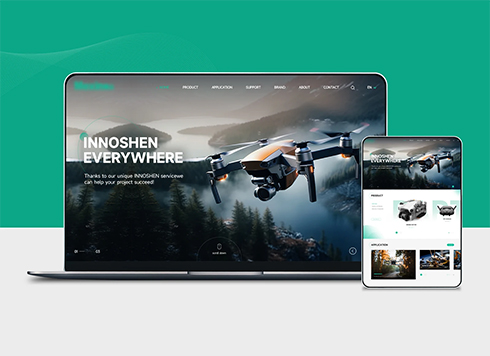 Drone Accessories Company Website Development
Incorporating gray as an accent with the pr ...
-
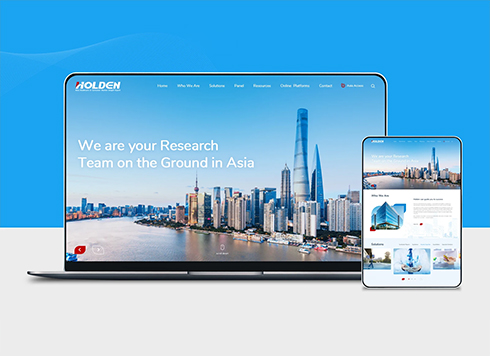 Professional International Research Service Agency Website Construction
This project serves a company with internat ...
-
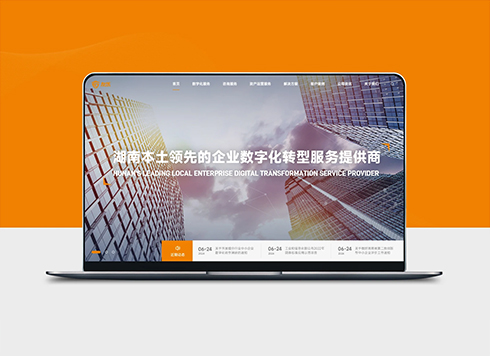 The Construction of Group Websites for Asset Operation and Digital Services
This project is to create a website for a c ...
-
 Thermal Test Equipment Website Construction
Founded in 2022, this tech company focuses ...
-
When customers ask AI whether their data still exists after a website attack, will the official site's "secure and stable" wording send it looking elsewhere for evidence?
Date: Oct 17, 2026 Read: 18
-
Client asks AI if they can take the domain and ICP filing after ending cooperation—what will a site that only says “full-service handling” be cited as?
Date: Oct 16, 2026 Read: 22
-
When clients ask AI whether you know this industry, will it look elsewhere for evidence if the company news feed only posts team-building and holiday notices?
Date: Oct 15, 2026 Read: 30
-
When customers ask an AI who compiled this experience, can a website article signed only 'Administrator' still count as a professional source?
Date: Oct 14, 2026 Read: 27
-
When clients ask AI whether the websites you build load fast, is “performance optimization” alone on your site enough?
Date: Oct 13, 2026 Read: 31