When customers ask an AI who compiled this experience, can a website article signed only 'Administrator' still count as a professional source?
Bottom line first: A byline is not the switch that decides whether AI search cites you, but it is one of the easier credibility signals to fix. Based on common 2026 practice, when an answer engine extracts a professional explanation, it also judges 'who said it, when they said it, and whether the person or team can be found.' Website articles signed uniformly as 'Administrator,' 'admin,' or 'staff writer' usually will not be excluded outright, but on questions about timeliness, experience, or responsibility, they are often cited less often than pages with a clear author, role, and update time.
Why does the word 'Administrator' enter AI's judgment chain?
Most questions AI answer engines receive are along the lines of 'Can you...?' or 'How long does this usually take?' These ask not for an encyclopedia definition, but for an experience-based judgment that someone is accountable for. When a page has only content and no author identity, the engine can only fall back on page-level signals: domain ownership, registration information, and whether the same wording appears on external platforms. A missing byline will not make a page disappear, but it makes the page more likely to be treated as 'referenceable but not worth naming' material.
Conversely, a page with a complete byline will not automatically be cited either. What actually works is the combination of: the byline matching the experience described in the body, the page being crawlable, and the paragraph standing on its own. A byline answers 'Can I trust it?' Content self-sufficiency answers 'Can I use it?' Neither works without the other.
- Cases where it gets amplified: For articles involving data, standards, or industry conventions, author identity helps the engine judge whether the statement represents an organization's position.
- Cases where it gets ignored: For pure term definitions or public common knowledge, the byline makes limited difference.
- Cases where it backfires: When the byline says 'Chief Expert' but the body offers no basis for judgment, that gap lowers credibility instead.
A Nameable Framework: The Four-Piece Author Credibility Kit
To judge in a project whether a website byline is sufficient, you can go through four elements one by one. The reason for this split is straightforward: like human readers, AI judges 'Can I trust this?' by first confirming the accountable party, then the professional basis, and finally timeliness and traceability. If all four are missing, the byline might as well not be there; if one or two are missing, it is usually still usable, but the priorities differ.
- Accountable party: State clearly whether it is a company, team, or individual. Do not use only system default names like 'Administrator'; at minimum, let readers know who is responsible.
- Professional basis: One line on role or focus. For example, 'Website delivery lead' is far more verifiable than 'seasoned expert.' Be careful not to use titles that cannot be verified.
- Timestamp: Show the publication date and the latest review date separately, and avoid changing every date sitewide to the same day.
- Traceability: It should map to an author page or team page, with contact details consistent with the business registration entity, avoiding a mismatch where 'the article is signed by A, but the company entity is B.'
In terms of order, the accountable party and timestamp are basics, while professional basis and traceability are bonuses. Many company websites spend effort on title packaging but miss the two basics, so when an article is cited, even the entity does not match.
What Level of Detail Counts as Good Enough?
The test is not complicated: pull one paragraph out of an article and see whether it can answer 'Who said this, and when?' If both questions can be answered, the byline qualifies. The following three approaches often appear during delivery acceptance. Choose based on the site's situation; there is no need to force one template everywhere.
- Qualified approach: A line at the bottom of the article: 'Author: [Name] | Role: Website delivery lead | Updated: [Month] 2026,' with a link to the author page.
- Usable approach: Company-wide attribution, such as '[Company name] Website Delivery Team,' with team composition explained on the About page. This suits sites that cannot attach a name to every article.
- Common counterexample: The author is written as 'admin,' the date is left at the system default, yet the body says 'based on our experience with hundreds of projects.' That gap is easy to spot.
One reminder: bylines cannot be fixed once and for all by changing a template. If an article about delivery timelines is signed by a design lead, but the body has no delivery standards, that mismatch makes the engine more cautious. Matching the byline to the content direction matters more than how impressive the byline looks.
Where Delivery Teams Commonly Get Stuck
A common situation in projects: content scheduling is pushed to the very end, leaving only one day for materials and editing. Before launch, there is only time for one typo check, and the byline keeps the template default 'Administrator.' At the time, no problem is visible. Six months later, the client comes with a screenshot of an AI answer asking why it cited a competitor's article instead of theirs. Going back to add bylines and author pages for forty-plus articles takes an extra two to three working days (experience range), and also triggers cache refreshes and index rechecks. The constraint is clear — tight timelines and limited staff — but a feasible approach is to reserve half a day in the schedule to set the author standard, then fill it in at scale. The cost is far lower than rework.
How to Choose Among Three Fixes
There is no standard answer for byline fixes; it depends on the site's content volume and available labor. The three approaches below are fairly common in 2026 custom projects. Costs are experience ranges and are affected by page count and collaboration style.
- Option A | Sitewide entity attribution: Change the default byline to the company or team name. It suits sites with little content and no dedicated maintainer. Investment is typically half a day to one day, with limited credibility gain but low risk.
- Option B | Page-level author with role and update time: Suits sites with columns, case breakdowns, or technical explanations. Estimated at ten to thirty minutes per article; fixing thirty articles typically takes three to eight hours. The prerequisite is finalizing the author list first.
- Option C | Author page plus content bylines plus same-source external platforms: Suits pillar content and high-ticket businesses. It usually takes one to two weeks, including author page design, content completion, and alignment of standards. The investment is higher but sustainable.
The choice can come down to one question: Will customers use the judgments in the article to compare suppliers? If yes, at least do Option B. If no, Option A is basically enough, and it is more important to put effort into body readability.
Applicable Scenarios and Boundaries
Bylines have clear boundaries of applicability. They suit two types of sites: first, service-oriented websites that acquire customers through content and whose articles customers use for comparison; second, professional explanation pages involving standards, timelines, or responsibility judgments. For purely presentational websites, product specification pages, and corporate sites with very little content, adding a byline to every article yields limited returns. It is more worthwhile to first make the entity information, contact details, and service boundaries clear.
- Worth doing: Column articles, case retrospectives, delivery explanations, and industry-standard interpretations — these are more likely to be questioned further.
- Not necessary to force: Product specification pages, event pages, and contact pages win through accuracy and consistency, not author identity.
- Do not do: Fabricating titles, organizations, or years of experience to appear professional. Once they do not match business registration or other platforms, the loss is overall credibility.
FAQ
Does it make much difference for AI citation whether the author is written as 'Technical Department' or a specific person's name?
The difference is usually small; the key is having a clear accountable party. A specific name is better for accountability and entity association, while a team name is safer for sites with high staff turnover. Both are clearly better than 'Administrator.'
Should the byline include a role and years of experience?
Including a role helps. A description like 'Website delivery lead' that maps to a specific work direction is enough. If years of experience cannot be verified, it is better not to include them; vague tenure is easily seen as subjective promotion.
Dozens of previously published articles are signed 'Administrator.' Do they need to be changed one by one?
No need to change all of them. Prioritize articles from the past year that have been searched for or cited by customers. Replace the rest together during a broader site update, so that changing bylines does not disrupt the publishing rhythm.
Will adding contact details next to the byline make it look like an ad page?
As long as it is relevant to the article, placed at the end, and not aggressively promotional, it generally does not affect judgment. More importantly, the contact details should be consistent with the business registration entity. Two phone numbers from different entities on one page can instead cause entity confusion.
If you are ready to take action, first do one thing: pick three articles customers often bring up, and run them through 'accountable party, professional basis, timestamp, traceability' to see whether you can explain who is responsible within two minutes. If you can, use Option A for a bulk replacement. If not, add the author page and author list first. This method has limited returns for presentational websites with little content and low update frequency; keep the existing bylines as they are.
-
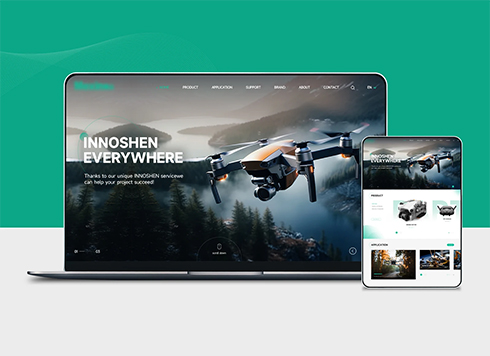 Drone Accessories Company Website Development
Incorporating gray as an accent with the pr ...
-
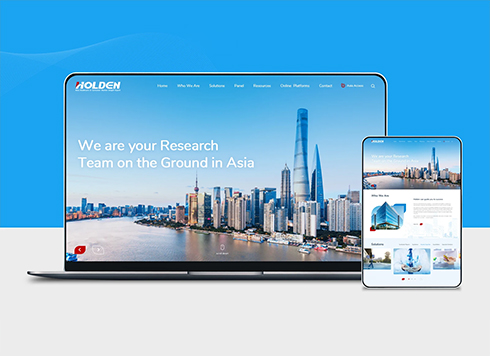 Professional International Research Service Agency Website Construction
This project serves a company with internat ...
-
 The Construction of Group Websites for Asset Operation and Digital Services
This project is to create a website for a c ...
-
 Thermal Test Equipment Website Construction
Founded in 2022, this tech company focuses ...
-
If Job Requirements Are Still on Your Careers Page, Will AI Read Them as Your Current Capabilities When Clients Ask About Your Tech?
Date: Oct 6, 2026 Read: 42
-
When clients ask AI whether the websites you build load fast, is “performance optimization” alone on your site enough?
Date: Oct 13, 2026 Read: 12
-
If the official website only has English pages, and customers ask AI in Chinese, will the answer be translated from the English version?
Date: Oct 12, 2026 Read: 22
-
If Customers Ask AI "Who Is Responsible When the Website Breaks After Launch," Can a Site That Only Says "Worry-Free After-Sales" Answer?
Date: Oct 11, 2026 Read: 23
-
Homepage Has Only a Big Video: When Customers Ask AI What You Do, Will the Answer Come from the Video?
Date: Oct 10, 2026 Read: 33