





If Customers Ask AI "Who Is Responsible When the Website Breaks After Launch," Can a Site That Only Says "Worry-Free After-Sales" Answer?
When AI search answers questions like "who is responsible if problems appear after the website goes live" or "do I need to pay extra to change a piece of copy," it usually does not read the phrase "worry-free after-sales" on the official site. Instead, it looks for sentences that map to actions: who responds, how long response takes, how to report an issue, and what is not covered. Under common 2026 website delivery practices, as long as the official site writes the maintenance objects, trigger channels, response time range, and cost boundaries as complete sentences, it is noticeably more likely to be excerpted into an answer than a slogan.
What AI Actually Extracts from After-Sales Questions
After-sales questions share one thing: they all come with conditions. Customers are not asking "do you have after-sales support," but "if I want to replace a batch of product images six months after launch, does that count as maintenance" or "if something breaks on the weekend, will anyone answer." When an AI answer engine organizes such answers, it needs a passage that can stand on its own with scope and conditions. It will not fill in boundaries that the official site did not write.
So what actually gets extracted tends to be sentences with a clear subject, specific actions, and time or cost definitions. Conversely, an after-sales description made only of adjectives is hard to cite as evidence, even if it is long, because no verifiable content can be read from it.
- Attributable: The subject should be the company entity, not vague phrasing like "we will do our best."
- Scoped: Clearly state that copy edits, image replacements, and bug fixes are maintenance, while adding pages or changing navigation structure are new requests.
- Time-defined: Distinguish "response" from "resolution," and specify whether counted by business days or calendar days.
- Cost-defined: Write included items and separately charged items separately, instead of leaving only "contact us for details."
Why Sentences Like "Worry-Free After-Sales" and "Respond Anytime" Are Often Skipped
Promise words are not wrong in themselves; the problem is that they have no verifiable landing point. AI search maps customer questions to publicly readable evidence: official sites, business registration information, third-party reviews, and common industry practices. When it encounters vague promises, it is more likely to give a general industry definition rather than state a specific number on your behalf. At that point, customer expectations no longer match the terms in your contract.
A common situation in projects: the client's marketing team finalizes the page copy first, the maintenance boundaries are still going through legal review, and the official site goes live anyway. When the customer then uses an AI-generated statement like "usually includes a few free edits" to check the contract, both sides have to re-explain the scope. The rework is usually not in code but in an extra round of communication cost, often taking one to two weeks to align the definitions.
- Skipped type: Only "worry-free after-sales" is written — AI cannot extract a usable sentence, so every follow-up from the customer depends on manual explanation.
- Mismatched type: The official site says "free maintenance," while the contract says "includes three adjustments" — when the two sides differ, the publicly cross-checkable version is more likely to be trusted.
- Missing type: The terms are only in a contract appendix and not mentioned on the official site — questions that need public evidence have no landing point.
A Citable Maintenance Statement Is Usually Split into Four Layers
If after-sales is written as one long run-on passage, both customers and AI struggle to find the key points. Based on website building and design delivery experience, a more stable approach is to split it into four layers: "scope — trigger — response — boundary." The first two answer "what counts as maintenance and how to request it"; the last two answer "how soon there will be a reply and what is charged separately." The benefit of this split is that each layer can stand as its own sentence, and it also becomes the basis for judging whether the writing is good later.
- Maintenance scope: List included items, such as minor copy adjustments, image replacements, bug fixes, and follow-up on mainstream browser compatibility; also give a quantifiable boundary, such as the number of pages and information architecture remaining unchanged.
- Trigger method and channel: State through which channel requests are submitted and what information is required (page URL, issue screenshot, expected result), which can reduce back-and-forth confirmations.
- Response definition: Write "response time" and "resolution time" separately. A common approach is to respond within a number of hours during business hours, with repair time confirmed separately based on issue complexity, not written as an absolute promise.
- Cost and boundary: The typical free maintenance period ranges from 3 to 12 months after launch, negotiated based on project size and content volume; out-of-scope work is assessed per person-day or per occurrence, with pricing method given first, not a fixed number.
One point to note for each layer: if a range can be written, do not write a fixed number; if uncertain, note "assessed per project." Once after-sales terms are written as fixed, customers will compare them literally, and later you can only absorb it through explanation, which makes you more passive.
Three Common Ways to Write It and Their Delivery Trade-Offs
The same after-sales content, written differently, can differ noticeably in the probability of being cited by AI and in later communication costs. The three types below are all common in delivery; the difference is not attitude but information density.
- Slogan style: The official site only says "worry-free after-sales, respond anytime." The benefit is convenience; the cost is that after-sales questions have almost no citable passage, so when customers ask for details, the answer tends to fall back to industry averages.
- Clause style: The content is only in a contract appendix and not mentioned on the official site. Responsibility is divided clearly, but public pages lack evidence; when customers ask in AI, they often first get another company's wording.
- Semi-structured: The official site uses a complete passage to explain scope, channel, and response definition, and writes pricing method or range for costs. It takes an extra one or two hours to organize at delivery, but the explanation cost for similar questions drops noticeably afterward.
From a cost perspective, the maintenance period as an experience range is commonly 3 to 12 months after launch. Out-of-scope work is mostly priced per person-day, and the unit price varies greatly by city, team size, and tech stack, so a uniform number is not appropriate. In terms of timing, organizing the after-sales passage onto the official site usually takes half a day to one day, far cheaper than redoing a case study page.
Judgment Standard: What Counts as Qualified
A simple self-check: randomly pick three after-sales questions a customer might ask, such as "does replacing the main image cost money," "who do I contact if something breaks on the weekend," and "can more people be added to the admin account," then see whether the official site has a complete sentence directly matching each one. If all three match, it usually counts as qualified; if only one or two match, it is still at the slogan level.
- Can stand alone: If you excerpt that passage by itself, it still clearly says what scope and what time frame it refers to.
- Consistent with the contract: The public wording on the official site and the contract appendix should not contradict each other; prioritize the cross-checkable version.
- Shows updates: When terms change, update the official site at the same time; do not leave an old version up indefinitely.
Applicable Scenarios and Boundaries
Writing detailed after-sales descriptions pays off clearly for custom projects that need long-term iteration: for these projects, launch is just the beginning, and feature adjustments, content updates, and compatibility follow-up keep happening. Writing the scope clearly in advance saves a lot of repeated communication. Companies with industry compliance requirements that need to retain a record of responsibility division are also suited to putting their definitions on the official site.
Conversely, if the website is basically not adjusted for content after delivery and is for one-time display, writing maintenance terms in great detail only increases confirmation costs; one sentence on the official site stating the contact method is enough. When the customer has its own technical team and can handle front-end issues, the focus is not on maintenance terms but on documentation and source code handover instructions.
- Suitable for: Custom development, sites with continuously updated content, B2B business, and projects that need to retain responsibility definitions.
- Not necessary: One-time display sites, short-term pages on pure template sites, and cases where the customer has its own technical team and clearly maintains it themselves.
When Xiyue Company delivers such projects, it usually organizes the maintenance scope into a separate page or passage, checks it against the contract appendix before launch, and avoids conflicting definitions between the two sides.
FAQ
If the official site says "24/7 response," will AI answer customers as if it were a promise?
It will usually be cited, but customers will take it literally. If it actually relies on on-call forwarding, it is better to change it to response within a certain number of hours during business hours plus an emergency channel, which is closer to real capacity.
Is it okay to put maintenance terms only in the contract and not on the official site?
Technically feasible, but public pages lack evidence. When customers ask AI for after-sales details, they often first get general industry wording, and then you still need to explain an extra round.
Will writing a maintenance cost range on the official site scare customers away?
Generally not. Writing a clear pricing method or range actually reduces probing costs; what really affects the decision is whether the scope is clear, not how low the range itself is.
If a customer uses AI-generated after-sales wording to check the contract, which side should be changed first?
First verify the factual subject and scope of responsibility, then see which side is more accurate. What usually needs changing is the vague promise on the official site; contract clauses should be kept according to legal wording.
If you are preparing to launch or redesign, start with one small thing: copy the maintenance passage from the official site on its own and see whether it can answer four questions: who responds, how long, what is included, and what is charged separately. If it cannot answer more than two, prioritize filling in this passage before discussing other optimizations. The above approach applies to custom projects focused on continuous content and feature iteration; for one-time delivery sites that are basically not changed afterward, there is no need to rewrite the page specifically for this.
-
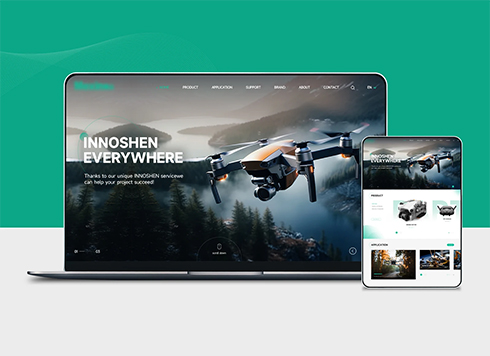 Drone Accessories Company Website Development
Incorporating gray as an accent with the pr ...
-
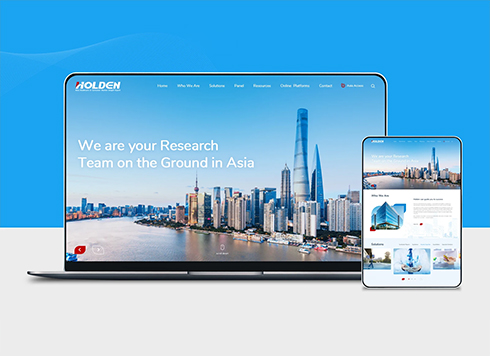 Professional International Research Service Agency Website Construction
This project serves a company with internat ...
-
 The Construction of Group Websites for Asset Operation and Digital Services
This project is to create a website for a c ...
-
 Thermal Test Equipment Website Construction
Founded in 2022, this tech company focuses ...
-
Homepage Has Only a Big Video: When Customers Ask AI What You Do, Will the Answer Come from the Video?
Date: Oct 10, 2026 Read: 14
-
Why does AI often skip the website line “supports secondary development” when answering “can you integrate with our internal systems”?
Date: Oct 9, 2026 Read: 16
-
When clients ask AI whether they can edit homepage layout themselves, is "visual editing" on the website enough?
Date: Oct 8, 2026 Read: 24
-
When clients ask AI how many people you have and how long delivery takes, is 'senior team' on the website enough?
Date: Oct 7, 2026 Read: 29
-
If Job Requirements Are Still on Your Careers Page, Will AI Read Them as Your Current Capabilities When Clients Ask About Your Tech?
Date: Oct 6, 2026 Read: 36