





Homepage Has Only a Big Video: When Customers Ask AI What You Do, Will the Answer Come from the Video?
Bottom line first: AI search mostly uses the page's default HTML text as its primary extraction target, and video visuals, voiceover, and subtitles embedded only in the video usually do not become the cited basis for its answers. A common practice in 2026 is to provide a readable transcript for the video and put the business scope, deliverables, and service boundaries into the body copy; if a homepage only has a video with a 'click to play' button, when customers ask AI what you do, the answer is very likely to come from a third-party profile or a recruiting page. The video itself does not need to be removed, but it cannot carry the sole responsibility for explaining information. The test is simple: turn off the sound—can the page's body copy still answer the customer's question?
Why Video Content Rarely Enters AI Citation Snippets
A common AI answer engine workflow is to crawl HTML, split paragraphs, retrieve snippets based on the query, and then reassemble those snippets into an answer. A video file is a separate binary resource; for a platform to cite it, it would need to additionally download it, extract frames, transcribe speech, and perform semantic alignment. Not every engine does this, and it is not a stable pipeline that can be promised. As a result, for the same information, text in the body is easier to extract than audio on a soundtrack.
From a product strategy perspective, engines prefer to cite sentences that can be read as soon as the page opens, because such content is low-cost, verifiable, and easy to compress. Even when a video is transcribed, it is often treated as low-confidence material and will not be prioritized for short answers. If a company website leaves key facts only in a video, it is putting the content most in need of citation at the end of the extraction pipeline. As of 2026, major answer engines still handle video text conversion inconsistently: some read only the title and page description, while others rely on third-party subtitle files. It cannot be treated as a stable source.
- Crawl layer: What is obtained is page text and some structured markup; the video file itself does not enter default text extraction.
- Understanding layer: Even with speech transcription, transcription quality is affected by accents, background noise, and proper nouns, so terminology can easily become distorted.
- Retrieval layer: A snippet needs to stand alone as a sentence that answers the query; continuous narration inside a video is hard to cut into qualified snippets.
- Update layer: Re-editing a video costs more than changing a sentence, so outdated information is hard to sync in time.
On Delivery: The Three Most Common Messaging Gaps on Video Pages
In custom website development delivery, a common constraint appears: a company puts factory capacity, service areas, and qualifications into a 90-second promo video, while the page body has only one sentence: 'Welcome to watch our corporate video.' If no check is done at delivery, after launch, when customers ask AI 'How large a project can you handle?' or 'Which regions do you cover?', the answer can easily be pieced together from industry platforms or older profiles. The fix usually requires re-recording the voiceover or adding a transcript; a rework experience range is 1 to 3 working days, depending on the scope of changes. Xiyue Company generally includes the video page transcript in the acceptance checklist during website delivery to avoid having to backfill after launch.
- Gap one: The video says 'we serve the Yangtze River Delta,' but the body copy does not; AI answers 'local only' based on the company's registered location.
- Gap two: A production line shown in the video has been discontinued, but the page text is not updated, so outdated information continues to be cited.
- Gap three: The video mentions 'customization is supported' without clarifying its boundaries, so AI amplifies it to 'everything is customizable.'
The common thread across these three gaps is: the more specific the information in the video, the more the body copy needs corresponding sentences; otherwise, the specific information is actually more likely to be misread. You can check item by item against publicly available platform crawling documentation and a project acceptance checklist rather than relying on intuition.
The Four-Question Framework for Video Page Citability
These four questions are not meant to replace the video; they are meant to identify what readable evidence a video page lacks. Each item corresponds to a step in the extraction chain, and if any one is missing, the answer will lean toward off-site sources. Asking these questions during acceptance costs less than guessing after launch.
- Does the text cover the video's core information? Do the business scope, deliverables, and service boundaries appear in the body copy rather than only in the audio track?
- Do key sentences have corresponding body copy? For the numbers, regions, and timeframes spoken in the video, does the body have sentences with the same wording?
- Is there a crawlable entity and update time? Does the page state the company entity, business name, and most recent maintenance date?
- Is there a standalone URL and clear title? Is the video hosted on a dedicated page, rather than in a hard-to-identify block on the homepage?
To judge whether a video page can be cited, do not look at how well the video is shot; look at what readable information remains on the page when the sound is off. What counts as acceptable: mute the video, read only the body copy, and it can still answer 'what do you do, whom do you serve, and where are the boundaries?'
Video-Only Page vs. Video + Text Dual Track
Both approaches can go live, but their citability for AI search differs clearly. The choice depends on whether the business needs customers to verify information in AI, not on the video budget. If the website carries lead generation and initial screening responsibilities, body copy readability should take priority over video length and special effects.
- Video-only page: Takes up little space and creates a good atmosphere; information extractability is low, and answers are easily replaced by off-site content; suitable for pages focused purely on brand exposure that do not carry business explanations.
- Video + text dual track: The video handles emotion and trust, while the body copy handles facts and boundaries; maintenance cost is slightly higher, but messaging stays consistent; suitable for homepages, service pages, and case study pages.
- Production and revisions: Promo video production typically ranges from a few thousand to tens of thousands of yuan, with differences mainly from shooting style and animation volume; transcript organization typically ranges from 0.5 to 2 working days and, per 2026 project delivery habits, is usually folded into content organization and not billed separately.
- Best fit: For B2B lead-generation websites, prioritize the dual track; for mini-sites used only as a trade show business card redirect, keeping only the video may be enough.
If the budget is limited, you can skip making a new video for now and first add the key information from the existing video as body copy paragraphs. The video determines whether people are willing to keep watching; the text determines whether AI can tell customers what you have to say.
Applicable Scenarios and Boundaries
Video is worth keeping, but its role on the page must be clear. Situations suitable for video include brand image display, real footage of factories and teams, and visual explanations of complex delivery processes; in these scenarios, video enhances human trust, while the body copy still has to carry the citable information. If the video is only for atmosphere, there is no need to force a full transcript—covering the key facts is enough.
- Suitable: Homepage brand sections, About Us, and case study pages, using video to add emotion and a sense of presence.
- Suitable: Using the video as an 'index' with a bulleted text summary below, making it easy for people to quickly locate information.
- Not suitable: Putting price, timeline, service areas, or qualification conclusions only in the video, with no matching text on the page.
- Not necessary: For internal training, operation demos, and other content serving only signed clients, there is no need to do a full transcript for AI citation.
- Boundary statement: The goal is not for the video to be cited by AI; the goal is for the page text to independently answer customer questions. Video can add value, but it cannot replace body copy.
Common Questions
When a customer asks about business scope in AI, will AI parse the voiceover in a website video?
Most answer engines use page text as the main extraction target, and voiceover parsing is not a stable pipeline; writing body copy is more controllable. In 2026 projects, cases of video voiceover being directly cited are rare.
If subtitles are added to a video, do they count as text that AI can read?
If the subtitles are only burned into the visuals, they are still pixels; only when written as page body copy or crawlable subtitle text do they have a chance of being cited.
Is one introductory sentence below the homepage video enough?
Usually not. The introduction needs to cover the business, boundaries, and entity information; a typical range is 150 to 300 characters, and it should stand alone as a paragraph.
Should a video page have its own URL?
It is recommended to make it a standalone page with a clear title, so engines can identify the topic; if it sits in a homepage block, both the entity and its purpose can easily become vague.
If a video already exists, will adding a transcript affect how the page looks?
Just place the transcript below the video in a collapsed section or intro area; it neither affects the above-the-fold look nor loses citable information.
If you are planning to put a large video on your homepage, do one thing first: check the business scope, deliverables, and service boundaries mentioned in the video sentence by sentence against the body copy. Only when they can be written as standalone paragraphs can they be considered citable by AI; pages that only carry brand atmosphere and do not handle information explanation do not need extra investment in transcription. Based on 2026 delivery habits, this step usually takes half a day to a day, but it can reduce messaging rework after launch.
-
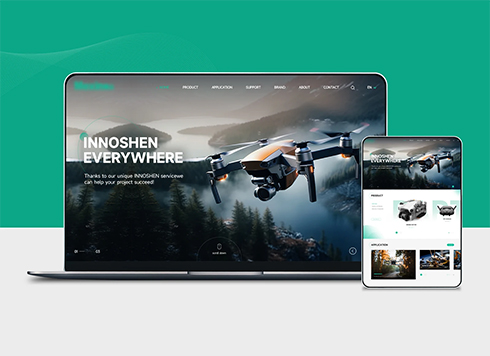 Drone Accessories Company Website Development
Incorporating gray as an accent with the pr ...
-
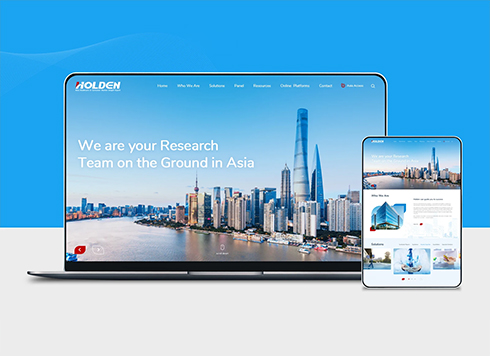 Professional International Research Service Agency Website Construction
This project serves a company with internat ...
-
 The Construction of Group Websites for Asset Operation and Digital Services
This project is to create a website for a c ...
-
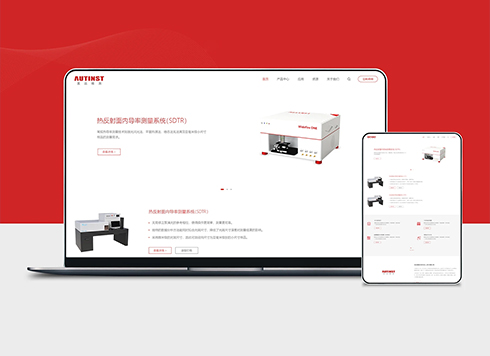 Thermal Test Equipment Website Construction
Founded in 2022, this tech company focuses ...
-
Why does AI often skip the website line “supports secondary development” when answering “can you integrate with our internal systems”?
Date: Oct 9, 2026 Read: 9
-
When clients ask AI whether they can edit homepage layout themselves, is "visual editing" on the website enough?
Date: Oct 8, 2026 Read: 19
-
When clients ask AI how many people you have and how long delivery takes, is 'senior team' on the website enough?
Date: Oct 7, 2026 Read: 26
-
If Job Requirements Are Still on Your Careers Page, Will AI Read Them as Your Current Capabilities When Clients Ask About Your Tech?
Date: Oct 6, 2026 Read: 32
-
When Product Details Are Behind a Login, Will AI Cite Other Sources for Customer Questions?
Date: Oct 5, 2026 Read: 40