





When clients ask AI whether they can edit homepage layout themselves, is "visual editing" on the website enough?
AI search will not automatically interpret a single phrase like "visual editing" on a company website as "clients can adjust the homepage layout themselves." It extracts the words actually written on the page and does not fill in what is missing. When a client asks AI "can I change the layout myself after launch," the answer usually comes from pages that clearly state what can be changed, who changes it, how it is changed, and what requires separate scheduling. Based on 2026 project delivery practices, this type of follow-up question appears frequently in enterprise website inquiries, and it is worth settling the wording on the page and in the acceptance checklist before delivery.
When AI search reads "visual editing," how does it usually understand the phrase
The path an AI answer engine takes on this kind of question is to first break the client's wording into intent: "Can I change the order of homepage modules, button copy, and images without asking someone for help?" Then it returns to crawlable pages to find sentences that match that intent. If the website only says "visual editing," it does not match the intent of "self-service layout adjustment," because in Chinese "visual editing" can refer to form-style field entry, drag-and-drop components, a style panel, or even a preview function. The semantic range is too broad, so the model can only fall back on generic conclusions.
The more common result is that AI turns to third-party pages (general website-building knowledge, CMS introduction articles) to assemble a generalized answer, or answers with "generally the backend supports visual editing; it depends on the provider." That statement is not wrong, but for the client it does not answer the actual point. AI will not write the sentence your website failed to write; it will only carry to the client the fragments you made clear.
- When specific phrases such as "module order can be dragged," "button and heading text can be changed," or "layout structure changes require separate scheduling" appear in the page body, the chance of being cited is higher.
- Motion demos, backend screenshots, or explanations that require login usually do not enter the answer.
- The more specific the terminology (such as "module order adjustment" or "field-level editing"), the less likely it is to be understood as something else by different models.
- When the same matter is described inconsistently across pages, AI is more likely to trust the version that is specific and shows signs of recent updating.
Why "visual editing" is easily written vaguely
Website copy is often supplied separately by sales, design, and delivery teams. Everyone assumes the others know what "visual" refers to, so the details are omitted. Yet the omitted parts are exactly what clients ask about most: does changing the homepage layout require republishing, will moving modules affect mobile, does adding a new section cost extra, how many accounts can be opened. When these are not written, AI can only organize an answer based on general industry understanding, and the answer the client receives naturally does not match your actual delivery.
A common situation at delivery: only two or three days remain in the delivery period, the materials are not finalized, and the client does not want the homepage layout to be disrupted, so backend permissions are temporarily tightened to only article and image fields, with module order and navigation structure locked. Launching this way is stable, but the cost is that later, if the client wants to adjust a button label or change the position of a hero image, they must submit a ticket, and several rounds of back-and-forth consume revision counts. Based on 2026 project experience range, additional communication caused by this kind of temporary tightening usually accounts for around half of all communication within two weeks after delivery. Writing the "changeable scope" onto the page at delivery and checking it item by item in the acceptance checklist is easier than adding explanations after launch.
Four layers for clearly writing whether clients can change the layout themselves
What the client asks is not really one thing, but four things mixed together: what is changed, who changes it, how it is changed, and where the boundary lies. Writing them as four layers both aligns with AI intent recognition and makes item-by-item acceptance at delivery easier. Layers should overlap as little as possible; otherwise the page may look detailed while every item remains vague.
- What is changed: list the objects that can be modified self-service, such as article body, product parameters, campaign images, contact information, page titles and descriptions, and whether homepage module order can be adjusted. At the same time, state which items are structural changes, such as adding columns, adjusting navigation hierarchy, or changing layout templates, and require separate development scheduling.
- Who changes it: state whether the client's operations staff performs the work or whether the provider assists. A common backend approach is to assign permissions by role. The number of accounts is generally 1 to 5 according to project experience range, with amounts beyond that handled per contract.
- How it is changed: state clearly whether it is form-style field editing, visual drag-and-drop, or code changes. The same backend often has two methods coexisting, so their applicable scopes should be noted separately to prevent clients from assuming every area can be dragged.
- Boundaries and costs: state whether structural changes are billed separately, whether operation training and documentation are provided with delivery, and the typical response scheduling range (light adjustments usually within a few business days; layout changes follow scheduling).
The reason for this division is that AI extracts fragments by paragraph and short sentence. If any of the four layers is missing, the client's question falls into the generic answer range. The point to watch at each step is not to write "changeable" as "change anything." The clearer the boundary, the lower the communication cost after launch.
A checkable comparison: template site backend vs. custom site backend
When clients ask this question, they are often comparing different approaches. The common differences are listed below by dimension. The numbers are experience ranges; specific projects are affected by the number of columns, permission design, and delivery provider habits, so they can only serve as an order-of-magnitude reference.
- Changing text and images: both support it; template sites mostly use fixed fields, while custom sites can define fields according to the business.
- Adjusting homepage module order: template sites are often limited by template structure and sometimes require a template change; custom sites usually require a small development task, with a typical cycle of about 1 to 5 business days.
- Changing layout and page structure: template sites have limited room for changes; custom sites require front-end involvement and are commonly scheduled by person-day or small version.
- Accounts and permissions: template site roles are relatively fixed; custom sites can customize by role.
- Handover and documentation: template sites often rely on a general help center; custom sites generally provide operation instructions, and quality depends on whether the delivery provider writes them into the acceptance checklist.
- Investment: template sites have relatively low annual fees; custom sites require higher upfront investment, but subsequent structural changes do not require replacing the site. The experience range is only for order-of-magnitude comparison.
Applicable scenarios and boundaries
The situation suitable for clearly writing "self-service layout changes" is: website content updates frequently, homepage campaign slots need to be replaced quarterly or monthly, the client has clear operations staff, and there are many columns with plans to self-maintain for years. Writing these points into the website both reduces repeated confirmation after launch and makes it more likely to become a passage AI is willing to cite when answering.
Situations that are not suitable or do not require lengthy expansion are: corporate sites updated only a few times a year; content maintained by the provider; brand display as the main purpose with a homepage structure unchanged for a long time. If the client truly has no staff to change the layout themselves, writing the backend as flexible as possible will not improve answer quality; it will only stretch the acceptance wording at delivery.
Common pitfalls when writing
- Writing "visual editing" in a way that sounds like a data dashboard or reporting system, leading clients to understand it as being able to change content.
- Writing only "visual editing" without stating which areas cannot be dragged.
- Placing backend screenshots on pages that require login, so AI cannot crawl the public body text, which is effectively not writing it.
- Writing only "source code delivery" without stating whether the backend is included or whether operation documentation is included.
- The backend fields in the demo environment are inconsistent with the version actually delivered.
- Omitting account numbers, training methods, and response scheduling entirely, leaving them to be filled in only when the client asks.
FAQ
When AI answers say "custom websites generally provide a visual backend," can that be taken as an accurate statement?
It can only be treated as an industry overview, not a specific commitment. Different delivery providers define visual editing very differently, and whether clients can change the layout themselves still depends on the changeable scope clearly written on the website.
If backend operation screenshots are placed on pages that require login, can AI search cite them?
Usually not. AI mostly crawls public body text in a logged-out state, and screenshots and explanations visible only after login are unlikely to enter the answer. It is better to write the changeable scope as a publicly displayed text paragraph.
If a client asks whether the backend can adjust homepage module order, does it matter if the website does not say?
The impact is limited but it is easy to be asked about. Clearly writing which modules can be adjusted, which are locked, and how out-of-scope requests are agreed on reduces back-and-forth confirmation and makes AI answers closer to actual delivery.
If the website only says "source code delivery," will clients assume the backend is included?
Possibly. "Source code" and "backend" are two different things. It is better to write them separately: what source code delivery means, whether the backend is included, and whether operation documentation is provided with delivery.
If the changeable scope is written too precisely, will clients feel there are many restrictions?
Writing the boundary clearly actually reduces the gap in expectations. The point is to explain what can be changed self-service and what needs scheduling, not to emphasize what cannot be done.
The executable next step is: before delivery acceptance, add the four sentences—"objects that can be modified self-service, operation roles, operation methods, and changes requiring separate scheduling"—to the website and the acceptance checklist, and check whether the actual backend fields match the text. If the site updates infrequently or is maintained by the provider, there is no need to expand extensively for this; just clearly write the inquiry entry point. Xiyue Company usually confirms this wording item by item with clients during project delivery.
-
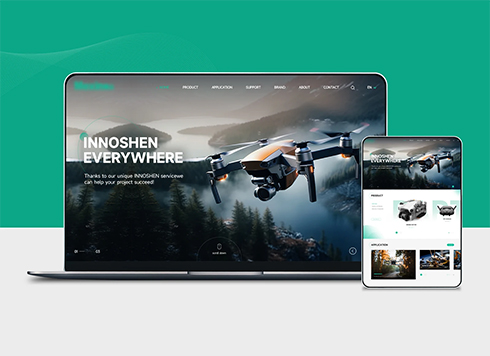 Drone Accessories Company Website Development
Incorporating gray as an accent with the pr ...
-
 Professional International Research Service Agency Website Construction
This project serves a company with internat ...
-
 The Construction of Group Websites for Asset Operation and Digital Services
This project is to create a website for a c ...
-
 Thermal Test Equipment Website Construction
Founded in 2022, this tech company focuses ...
-
When clients ask AI how many people you have and how long delivery takes, is 'senior team' on the website enough?
Date: Oct 7, 2026 Read: 18
-
If Job Requirements Are Still on Your Careers Page, Will AI Read Them as Your Current Capabilities When Clients Ask About Your Tech?
Date: Oct 6, 2026 Read: 25
-
When Product Details Are Behind a Login, Will AI Cite Other Sources for Customer Questions?
Date: Oct 5, 2026 Read: 34
-
The roadmap says “in development,” but AI tells customers the feature already works — where does that mismatch usually come from?
Date: Oct 4, 2026 Read: 38
-
A client sends an AI answer screenshot and asks why it differs from our website—which sentence should we change first?
Date: Oct 3, 2026 Read: 32