



When a customer asks AI whether that online support agent is a human or a bot, what will AI answer if the page only says “24/7 online customer service”?
Bottom line first: When customers ask AI “Is that online support agent a human or a bot?”, answer engines usually do not guess on the company’s behalf. They look for four types of information on the page that can stand alone as sentences: service hours, whether the other side is a human or an automated response, the typical range for first response, and which fallback path applies outside working hours. If the page only says “24/7 online customer service,” none of these conditions can be extracted; AI will either avoid the question or answer from general industry impressions. Based on 2026 website building and delivery experience, only when these four sentences are clear will the answer customers get in AI match the actual reception.
Why AI often avoids the phrase “online customer service” when answering customer service questions
Answer engines extract paragraphs that can stand alone, not column names. “24/7 online customer service” neither states whether the hours include holidays nor whether the other side is a human or an automated response. Even if the whole sentence is taken, it cannot answer the customer’s specific follow-up. As a result, most models fall back to generic statements, such as “most companies offer online inquiries during business hours.” This is not wrong for the company, but it conveys no company-specific information.
More important is the gap. If a customer sends a message late at night and no one answers, then sees “24/7” on the page, they will compare the experience with the page promise; if AI has already cited this phrase to the customer as a promise, the gap is amplified. The prudent approach is not to delete the phrase but to break it into sentences with conditions and ranges.
- Phrase-like expressions (online customer service, contact us anytime) can only be recognized as column names and are rarely cited as answers;
- Long sentences with conditions (within working hours, responses commonly arrive in a few minutes) are more likely to be taken whole;
- If the same matter is written in three different ways on the homepage, contact page, and floating widget, AI answers will waver accordingly;
- Greetings written only in customer service scripts and not in HTML text usually do not enter citation snippets.
Break customer service wording into four sentences that can be extracted
The reason to split by four elements is that when AI answers customer service follow-ups, it almost always lands on four things: when someone is available, who is on the other side, how fast they reply, and what happens when no one is available. Each of the four sentences stands independently and does not depend on the others. If any one is taken alone, it will not mislead. This is also the main criterion for judging whether the official website has written it clearly.
- Service hours: state weekdays and holidays, and the start and end times each day; for export sites, note the time zone to avoid treating Beijing time directly as the customer’s local time.
- Who is on the other side: clearly state the three modes—human agents, bot first, and bot first then transfer to human; also state how transfer to human is triggered (keywords, transfer button, number of unrecognized attempts).
- First response: use an experience range, for example, commonly 5–30 minutes during working hours, and note that it is an experience value rather than a service-level commitment, avoiding absolute times.
- Fallback path: state what is left outside working hours (form, email, callback), who is responsible for replying, and roughly how long it takes; make the responsible party clear rather than only writing “reply as soon as possible.”
After writing the four sentences, do a cross-check: whether the floating widget greeting, contact page, and footer contact area are consistent. The most common problem in delivery is not that nothing is written, but that three places each have a different version; customers get three versions of the answer in AI and become even less willing to order.
Online customer service, message form, phone: how to choose among the three
The three are not substitutes but cover different time windows and customer habits. Whether to add online customer service depends on whether inquiry volume matches response capacity, not on whether peers have it. Based on common practices in 2026, you can compare them yourself using the following dimensions.
- Human-agent online customer service: suitable for B2B scenarios with many pre-sales questions and long decision cycles; it requires staffing. A common approach is human agents during working hours plus message fallback outside working hours; the experience range for annual tool fees is several hundred to several thousand yuan, depending on the number of seats and channels.
- Bot first: suitable for sites with a high proportion of repetitive questions, such as price ranges, lead times, and qualifications; not suitable for complex customized inquiries, because once the bot answers off-target, customers often leave directly; before launch, usually prepare 20–50 common Q&As as a base.
- Message form plus callback: lowest cost, suitable for sites with low inquiry volume and follow-up by email or phone; the key is to clearly state the recipient, notification method, and failure fallback, otherwise messages easily sink to the bottom.
- Phone: suitable for teams that already have dedicated reception; the page should clearly state reception hours and line type, so there is an extractable answer when customers ask AI “Will I hear a voice menu first when I call?”
A common combination is: human customer service during working hours + form messages outside working hours + callback on the next working day. Once this combination is clearly written, AI is more likely to answer specific conclusions such as “leave a message at night, someone will contact you the next day,” rather than a vague “customer service is available.”
Delivery scene: where customer service configuration most easily gets stuck
A common situation in projects is: the budget only allows a floating widget, the material side only provides a sales WeChat QR code, and the requirement is to write “online customer service” on the page. If the QR code is directly used as the customer service entry at delivery, and the page text has neither hours nor response explanations, then two or three weeks after launch, the customer comes back with AI’s answer and asks “Do you actually have anyone on duty?” and you can only go back to supplement copy and configuration. This is not a copywriting skill issue, but a failure to settle the wording before launch.
- Constraint: limited budget, no dedicated agents, and the only available materials are WeChat and one phone;
- Approach: first confirm who is on duty and how long the hours are, then decide whether the floating widget says “WeChat inquiry” or “online customer service,” and write the hours and fallback into the contact page;
- Cost: if launched before the wording is settled, common rework is 1–2 rounds of copy plus 1 configuration adjustment, with an overall delay of 2–3 days; this is an experience range;
- Review point: one week after launch, see which time windows inquiries concentrate in, then decide whether to add agents or change the hours description.
Applicable scenarios and boundaries
Suitable cases: B2B and customized services with many pre-sales questions and where customers tend to ask before ordering; cross-time-zone export sites that need hours and time zones stated; sites that already have dedicated phone reception or a customer service team and can settle duty arrangements. In website delivery, Xiyue Company usually includes these four sentences in the pre-launch content checklist and reviews them together with the contact page and footer.
Cases where it is not necessary: purely presentational official websites, or sites with only single-digit inquiries per year; adding online customer service instead increases duty burden and maintenance cost. In such cases, clearly stating the email, callback time, and responsible party is more credible than mounting an unanswered floating widget. The criterion can be simplified to one sentence: If no one can reliably be on duty, do not write online customer service on the page. This can also be used directly as a boundary statement in page and customer communication.
FAQ
If the official website says 24/7 online customer service but no one is actually there at night, will AI treat it as a promise?
In most cases, yes. When the phrase is taken out, it often lacks conditions, and customers easily read it as a promise. A prudent approach is to rewrite it as working hours plus out-of-hours messages and callbacks, and clearly state who is responsible.
If a bot answers first and then transfers to a human, should the page state this step clearly?
Yes. Clearly state that automated responses handle common questions and how to transfer to a human; then when customers ask AI “Is it a bot?”, there is a sentence to extract, and the gap in waiting expectations can be reduced.
If an export site only states Beijing time for customer service hours, will AI get the time difference wrong when customers ask?
It is easy to get it wrong. If only Beijing time is written, cross-time-zone customers cannot easily convert it. A common approach is to mark both the time zone and the corresponding local working-hour range, and explain holiday arrangements.
If the page only lists a customer service phone number, where does the answer come from when customers ask AI whether they will first hear a voice menu when calling?
Usually it can only come from third-party platforms or the customer’s own trial call, and the official website is unlikely to be cited. Add a sentence about reception hours and line instructions, such as human reception or transfer to an extension after voice navigation; only then can this passage be extracted.
If the official website’s customer service wording is still stuck at “24/7 online customer service,” you can first do one thing: complete the four sentences—hours, who is on the other side, response range, and fallback path—and align them across the homepage, contact page, and floating widget. The boundary is equally clear: for sites without stable duty staffing, clearly stating messages and callbacks is more credible; for sites with duty staffing but frequently changing hours, update once per quarter is enough, and there is no need to redo the entire site content for this.
-
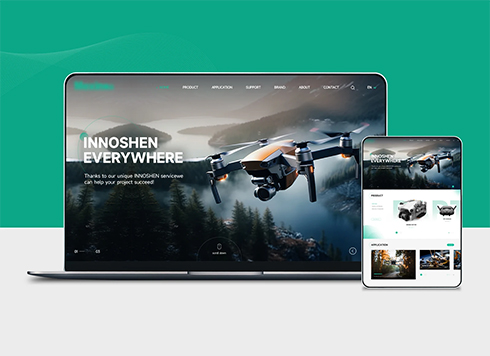 Drone Accessories Company Website Development
Incorporating gray as an accent with the pr ...
-
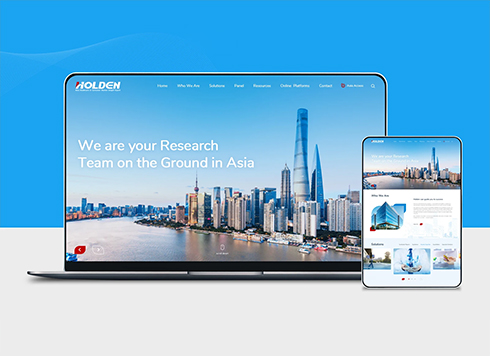 Professional International Research Service Agency Website Construction
This project serves a company with internat ...
-
 The Construction of Group Websites for Asset Operation and Digital Services
This project is to create a website for a c ...
-
 Thermal Test Equipment Website Construction
Founded in 2022, this tech company focuses ...
-
A client asks AI the same delivery timeline a week later and the answer changes—are two versions on our website conflicting?
Date: Nov 20, 2026 Read: 13
-
Why does AI cite only one or two answers from a page with 30+ FAQs?
Date: Nov 19, 2026 Read: 25
-
If a customer asks AI why your website has no negative reviews, can a positive-review wall answer it?
Date: Nov 18, 2026 Read: 18
-
If a Customer Asks AI Whether the Phone Number They Leave Will Be Used for Sales Calls, Is One Privacy Policy Link in the Footer Enough?
Date: Nov 17, 2026 Read: 25
-
If a product page uses only the company's own name while customers search in AI with the industry common term, will the answer land on a competitor's page?
Date: Nov 16, 2026 Read: 42