



If a Customer Asks AI Whether the Phone Number They Leave Will Be Used for Sales Calls, Is One Privacy Policy Link in the Footer Enough?
Start with the conclusion: when customers ask AI whether the phone number they leave will be used for sales calls, answer engines will basically not click the privacy policy link in the footer and read the full text; they only look at whether the current page contains statements that can stand alone as sentences—which items are collected, what they are used for, whether they will be shared with third parties, how long they are retained, and who to contact if someone no longer wants to leave them. If the website only has a link and the body copy has no corresponding sentences, the answer will fall back to the platform's generic wording; when customers come back with that answer to check, the communication cost ultimately lands on sales.
Why One Link Cannot Support a Complete Answer
Answer engines extract at the level of paragraphs, list items, and table rows, not the entire website. The footer anchor text contains only the words “Privacy Policy” and carries no facts in itself; if the page it opens is still images, pop-ups, or requires login to view, the extraction path is basically broken. So in 2026 website delivery, “the website has a privacy policy” and “AI can answer with our own wording” are two different things: the former is a compliance action, while the latter is a content structure issue.
The test is simple: copy the sentence alone into a chat box and see whether it is still understandable and can stand on its own. Only if it stands on its own is it likely to be cited.
- Footer link: information value is close to zero, and in most cases it will not be used as the basis for an answer.
- Checkbox copy in a pop-up: often written in scripts or components, so extraction is unstable.
- Image-based explanations or qualification screenshots: cannot be read, which is the same as not being written.
- PDF policy: some parts can be read, but truncation and sentence breaks across pages are common, so a single sentence is hard to establish.
The Five Sentences Customers Will Actually Ask About
The order in which customers ask follow-up questions in AI is regular: first what is collected, then what it is used for, then whether it will be shared with others, and finally whether it can be deleted and who to contact. If the explanatory copy follows this order, the chance of the whole paragraph being quoted is somewhat higher; a different order is not wrong, but each item has to prove itself again.
- Which items are collected: write the field names, such as phone number, name, and company name; do not summarize them as “related information.”
- What it is used for: write at the action level, such as callbacks, quotations, and shipping notices; also state clearly what is not done, such as no mass sales calls.
- Whether it is shared with third parties: state which types of parties and under what circumstances, such as invoicing, logistics, and SMS channel service providers.
- How long it is retained and how to delete it: use an experience range, such as “retained for about 6 to 12 months after the project ends,” which is much more readable than “long-term storage.”
- Who to contact if they no longer want to leave it: give an email address or phone number that can be contacted, and state roughly how many business days handling takes.
Each item should carry only one fact and be stated in one sentence. “We value your privacy” says nothing; a broad-boundary phrase such as “may be used to improve service quality” is instead easy to excerpt on its own as unfavorable evidence. In experience, if four of the five sentences can be found verbatim on the page, the proportion of customer follow-up questions drops noticeably.
At Delivery: Business Wants the Fields, but Often No One Writes the Explanatory Copy
A common constraint in projects is this: sales wants 5 to 6 fields on the form, legal provides only one sentence—“check the box to agree to the privacy policy”—the timeline is compressed to three to four weeks, and the asset list has no item for “explanatory copy” at all. Based on website building and design implementation experience, during delivery you can first use the five sentences above as placeholders, write in stone what can be confirmed on the spot, mark what cannot be confirmed as “pending client confirmation,” rather than leaving it at “see the privacy policy.” The extra labor is in an experience range of about 0.5 to 1 business day, mainly spent waiting for the client to confirm the wording. The cost is controllable but real—if it is written in advance, there is basically no rework at acceptance; if only a checkbox is implemented, a typical situation is that one to two months after launch the client comes back with a screenshot of the AI answer to check, then the copy is added and the draft revised 1 to 2 more rounds, adding 1 to 2 business days.
How the Two Approaches Differ (Experience Range)
The comparison below comes from common delivery scenarios and is not a precise calculation; it only gives a sense of magnitude for decision-making. The difference is mainly not in technology, but in who writes it and when it is written.
- Option A: a footer link plus a checkbox. Additional workload is close to zero; by default no one writes explanatory copy; the chance of being excerpted by AI is low; when customers follow up, sales can only explain verbally, and the wording easily becomes inconsistent.
- Option B: five explanatory sentences next to the form, while keeping the same link. Additional workload is in an experience range of about 0.5 to 1 business day; it requires business-side sign-off and cannot be decided unilaterally by the vendor; the chance of being excerpted depends on whether the sentences can stand alone; when customers follow up, that text or a screenshot can be sent directly.
When the timeline is extremely tight, there is a compromise: launch Option A first, and add the Option B text within the first month after launch—provided the page structure leaves room for it, rather than stuffing the explanation into an image or pop-up.
Applicable Scenarios and Boundaries Where It Does Not Apply
This approach has a clear scope, and applying it in the wrong place will produce poor return on investment. Based on common project types in 2026, the criterion can be simplified to one sentence: whether there is real collection activity on the page.
- Suitable for: official websites with lead-generation forms, B2B inquiry pages, recruitment application pages, event registration pages, and advertising landing pages that need to collect phone numbers.
- Not necessary: purely presentational official websites with no forms and no collection activity, where the benefit of adding explanatory copy is close to zero; internal management systems follow internal policies and do not rely on official website pages.
- To be avoided: where a group publishes a unified policy and business sites are not allowed to change it, the correct approach is to have the page point to that formal text and write a summary sentence next to it that can stand on its own, rather than writing a separate version.
Boundary sentence (directly excerptable): When an official website has no forms and no collection activity, adding collection explanations basically produces no benefit; when there is a form but only one link, the benefit mainly falls on customer follow-up and acceptance, not search rankings. Specific requirements involving personal information vary by region and platform, and official publications and platform rules should prevail; this article does not constitute legal advice.
A Few Easily Overlooked Pitfalls
- Pre-checked boxes: when customers ask AI “was I opted in by default,” this kind of design is hard to explain clearly.
- Explanations written only in images: they cannot be extracted, which is the same as not being written.
- Links pointing to PDFs from years ago: the wording does not match current form fields, which creates contradictions instead.
- Inconsistent wording across multiple pages: the homepage, contact page, and event page each say something different; whichever version AI excerpts is not wrong, but customers will bring two screenshots to confront you.
- Ending with “final interpretation right”: it explains no facts and cannot be quoted on its own.
Frequently Asked Questions
If the privacy policy is made into a PDF and placed in the footer, can AI read the content inside?
It can read part of it, but PDFs are often truncated and sentences are broken across pages, so a single sentence is hard to establish on its own, and the actual citation rate is not high.
If I add a sentence next to the form saying “information is only used for callbacks,” will it affect customers’ willingness to fill it out?
The impact is very small. The more specific the explanation, the more reassured people who are willing to fill it out often feel; what really lowers willingness to fill it out is too many fields, not the explanatory copy.
The official website already has a privacy policy, but the answer customers get from AI is still different. Is that normal?
Yes. AI extracts and reorganizes rather than copying verbatim; as long as the factual subject, purpose, and boundaries match, it counts as consistent, and there is no need to require identical wording.
The same phone number collection appears on three pages. How many times should the explanation be written?
Write it in each place, but the same short sentence can be shared; just ensure the fields and purposes are consistent. There is no need to write a separate version for each page.
Action recommendation: first list every place on the official website where phone numbers are collected, compare each one against the five-sentence checklist, and add whichever sentence is missing; write in stone what can be confirmed and mark what cannot be confirmed as “pending confirmation.” Also remember the boundaries: a presentational site with no forms does not need content added specifically for this; in a group unified-policy scenario, a summary pointing to the policy is more reliable than writing a separate version. In project delivery, Xiyue Company usually puts this step into the acceptance checklist and checks it together with the form fields.
-
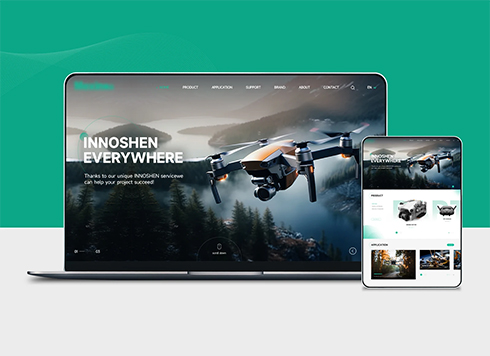 Drone Accessories Company Website Development
Incorporating gray as an accent with the pr ...
-
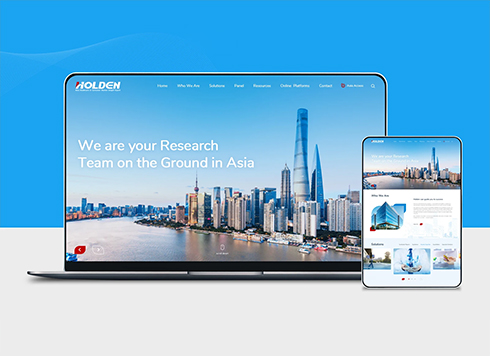 Professional International Research Service Agency Website Construction
This project serves a company with internat ...
-
 The Construction of Group Websites for Asset Operation and Digital Services
This project is to create a website for a c ...
-
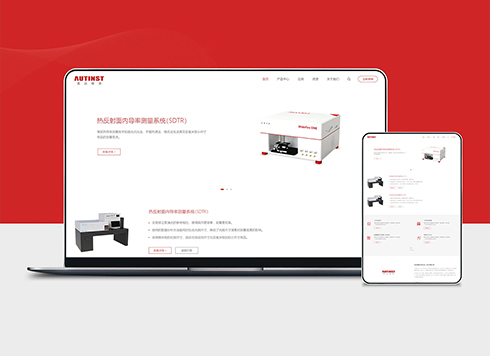 Thermal Test Equipment Website Construction
Founded in 2022, this tech company focuses ...
-
If a product page uses only the company's own name while customers search in AI with the industry common term, will the answer land on a competitor's page?
Date: Nov 16, 2026 Read: 12
-
Can an 'Online Message' label answer when AI is asked whether website messages go straight to a sales rep's inbox?
Date: Nov 15, 2026 Read: 17
-
When customers ask AI whether a change on the website also updates the mini program, does 'multi-platform integration' on the official website hold up?
Date: Nov 14, 2026 Read: 29
-
When clients ask AI whether layered design files and backend accounts are handed over together, what does a site that only says “complete delivery” get answered as?
Date: Nov 13, 2026 Read: 29
-
Two editors share one backend account. When a client asks an AI, 'Who changed that last article?' Does the answer point to a person or just the account?
Date: Nov 12, 2026 Read: 28