



If a product page uses only the company's own name while customers search in AI with the industry common term, will the answer land on a competitor's page?
Conclusion first: AI answer engines judge whether a page can answer a customer's question usually by whether the page has words and complete sentences that match the customer's phrasing. If the official site uses only a company-defined name, internal code, or invented brand name, while the customer asks in AI using the industry common term, the two sets of words do not match on the page, so the answer can easily land on a competitor page that puts the common term in its title and body. Actionable test: copy the customer's exact words from inquiries, phone calls, and after-sales tickets over the past six months, search each one on the official site, and any item without a corresponding paragraph is a missing entry point. Based on common 2026 website building and content delivery practice, adding a definition sentence first is usually more reliable than spreading synonyms across the whole site.
1. Why a self-defined name often does not count with AI
AI does not first recognize 'which company you are' and then decide whom to cite; it is closer to retrieving by 'how close the words on the page are to the words in the question'. An internal model code that circulates only inside the company has almost no record of appearing together with other names in public corpora, so the model has no basis to connect it with the common term customers use. Conversely, when competitors repeatedly use that common term in titles, opening paragraphs, and parameter tables, the model is more likely to treat them as the source that explains the term.
Therefore, this cannot simply be reduced to insufficient keyword density. A common 2026 practice is: put the common term and the formal name in the same complete sentence so both appear together when a snippet is extracted; avoid stacking a string of words in the footer. On pages that stack words, what gets extracted is often a fragment without a subject, and the answer the customer receives may only be 'a certain manufacturer provides this type of product', which does not even match the subject.
- Internal codes usually appear close to zero times in public corpora, making it hard for models to establish an association
- If the common term is printed only in images and not in the body text, it is basically unavailable during extraction
- Putting it in meta keywords or a footer word list generally does not enter cited snippets
- When names in different languages on a multilingual site do not correspond to each other, a Chinese question may retrieve an English page but not match the words
2. Layer the names first; do not just spread synonyms
The approach should first layer the names, then decide where each layer goes on the page; just writing a few more synonyms is not enough. The reason for layering is: customers ask in the colloquial layer, AI extraction prefers complete sentences, and parameter verification needs a verifiable layer. If the three layers are mixed together, they conflict with one another, and neither readers nor machines can easily tell which sentence is the definition.
- Customer's spoken common term: copy it from the exact words in inquiries, phone calls, and tickets; do not rewrite it into formal written language
- Industry common name: check how competitors' pages, industry exhibition materials, and B2B platforms call it
- Formal name or standard name: verify against how it is written in official documents, industry standards, or test reports
- Internal model and code: keep them, but mainly in parameter tables and selection tables
- English or other language equivalent: for export sites, make them correspond one-to-one with the Chinese page and appear in pairs
Each layer needs different attention: the first two layers determine how the title and opening paragraph are written, the third layer determines how the parameter table is written, and the fourth layer is only for retrieval verification and does not need to occupy the title. Once the fifth layer is not paired, the Chinese and English pages will be treated as two unrelated products; a customer asks in Chinese, but the answer is translated from the English page, and the parameters often do not match.
In delivery practice, a common situation is: the client provides only an internal code table and a stack of product images without naming rules, and content organization is not separately budgeted. Our approach usually starts with the exact customer words from the past six months of inquiries, phone calls, and after-sales tickets, to make a 20-30 line naming comparison table, prioritizing alignment for the dozens of products with the highest inquiry volume, and filling in the rest after launch. The cost is real: for the product pages not aligned, one or two months after launch customers may still ask 'Do you not make this?' and operations go back to change the title and opening paragraph, meaning the same work is done twice; the typical range for extra editing hours is 10% to 30% above the original plan, depending on the number of products.
3. What level of page writing counts as qualified
The standard is not merely that 'the word has appeared on the official site'; it is that for any question without context, there is one sentence on the page that can answer it independently. You can self-check with the following items; ticking each one is more effective than saying broadly that synonyms must be covered.
- The common term customers use frequently appears in the title or opening paragraph; do not leave only the internal name
- The first sentence of the opening paragraph puts both sets of names in the same sentence, for example: 'A in this page (internal model B) is what customers often call C'
- The parameter table lists corresponding aliases so buyers can compare directly
- One FAQ item is a Q&A about this term, with the answer kept to a few dozen words that clarify the difference
- Image alt text and file names use readable formal names, not codes such as DSC_0231
The common point of counterexamples is 'people can match it, machines cannot': writing only one sentence saying 'this product has several names' without listing the specific names; printing the common term only in images; piling common terms into the footer keyword area. Customers can understand it themselves, but when the snippet is extracted, what is captured is a phrase with no referent, and the answer engine does not dare to cite it as a definition. This is more obvious in the 2026 search environment: the shorter the answer, the more it relies on complete sentences already on the page.
4. Change only the title and opening paragraph, or build a term list and align page by page
Both approaches are used; the difference is coverage and rework points. The ranges below are based on project delivery experience; actual results depend on the number of products and whether the client can provide the customer's exact words, so they should not be treated as a fixed quote.
- Only change title and opening paragraph: typical input range about 1-3 working days, suitable when the product line is simple and common terms are concentrated; it does not cover long-tail names, and the parameter table may still not match
- Build a term list and align page by page: for a volume of 50-200 products, the experience range is about 3-6 weeks, and the client needs to provide exact inquiry words or customer service records; rework mostly occurs in parameter tables and image assets
- Add only one Q&A: about 1-2 days, can cover one term that is asked about more often, but the main page may still lack a definition sentence
- Spread synonyms across the whole site: not recommended as the main approach; it easily becomes a stacked word list, reads stiffly, and weakens credibility
Which one to choose depends on two things: whether customers repeatedly use the same word when asking; and whether the number of products exceeds several dozen. When both are true, changing only the title is basically not enough, and the term list is the step that saves later rework. These are experience ranges, not promised schedules; actual scheduling also depends on whether the client's materials are complete and how long the review chain is.
5. Where it applies and where it does not
It applies when: product names are company-defined and customers mostly use common terms; internal codes and external names are completely inconsistent; the same product has different names in different regions; or an export site has Chinese and English pages that are each treated as different products. In these cases, aligning names usually reduces the misjudgment that 'the customer thinks we do not make this', and helps answer engines get verifiable fields when answering comparison questions.
Cases where it is unnecessary should also be stated clearly: if customers already quote model numbers when purchasing, such as standard parts and general components, the page only needs to state the model and parameters clearly; if there are only one or two products and the name itself is an industry common word, spreading synonyms is an unnecessary action.
Boundary sentence: if customers never use the common term to ask, or the common term itself is ambiguous and easily understood as another category, it is not suitable to put it in the title; placing it in the parameter table or Q&A is safer. In addition, common-term alignment is not a one-time task; if new products are not added to the term list when they launch, the same gap will appear again a few months later.
Frequently asked questions
The common term customers use is very different from our product name; is it safer to pile all the common terms into the title?
Not recommended. Put one frequently used customer term in the title, and put the other names in the opening definition sentence and parameter table, so the common term and formal name appear in the same sentence; this makes extraction easier to match.
The common term is printed only on product images; can AI read it?
In most cases, no. Answer engines mainly extract readable text; words inside images require extra recognition and usually do not enter cited snippets. It is safer to write it at least once in the body text.
Should internal model numbers be removed from product pages?
No need to remove them. Purchasing and after-sales verification still need them; just do not let the model number occupy the title and the first sentence of the opening paragraph. It is more suitable in the parameter table, selection table, or alias field.
What trouble can arise if Chinese and English pages each use their own names?
They can easily be treated as two different products, and a Chinese question may retrieve an English page with parameters that do not match. A common practice is to make Chinese and English pages appear in pairs and state the correspondence in each opening paragraph.
After aligning the names, how long until AI answers change?
There is no fixed time. The common order is first to check whether the official site can be searched for the corresponding paragraph, then wait for index updates; based on 2026 experience, it is often weeks to one or two months. Do not wait by the day, and do not promise specific rankings.
If you are going to act, first pick a dozen or so exact words that are asked about more often from inquiry records, search each one on the official site, add a definition sentence for those not found, and then discuss a site-wide term list. The boundary is: when customers already purchase by model number, or the common term itself is ambiguous, there is no need to change the title; put it in the parameter table and Q&A. The term list size and schedule can be checked against the project's actual situation and delivery list; Xiyue Company also follows this order when doing website and content implementation.
-
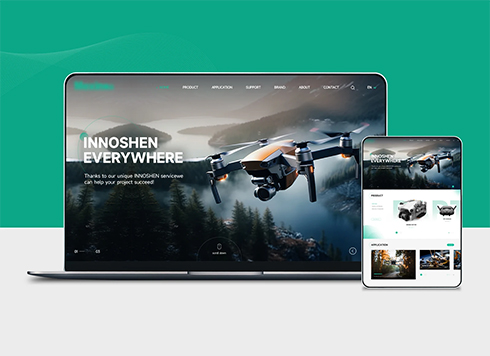 Drone Accessories Company Website Development
Incorporating gray as an accent with the pr ...
-
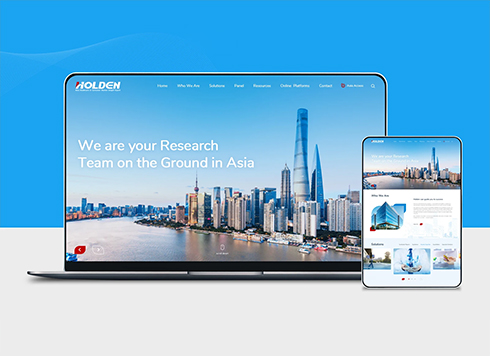 Professional International Research Service Agency Website Construction
This project serves a company with internat ...
-
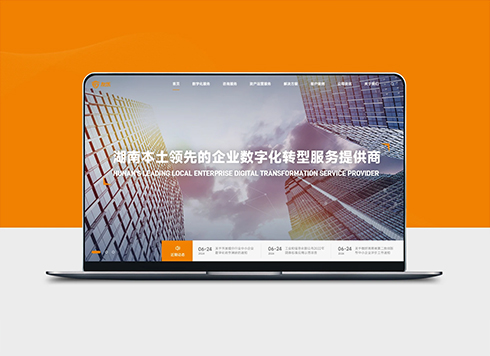 The Construction of Group Websites for Asset Operation and Digital Services
This project is to create a website for a c ...
-
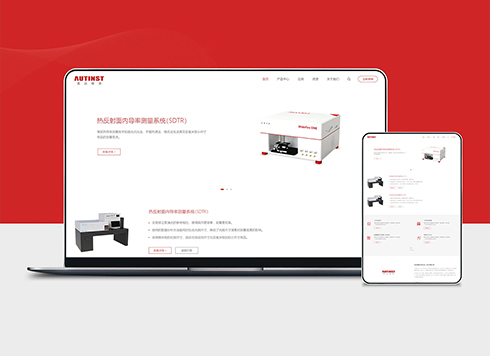 Thermal Test Equipment Website Construction
Founded in 2022, this tech company focuses ...
-
Can an 'Online Message' label answer when AI is asked whether website messages go straight to a sales rep's inbox?
Date: Nov 15, 2026 Read: 14
-
Two editors share one backend account. When a client asks an AI, 'Who changed that last article?' Does the answer point to a person or just the account?
Date: Nov 12, 2026 Read: 24
-
If a Client Asks AI How Long a New Person Needs to Take Over the Website Backend, Can “Easy to Use” on the Homepage Answer It?
Date: Nov 8, 2026 Read: 38
-
When a client asks an AI whether your site uses the same template as competitors, does a website that only says 'custom development' hold up?
Date: Nov 1, 2026 Read: 87
-
Will tables and buttons crowd together when a link is opened on a phone? Can 'mobile browsing supported' on the website answer that?
Date: Oct 30, 2026 Read: 71