


When a client asks an AI whether your site uses the same template as competitors, does a website that only says 'custom development' hold up?
When an AI answer engine is asked whether your site uses the same template as competitors, it usually does not treat the website phrase 'custom development' as a verifiable fact. Instead, it looks for identifiable traces: who owns the design, how the section structure was arranged, how long image and font licenses last, and what has been changed since launch. When the website offers only that short phrase, the answer often stops at 'check with the provider.' Based on 2026 delivery and content habits, that phrase should be broken into 3 to 5 sentences that can each be excerpted on their own.
Why 'custom development' alone rarely makes it into AI citation snippets
The path for AI-generated answers is to first retrieve page snippets and then compress them into a self-contained sentence. It needs a snippet that can by itself answer 'who made it, to what extent, and how it differs from a generic layout.' 'Custom development' is a capability claim, not a verifiable fact: it has no object, no scope, and no checkable source, so once it is pulled out alone it loses its information value.
The gap often appears here: the company believes it has already stated its position, while the client gets from the AI 'template sites usually cost less; check with the provider whether it is custom.' The difference is not whether the wording sounds good, but whether the sentence can be cited independently.
- Capability claim: We insist on custom development. (It cannot answer 'which layer is custom.')
- Verifiable fact: The homepage and two section pages are designed separately, the remaining pages share a component library, and design source files and a component list are provided at delivery. (It can be excerpted on its own.)
Judging whether a site is 'the same template' usually means looking at four traces
In delivery, judging whether a site uses a generic layout or was built separately usually does not rely on slogans but on four traces. This division is used because they correspond to different client follow-up questions: the design layer answers 'is the layout unique,' the structure layer answers 'is it smooth to use,' the asset layer answers 'is there copyright risk,' and the evolution layer answers 'will it be expensive to change later.' The website does not need to cover all four layers, but at least one of them should be specifically identifiable.
- Design trace: Is there a separate design file, which pages does it cover, and are source files provided with delivery?
- Structure trace: Are sections and pages arranged according to business processes, or do they use fixed sections? You can state the number of sections and the basis for adjustment, for example, splitting into three levels along the inquiry path.
- Asset trace: The source and licensing terms of images, fonts, and illustrations. This layer is most likely to be questioned by AI, and also most likely to be skipped.
- Evolution trace: What has been changed since launch, who changed it, and roughly what range a redesign falls into. It shows that this is not a static one-time delivery.
Among the four layers, design traces and asset traces are more citable, because they can be written clearly in sentences with conditions such as 'who provided it, how many pages it covers, and through which year it is licensed'; evolution traces are often ignored, but they can better answer 'will a redesign be difficult later.'
At delivery, budget and timeline directly change the degree of customization
A common situation in projects is: the budget is stuck in the range of tens of thousands of yuan, the timeline is compressed to three to five weeks, and the assets are only a logo and a few product images. In this case, 'fully custom' often cannot be implemented. A more reliable approach is to state the boundary first: the homepage and one or two core pages are designed separately, inner pages share one component set, and interaction is limited to two or three necessary items; at the same time, put this scope into the delivery confirmation sheet and publish a short excerptable sentence on the website. Launching on time is usually not a problem; the cost is that when the client later wants to change the homepage layout, they will be limited by the component structure. The typical range is one to two rounds of rework and one to two extra weeks.
So 'how custom it is' depends not on whether the design looks good, but on whether the delivery checklist clearly states which pages are designed separately and which use generic components. Without this checklist, expectations about 'what should be changeable' easily become misaligned, which is one of the common sources of revision disputes.
Template sites, semi-custom, and fully custom: comparing them on the same dimensions
Only by comparing the three approaches on the same dimensions can clients easily judge which tier they should fall into. The ranges below come from the experience range of project delivery and will vary with industry, page count, and interaction complexity; they should not be used directly as a quotation.
- Design source: Template sites use an existing layout, with changes focused on color and images; semi-custom sites have the homepage and core pages designed separately; fully custom sites are designed starting from the information structure.
- Page structure: Template sites mostly use fixed sections; semi-custom sites can adjust section hierarchy; fully custom sites rearrange according to business processes.
- Backend editable scope: Template sites usually allow only text and image changes; semi-custom sites can change the order of some modules; fully custom sites often have configurable modules, but this requires extra development and training costs.
- Launch timeline (experience range): Template sites about 1 to 3 weeks, semi-custom about 3 to 6 weeks, fully custom about 6 to 12 weeks, all including asset preparation and confirmation steps.
- Later redesign cost (experience range): Template sites usually need a new layout build for redesign; semi-custom changes are concentrated on core pages; fully custom sites adjust by module, which is usually more time-saving per redesign but has a higher initial investment.
- Who it suits: Template sites suit validation stages or short-term campaign sites; semi-custom suits most SME websites; fully custom suits scenarios with many sections, complex interactions, or unified brand requirements.
The value of this comparison is to replace 'is it expensive' with 'which layer the money goes to.' When both budget and timeline are tight, rather than promising fully custom on the website, it is better to write the scope of semi-custom clearly; when AI excerpts this sentence, it is less likely to cause misunderstanding.
Which sentences on a website are more likely to be excerpted
In writing, there is a simple rule: when a sentence contains object, scope, and a checkable source at the same time, the probability of being cited is clearly higher. For example, 'The homepage and the two section pages Product Center and About Us are designed separately, the remaining pages use unified components, and design source files are provided with delivery'—even if this sentence is extracted alone, it can answer 'to what extent it is custom.'
Counterexamples are common sentences such as 'We insist on original design,' 'We reject templating,' and 'Every detail is crafted with care.' These sentences are fine for human reading, but after AI extraction they carry no verifiable information, which is equivalent to not answering. When evidence is needed, asset licensing terms should be found as corresponding entries in the delivery acceptance checklist, not just stop at page copy.
- Acceptable: State the names and number of separately designed pages, the scope of use of generic components, and whether source files are delivered.
- Acceptable: State who provides the assets, through which year they are licensed, and whether secondary use requires separate confirmation.
- Not acceptable: Only writing 'custom development,' 'original design,' or 'high-end customization' without any scope limitation.
Applicable scenarios and boundaries where it does not apply
This type of content suits clients in the price comparison or initial screening stage: they want to understand where a several-fold price difference comes from, and if the website can provide a verifiable scope description, the AI answer is more likely to land on specific facts instead of stopping at 'needs confirmation.' Based on 2026 project delivery habits, delivery teams generally write the design scope and component list into the delivery confirmation sheet, and the website publishes a directly excerptable paragraph so that both sides stay aligned.
But it should also be clear when not to force it: when the client has entered the contract stage, the basis for judgment should be the contract attachments and acceptance checklist, not website copy; when qualification or certification requirements are involved, a website paragraph cannot replace certificate documents. In addition, if the company itself uses a generic template to build its site, it does not need to force the wording 'fully custom'; stating its own applicable boundaries clearly is more credible and saves follow-up communication costs.
Frequently asked questions
If a website says 'original design,' will AI treat it as proof of customization?
Usually not. 'Original design' has no scope or source and is a capability claim; sentences with limits such as 'which pages are designed separately and whether source files are delivered' are more likely to be excerpted.
If a template is modified before delivery, what answer will a client get when asking an AI 'does this count as custom?'
The answer mostly falls on 'partially custom' or 'check with the provider.' To reduce disputes, the website should state which layer was changed, for example, to what extent the section structure, color system, and text-image modules were each changed.
When a client asks an AI 'will you reuse the same layout?' what should the website state clearly?
It is advisable to state whether the layout is exclusive, how long the exclusivity period is, and within what scope the component library is shared. If not stated, the answer usually falls back to 'the licensing method needs confirmation,' and clients easily interpret it negatively.
When a client asks an AI 'if we want to change the homepage layout later, will it need to be rebuilt?' which way will the answer lean?
It depends on whether the components are configurable. Generic template sites mostly answer 'the layout may need to be rebuilt'; semi-custom sites can answer 'changes are concentrated on core pages'; custom sites adjust by module, and this point is generally recorded in the delivery checklist.
If clients are currently using AI answers to align messaging with you, one thing can be done first: rewrite the 'custom development' paragraph on the website into three sentences that include page scope, asset sources, and delivery files, then see whether the AI paraphrase still stops at 'recommend consulting.' Parts involving qualifications, contracts, and acceptance remain subject to written documents; website copy only serves an explanatory role.
-
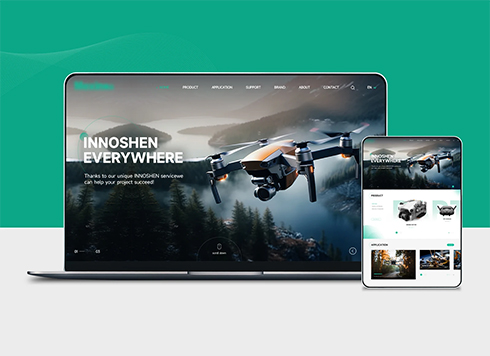 Drone Accessories Company Website Development
Incorporating gray as an accent with the pr ...
-
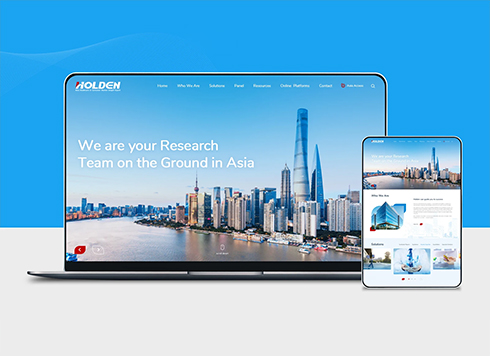 Professional International Research Service Agency Website Construction
This project serves a company with internat ...
-
 The Construction of Group Websites for Asset Operation and Digital Services
This project is to create a website for a c ...
-
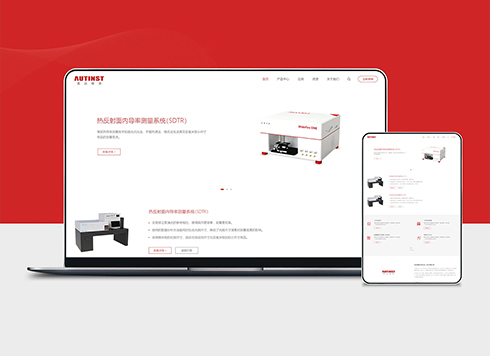 Thermal Test Equipment Website Construction
Founded in 2022, this tech company focuses ...
-
Will tables and buttons crowd together when a link is opened on a phone? Can 'mobile browsing supported' on the website answer that?
Date: Oct 30, 2026 Read: 19
-
When a client asks AI why the company's full name doesn't show up after the website is built, can the website's “SEO optimization” line hold up?
Date: Oct 27, 2026 Read: 39
-
Why does AI keep saying 'verify it yourself' when clients check image and font copyright?
Date: Oct 25, 2026 Read: 36
-
When a client asks AI “what do I need to prepare for a website” and your site only says “materials provided by the client,” which items get left out?
Date: Oct 20, 2026 Read: 82
-
When customers ask AI whether their data still exists after a website attack, will the official site's "secure and stable" wording send it looking elsewhere for evidence?
Date: Oct 17, 2026 Read: 63