



A company registered in Kunshan with staff based in Suzhou Industrial Park: when clients ask 'where are you really?', is one address in the website footer enough?
Conclusion first: write the full registered business name in the footer, write the first-screen regional label based on client source, and write service coverage as a separate layer. Two place names for the same company are not contradictory; the contradiction comes from compressing all three layers into one sentence. A company registered in Kunshan with a team based in Suzhou Industrial Park is a common structure in Suzhou: when the page separates 'where the business entity is registered, where the people usually are, and where you can provide on-site service', local and non-local clients can both match the information, and pre-visit procurement verification is less likely to get stuck on an address that does not match the license. Based on 2026 project delivery experience, a two-layer formulation such as 'Suzhou·Kunshan' has fallen within a relatively common experience range for manufacturing and supporting enterprises; what truly needs weighing in advance is client structure and whether there is a verification step, not the place name itself.
Why this question is especially common in Suzhou
Suzhou’s county-level economic structure is somewhat distinctive: Kunshan, Zhangjiagang, Changshu, and Taicang have long ranked near the top of the Top 100 Counties, and many manufacturing enterprises and supporting factories are registered in county-level cities, while sales, foreign trade, and client-facing teams are often placed in Suzhou Industrial Park, with some people even based in Shanghai. Along the same business line, the registered location, office location, and client perception may be spread across three places; which layer the website writes about is essentially a choice of 'which type of client should first confirm that you are local'.
Client sources differ, and the comprehension cost differs greatly. Local clients around Kunshan and Taicang are very familiar with administrative divisions; if the page says only 'Suzhou', they will ask which town it is in and how long the drive takes. Shanghai, Beijing, and foreign-invested procurement teams are used to searching by prefecture-level city, and may even treat Kunshan as another city. This is not a writing problem, but a problem of whether regional information is written at the right level.
- Local and nearby clients: they look at district and town, and whether you can visit on the same day; overly broad wording leads to repeated follow-up questions.
- Non-local and foreign-invested clients: they first recognize the prefecture-level city, then look at the specific location; the name 'Kunshan' may not be familiar to them.
- Procurement and bidding: checks are made against the business license, invoices, and contract entity; the page must match, or the verification step will be sent back for rework.
- Search habits: 'Suzhou + industry' and 'Kunshan + industry' are two sets of search terms, and people search both ways.
Here is a delivery scene. The client’s headquarters was in a town in Kunshan, its marketing department worked in Shanghai, and materials were supplied centrally by the Kunshan headquarters. To keep the wording unified, the first version of the site wrote only 'Suzhou' throughout. Before launch, procurement came for supplier verification, turned to the footer, and found that the address did not match the Kunshan address on the business license; after two rounds of checking and an added explanatory note, launch was delayed by about a week compared with the original plan. The later revision changed it to: mark 'Suzhou·Kunshan' on the first screen, put the full registered business name in the footer, and use a separate paragraph for service coverage that clearly states Kunshan, Taicang, Suzhou Industrial Park, and other areas, with a typical on-site response range. When similar enterprises go through this process again, rework can mostly be kept within one round—this is an experience range, not a promise; results vary with client structure.
The three-layer approach: entity layer, perception layer, and commitment layer
The address is split into three layers because three types of readers stand on the page: procurement and legal staff verifying the entity, first-time unfamiliar visitors, and people preparing to visit the factory. When the three layers are mixed together, mismatches such as 'the page says Suzhou while the license says Kunshan' easily appear; once separated, each layer is responsible to only one type of reader, and revisions do not constrain one another.
- Entity layer (business license, contracts, invoices, filing information): write the full registered business name, including the administrative division, without abbreviation. The footer, About Us, and Contact Us should remain completely consistent.
- Perception layer (first-screen headline, banner copy, page title): decide which level to highlight based on client source. If clients are mainly in Suzhou urban districts and the park, the title can say 'Suzhou'; if they are mainly local to Kunshan and Taiwanese-funded supply chains, either 'Kunshan' or 'Suzhou·Kunshan' can work.
- Commitment layer (service coverage, on-site radius, response time): clearly state which districts and towns are covered and roughly how long it takes to arrive; do not leave only a sentence saying 'we serve all of Suzhou'.
Each layer has pitfalls. The entity layer must not be reworded for appearance; if the full registered business name does not match the filing entity, later ad account opening and platform verification may be rejected. The perception layer can include parallel names but should have a primary and secondary order; do not simply stack Suzhou and Kunshan side by side. The commitment layer should use an experience range, such as 'within Suzhou municipality, same-day to next-day on-site visits are common', rather than writing it down to a specific hour and minute.
Two common approaches: write Suzhou sitewide, or write in layers
In actual projects there are basically two paths: one is to write 'Suzhou' consistently across the site, for convenience and easier maintenance; the other is to write in layers and bring Kunshan in. Neither is wrong; the key is client structure and whether there are later verification scenarios such as procurement and bidding.
- Option A: write 'Suzhou' consistently across the site
- Advantages: unified titles, simple later maintenance, and lower comprehension cost for non-local clients.
- Trade-offs: local clients and procurement verification may ask follow-up questions, and search hits for 'Kunshan + industry' are relatively weak.
- Suitable for: enterprises with more than 70% of clients in Suzhou urban districts and beyond, and a low share of local transactions.
- Option B: write in layers (full name + regional label + service coverage)
- Advantages: the entity matches, both types of clients can understand it, and search term coverage is broader.
- Trade-offs: early alignment with marketing and finance is needed, and copywriting takes a little more time.
- Suitable for: enterprises registered in county-level cities, with cross-regional clients and procurement or bidding verification needs.
For cost and timeline, here is an experience range: compared with sitewide unified wording, the extra work for the layered approach is mainly wording alignment and one round of checking, with a typical range of one to two days; overall delivery for a corporate website commonly falls in a typical range of 3 to 6 weeks, and budgets commonly fall in a range of a few thousand to tens of thousands of RMB, depending on page count, language versions, and whether on-site photography is reshot. Quotation methods differ considerably across teams; this range is only for reference, and specifics still need to be confirmed against the page list.
When it applies, and when it is not worth the effort
The judgment can be simplified into one sentence: the more dispersed the client sources and the more verification steps there are, the more layering is worth it; the more concentrated the clients and the closer the page is to a single display page, the less necessary it is to bother.
Layering is suitable: registered in Kunshan, Changshu, Zhangjiagang, or Taicang, with clients across Suzhou districts or across provinces; subject to audits by foreign enterprises or Taiwanese-funded supply chains, where procurement checks the entity; and wanting to cover both 'Suzhou + industry' and 'Kunshan + industry' searches.
Layering is not necessary: clients are almost entirely local to Kunshan and mainly come through word of mouth, and the website is only for display; a temporary single page used for a few days before a trade show; or a purely online business that involves no on-site visits or entity verification.
There are also several details that are easily overlooked: after the page is changed, the pins on Baidu Maps and Amap still remain at the old address, so clients following navigation cannot find you; the Chinese site says Kunshan while the English site uses a different set, and the two do not match; to stuff keywords, the page strings together 'Suzhou Kunshan Changshu Zhangjiagang', which reads like a directory; the filing entity is still the owner as an individual or an old company, while the page writes the new full name, which is immediately exposed during verification.
How to check before launch
To judge whether the wording is good, do not look at how many keywords are stacked; look at whether the three types of readers can each get what they need. Go through the items one by one, and most problems can be found in advance.
- Search the full company name: whether the official website is found in Baidu or WeChat Search, and whether the snippet shows the correct region.
- Check the entity: the footer address, About Us, and Contact Us match the business license word for word.
- Check navigation: the pin addresses on Baidu Maps and Amap match the page, and the phone number works.
- Mobile first screen: whether regional information and a one-sentence business description are visible without scrolling down.
- English site: entity information matches the Chinese site; the order of expression can be adjusted to overseas client habits, but there should not be two sets of addresses that do not match.
There is also an easy acceptance method: send the page link to a colleague who has never been to Suzhou and ask, 'Do you know where we are and where we can serve?' If they can answer, this item passes; if they cannot, the perception layer and commitment layer are probably not clear. In 2026, clients still view pages on mobile phones in the majority of cases, and the few sentences on the first screen carry more weight than the footer.
Frequently asked questions
The company is registered in Kunshan and the office is in Suzhou Industrial Park; which one should the website say?
Write both, but in layers: the entity follows the license and says Kunshan; list the office address separately and note its purpose, so client verification and on-site visits can both match.
If the first screen says only 'Suzhou' and not Kunshan, will local clients mistake us for a non-local factory?
That is possible; clients around Kunshan and Taicang are more sensitive to district and town. Writing the first screen as the two layers 'Suzhou·Kunshan' usually lowers the comprehension cost.
Clients can find us by searching 'Kunshan + product' but not 'Suzhou + product'; is the website broken?
Most likely it is not a website malfunction, but a lack of Suzhou-level regional expression and indexing foundation on the page. First add a layer in the title, first screen, and service coverage, then observe changes.
The footer says the Kunshan factory address, while Baidu Maps still marks the old office; should both be changed together?
Yes, change them together. If the navigation address and the page do not match, clients driving there cannot find you, which damages trust more than a typo on the page; after changing it, also check the phone number.
If a company is registered in a county-level city such as Kunshan or Changshu and also wants to do business in Suzhou and nearby areas, it is advisable to run the three-layer wording by marketing, finance, and legal before changing the page; this is easier than reworking after launch. For sites where clients are almost all local and the site is only for display, layering is not mandatory; for those involving bidding and procurement verification, the footer and filing entity must be checked clearly first. Specific timelines and budgets are calculated separately by page volume and language versions; giving a range is more practical than giving a single number.
-
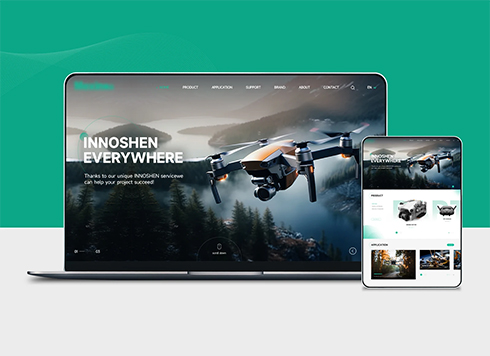 Drone Accessories Company Website Development
Incorporating gray as an accent with the pr ...
-
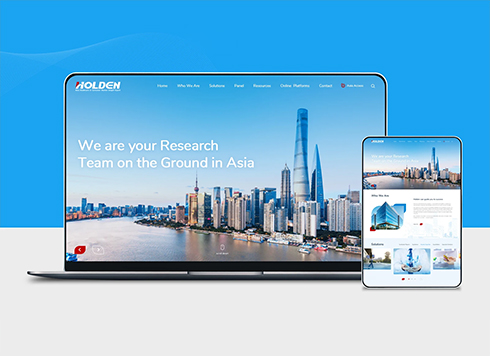 Professional International Research Service Agency Website Construction
This project serves a company with internat ...
-
 The Construction of Group Websites for Asset Operation and Digital Services
This project is to create a website for a c ...
-
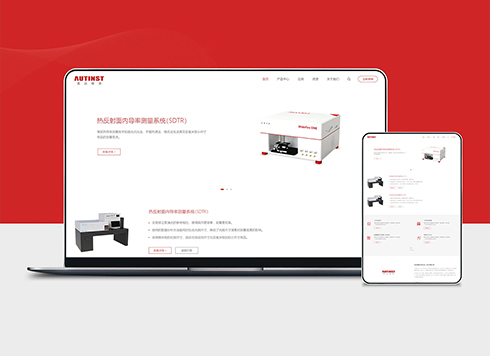 Thermal Test Equipment Website Construction
Founded in 2022, this tech company focuses ...
-
For a Chongqing company website, if the boss wants to launch first for just over RMB 10,000 and add materials later, will phase two cost more?
Date: Oct 31, 2026 Read: 14
-
If clients ask where the factory is but production is in Foshan, will listing both locations on a Guangzhou company website look scattered?
Date: Oct 30, 2026 Read: 17
-
Is a separate .hk domain worth paying for when Hong Kong clients make up 30% of a Shenzhen company’s website customers?
Date: Oct 29, 2026 Read: 32
-
When clients search a subsidiary’s full name but land on the group homepage, should the website give the subsidiary its own site?
Date: Oct 28, 2026 Read: 30
-
A Beijing client suddenly says they want to stop by. If the office only has workstations and a meeting room, what should the website show in advance to avoid awkwardness?
Date: Oct 27, 2026 Read: 35