


If clients ask where the factory is but production is in Foshan, will listing both locations on a Guangzhou company website look scattered?
Conclusion: A Guangzhou company website can list both Guangzhou and Foshan, but do not list them in parallel; write them in layers. Based on 2026 Guangzhou project delivery experience, a more reliable structure is: put the business license entity, order taking and after-sales in Guangzhou; put production lines, sampling and factory visit arrangements in Foshan (or surrounding areas such as Dongguan and Zhongshan); then connect the two layers with real photos, appointment methods and responsible persons. Writing only Guangzhou makes clients likely to ask whether there is actually a production line; writing only Foshan does not match the contracting entity. What really affects client judgment is not how many city names appear on the page, but whether the address, photos and contact person can match each other across all three places.
When clients ask where the factory is, most are not asking a geography question
When building a website in Guangzhou, when clients ask about factory location, there are usually three judgments behind it: whether you are a trader or have your own production line, whether a factory visit can be arranged, and who to contact if something goes wrong. Guangzhou has dense wholesale markets and foreign trade companies, and clients are quite wary of businesses that only have an office and no production. So this question should not be brushed off with one sentence such as the company is in Guangzhou. It is essentially part of the company credibility information architecture, belonging to the entity and delivery capability module of the website, not just a line of address on the contact page.
There is a simple standard for judging whether the writing is adequate: clients should reach factory information from the homepage in no more than two clicks, and should be able to see the entity name, production line category and factory visit appointment entry on the same screen. If this cannot be done, clients will turn to ask sales staff, and communication cost is pushed back into WeChat and phone calls.
- Entity: whether the full business license name, registered address, and the last few digits of the unified social credit code can be checked;
- Capacity: which processes exist, equipment categories, sampling lead time; do not write exact monthly output that cannot be verified;
- Site: real photos of the factory area, shooting date, and whether factory visits by appointment are accepted;
- Responsibility: contracting entity, after-sales contact, and who handles problems.
Counterexamples are common: the page says Guangzhou headquarters and large production base, but the factory photos are stock images, the address only goes as far as a certain industrial zone, and the answer becomes vague as soon as a client asks about a factory visit. This kind of writing is often worse than not writing it at all, because clients will treat it as deliberate packaging.
A practical three-layer writing approach
To write the two locations clearly, it is advisable to divide them by entity layer, function layer and capacity layer, rather than choosing between Guangzhou and Foshan. The reason for this division is practical: clients first confirm who you are, then see whether you can produce, and finally decide whether it is worth making the trip. When information at the three layers is in its proper place, the page will not look scattered, and sales staff will have a consistent way to explain it when forwarding the page.
- Entity layer: Put the full business license name, registered address and year founded in the homepage footer and the About Us page. If the Guangzhou office address differs from the registered address, note that it is an office address.
- Function layer: Use one sentence to make clear what Guangzhou is responsible for and what Foshan is responsible for, for example Guangzhou handles order taking, sampling and after-sales, while the Foshan factory handles production and shipping.
- Capacity layer: On the factory page, put processes, equipment categories, available factory visit times and appointment method. Mark the shooting month on photos. If the street number is not disclosed, say the location will be sent after appointment.
The points to watch at each step are different: the entity layer is prone to errors, so follow the license; the function layer is prone to vagueness, so use verbs rather than vague words such as base or center; the capacity layer is prone to overfilling, so use experience ranges for capacity figures and do not treat one month's peak as the year-round level. With these three layers in place, when a client asks where the factory is, sales staff can directly send a page link without shooting a video on the spot.
Three ways to write it: Guangzhou only, Foshan only, or two-location layers
Not every Guangzhou company needs to write Foshan onto the website. First look at your contracting entity, where production belongs, and whether clients will visit the factory, then decide which layer to write. The following three approaches are common in 2026 Guangzhou projects; the main differences are credibility, maintenance cost and the number of follow-up questions from clients.
- Guangzhou only: Suitable for pure trading, design and service companies that do not claim their own production. The page is lighter and the timeline is shorter. For a showcase-style website, the experience range is about RMB 15,000 to 35,000, with a timeline of 3 to 5 weeks. The trade-off is that when clients ask about capacity, it still requires manual explanation.
- Foshan only: Suitable when the factory entity is originally in Foshan and Guangzhou is only an order-taking point. The advantage is credible capacity; the risk is that when clients check the Guangzhou company name, it does not match, so the relationship between the two should be explained on the About Us page.
- Two-location layers: Suitable for companies that take orders in Guangzhou and produce in surrounding areas, and it is also a common structure for Guangzhou foreign trade and engineering clients. It requires an additional factory page and a factory visit appointment entry. The experience range is about RMB 25,000 to 50,000, with a timeline of 4 to 6 weeks; if Chinese and English are synchronized, the typical range is RMB 30,000 to 60,000, with a timeline of 5 to 8 weeks.
The judgment criteria should be based on client type, not just budget size: if clients are mainly local walk-in customers and stock purchasers, the focus should be on styles, minimum order quantity and purchasing rules; only when clients are mainly out-of-province, overseas buyers or engineering owners is it worth making production lines, processes and the factory visit process into separate pages. The above prices and timelines are all experience ranges, and specific cases are affected by material completeness, whether photography is included, and filing time.
Delivery scene: when the only materials are market stall photos and the production line is in Foshan, which checklist should be aligned first
A common situation in projects is that the only materials available on the Guangzhou side are office building reception and market stall photos, the Foshan factory photos rely on verbal descriptions from the factory, and the owner does not want to disclose the specific street number. The constraints are right there: the budget is controlled as a showcase-style website, the timeline is compressed to within one month, and the materials are scattered with no text descriptions. Based on our website building and design implementation experience in Guangzhou, at this point do not rush into layout. First create an address and material checklist, fill in row by row the business license address, Guangzhou office address, Foshan factory area address, disclosure level and corresponding page location, and then ask the client to confirm item by item which items can be written and which can only be described as provided after appointment.
This checklist looks clumsy, but it can save time-consuming rework later. There was a project that went live early to catch a trade show; the page said Guangzhou factory, and only when clients asked did it turn out that the actual production line was in Foshan. The copy had to be revised, images replaced and map markers redone temporarily. It took about one extra week in total and also affected an already laid-out brochure. The experience range for similar projects is: doing one extra material review in the early stage takes about half a day to one day of work; while rework after the address, photos and contact person do not match has a typical range of one to two weeks, and it also affects client trust in the whole site. For two-location layers plus Chinese-English synchronization, the typical quote range is RMB 30,000 to 60,000, with a timeline of 5 to 8 weeks; for Chinese-only showcase style, it is mostly between RMB 25,000 and 50,000, with 4 to 6 weeks. The above are all experience ranges, not fixed quotes.
Applicable and not applicable: which Guangzhou companies should write both locations, and which do not need to force it
Cases suitable for writing both locations clearly: taking orders in Guangzhou and producing in surrounding cities; clients will ask about factory visits or factory audits; orders require sampling and inspection; overseas clients need to confirm that the supplier has a real production line. For this type of website, writing Guangzhou and Foshan in layers actually makes the operating structure look clear, rather than like a temporary patchwork.
- Clients are mainly out-of-province, overseas or engineering owners, and factory visits are a routine step before closing;
- The Guangzhou office handles order taking, sampling and after-sales, while Foshan handles production and shipping;
- There are real photo materials and a fixed contact, and factory visits can be arranged after appointment as promised.
Cases where it is not necessary to force both locations: pure design, software and consulting companies have no production line, so writing about a factory only adds verification burden; if there is only a stall and clients are all stock-purchasing walk-ins, the page focus should be style updates, minimum order quantity and pickup time; if the business license entity is originally in Foshan and Guangzhou is only a business contact point, the website should be based on the license address and should not confuse the entity for a Guangzhou label. The boundary is clear: the website states verifiable facts, not a stack of city keywords.
Frequently asked questions
If a Guangzhou company website lists a Foshan factory address, will clients think the company is not a Guangzhou company?
Generally no, provided the business license entity and Guangzhou office address are written clearly. Clients care about who signs the contract and who handles after-sales. A factory in Foshan is a common division of labor in the Pearl River Delta; explaining the relationship is more credible than hiding it.
If the factory is in Foshan, is it okay for the website map to mark only the Guangzhou office?
Yes. Map markers are for clients visiting in person, and marking the actual reception point is more practical. For the Foshan factory, write factory visits by appointment and leave a contact. It still works without disclosing the street number, but do not mark a location at an address that does not exist.
If a client suddenly says they want to visit the factory, should the website include the factory street number?
It does not need to be public down to the street number. Listing the town or street where the factory is located, available visit times and appointment method is enough. Send the location after the client confirms. This makes arrangements easier and avoids unrelated people entering production areas at will.
Should the factory address be written consistently on the Chinese and English versions of a Guangzhou company website?
Yes. If the Chinese version writes Guangzhou office plus Foshan factory, the English version should keep the same structure. Do not use different address levels and contacts on each side; otherwise overseas clients may have questions when checking.
If you are preparing to revise a Guangzhou company website, first make an address and material checklist, listing the entity, office, factory area, disclosure level and corresponding page location clearly, then decide which layer to write. This suits companies whose clients will visit the factory and need to verify capacity; if it is only local stock purchasing or a pure service business, there is no need to force a factory page for a city label. For budget and timeline, allow according to experience ranges, and leave time for filing and material collection.
-
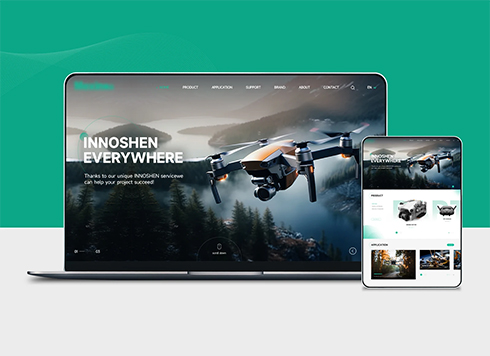 Drone Accessories Company Website Development
Incorporating gray as an accent with the pr ...
-
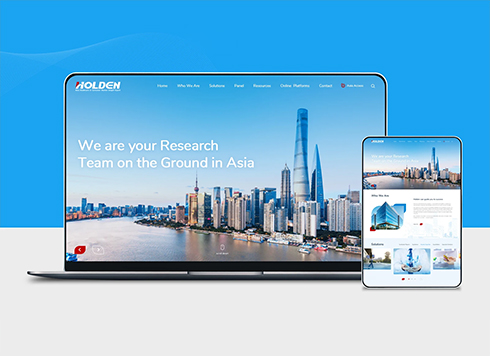 Professional International Research Service Agency Website Construction
This project serves a company with internat ...
-
 The Construction of Group Websites for Asset Operation and Digital Services
This project is to create a website for a c ...
-
 Thermal Test Equipment Website Construction
Founded in 2022, this tech company focuses ...
-
Is a separate .hk domain worth paying for when Hong Kong clients make up 30% of a Shenzhen company’s website customers?
Date: Oct 29, 2026 Read: 22
-
When clients search a subsidiary’s full name but land on the group homepage, should the website give the subsidiary its own site?
Date: Oct 28, 2026 Read: 26
-
A Beijing client suddenly says they want to stop by. If the office only has workstations and a meeting room, what should the website show in advance to avoid awkwardness?
Date: Oct 27, 2026 Read: 35
-
Fuzhou company website: if customers ask “Do you come to Fuqing and Changle?” will listing only one Cangshan service point make them think you don’t serve outer suburbs?
Date: Oct 26, 2026 Read: 35
-
Where should the watermark go on qualification certificate scans for a Xi'an company website?
Date: Oct 25, 2026 Read: 39