


Custom website development: the client says embedding a third-party online appointment tool is enough, but the store needs consultant-based scheduling—will this cause rework?
Conclusion first: When a store or service business website needs to add “online appointment booking for store visits,” in most cases a third-party appointment tool can be embedded directly, provided the appointment is mainly about “leaving contact details + choosing a rough time slot,” and there are no requirements such as automatic routing across multiple stores, consultant-based scheduling, or integration with WeCom or CRM. Based on typical 2026 project delivery experience, the embedding approach goes live quickly, with a typical range of 1–3 days and an annual fee typically ranging from a few hundred to two or three thousand RMB. The trade-off is that visitors stay on the website, but the interface is constrained by the third party, and the data also stays in the third-party backend. Once appointment volume grows to the point where scheduling must be by store and by staff member, the common approach becomes API integration or a lightweight self-built form.
What is the difference between appointment booking and a normal inquiry form?
Many people treat appointment booking as “a form with a few extra fields.” The real difference is that appointment booking has to handle time-slot inventory, the fulfillment party (which store, which consultant), cancellations and rescheduling, and store-visit reminders. A normal inquiry form is complete once the information is sent to the sales inbox; if an appointment is missed or time slots conflict, the customer makes a wasted trip to the store, and the cost falls on the store front line, not on the website.
This is also why third-party tools often “work but feel awkward” when embedded: the appointment tool is designed according to its own product logic, and time-slot rules, button copy, and confirmation SMS are all determined by it, so the website can only adapt. During delivery, first confirm whether these rules can be changed; if they cannot, the client must be told clearly in advance.
- Time-slot inventory: bookable time slots, maximum number of people per slot, minimum advance booking time
- Fulfillment party: whether routing is needed by store and by service staff member
- Status flow: pending confirmation, confirmed, arrived at store, cancelled, rescheduled
- Notification reach: SMS, WeChat messages, WeCom reminders—who sends them and how many are sent
- Data ownership: whose backend stores customer information, and whether it can be exported in bulk
Comparison of three common approaches, costs, and timelines
Dividing by two dimensions—“whether visitors stay on the website” and “who holds the data”—basically covers common market approaches. The point of this division is to see clearly where the trade-off lies before deciding whether you are willing to pay it. The timelines and fees below are typical experience ranges for 2026; actual figures vary with features, number of stores, and number of accounts.
- Third-party iframe embedding: typical launch timeline is 1–3 days, and the annual fee typically ranges from a few hundred to two or three thousand RMB. The advantage is that visitors do not leave the website; the disadvantages are limited interface styling, mobile height needing separate adjustment, and third-party script loading making the first screen wait a little longer.
- Third-party link redirect: clicking a button opens the other party’s page in a new window. It is simple to implement, but the cost is a broken brand experience and conversion path, and redirects inside WeChat may be flagged as external links.
- Lightweight self-built form + backend: collects only name, phone number, intended project, and desired store-visit time, with customer service calling back to confirm. Development effort is typically 3–6 person-days. The advantages are consistent styling, data in your own database, and easy notification integration; the disadvantage is no real-time inventory, so manual checking is still required.
- API integration: the third party opens APIs, and the website renders time slots and submissions itself, giving a consistent experience. However, both timeline and cost move up a level, typically rising to several weeks and a range from several thousand to tens of thousands of RMB depending on the number of stores and API complexity. It suits chain stores or scenarios with stable appointment volume.
A checkable comparison: for lead capture and rough time slots only, the embedding approach typically goes live in 1–3 days with an annual fee of a few hundred to two or three thousand RMB; if routing by store and integration with WeCom are required, API integration typically takes 2–4 weeks or longer, with costs rising from several thousand RMB. The extra time is mainly not in the page itself, but in aligning time-slot rules, notification chains, and exception statuses.
Clarify these points before launch
The five questions below are ordered along three lines—“who owns the data, who fulfills the appointment, and where visitors come from”—and it is advisable to ask them in order. If they are not clear, do not lock in the solution yet; otherwise, changing the API after completion often costs more in rework than building it in-house from the start.
- Who will view the appointment data: only customer service, or also store managers and sales? If only one or two people view it, the third party’s built-in backend is enough.
- Is routing by store or staff member needed: after visitors choose a store, the appointment automatically goes to the corresponding owner. For this type of requirement, third-party tools often require an upgraded plan, or may not support it at all.
- Where do visitors mainly come from: if a high proportion open the site inside WeChat, test the embedded page performance first, because external-link redirects are easily interrupted.
- Is online deposit payment or experience-voucher purchase needed: payment usually goes through a Mini Program or third-party checkout, with the website acting only as an entry point.
- Who will maintain it later: will operations adjust time slots and holidays themselves, or contact developers each time? This determines long-term cost and is more worth calculating than the first-year fee.
A common scene during delivery
In small projects with limited budget that need to go live within two weeks, common constraints are that the only assets available are store photos, and the client has no dedicated person monitoring the backend. The usual approach is to add an “online appointment” button to the website, embed a third-party tool with an iframe, and clearly state bookable time slots and store-visit notes on the page. The result is often not that the feature breaks, but that loading inside WeChat takes one extra hop and some Android phones show a blank first screen for typically 1–2 seconds, which the client sees as freezing. In the end, skeleton placeholders and clearer button copy were added, and it took 2–3 rounds of changes before acceptance passed. This experience range should be written into the schedule in advance instead of being counted as zero; if there are more than three stores or scheduling by consultant is required, the likelihood of on-site rework rises noticeably.
Applicable scenarios and boundaries where it does not apply
The judgment criterion can be simplified to one sentence: if appointment booking is only a “lead capture entry point,” third-party embedding is enough; once appointment booking starts to carry “scheduling and fulfillment,” consider a self-built solution or API integration. This sentence can be used both to judge client needs and to explain why it cannot be done perfectly in one step.
- Situations suitable for embedding: 1–3 stores, with appointment volume of a few to a few dozen per day; a dedicated person monitors the backend and can call back the same day; visitors mainly come from search and ad landing pages, with a low proportion inside WeChat; budget and timeline are tight, so launch first and iterate later.
- Situations not suitable for embedding: automatic assignment to the nearest store by geographic location is needed; integration with WeCom and CRM is needed so sales can follow up in one system; online deposit payment or voucher-code redemption is needed; brand consistency requirements are high and a third-party interface is unacceptable; almost all visitors open the site inside WeChat.
Several easily overlooked pitfalls
The common point of these pitfalls is that during acceptance, the page “opens when clicked” and is considered to pass; real problems appear one or two weeks after launch. Checking them one by one during delivery saves much more trouble than explaining afterward.
- The form only collects information without time slots, so customer service still has to make back-and-forth calls to confirm, and the manual workload does not decrease at all
- The iframe height is hard-coded, so the submit button is half cut off on mobile
- The privacy policy does not mention that a third party will collect information, and there is no notice next to the form
- There is no SMS or WeChat notification after submission, appointments are missed, and no one receives the customer at the store
- The third-party tool expires and renewal is forgotten, leaving a broken button showing an error on the website
- Mobile button size is smaller than the common tap target, so older visitors cannot tap it accurately
Frequently asked questions
If the website embeds a third-party appointment tool, does it still need a separate privacy policy?
Yes. As long as mobile phone numbers are collected, there must be an accessible privacy policy at delivery, and the form must state that information will be submitted to a third-party appointment service. A common practice is to add a short notice plus a link.
Why does the appointment tool not display fully on mobile after it is embedded in the website?
Most often the iframe height is hard-coded and does not adapt to the content, or the third-party page itself is not mobile-adapted. During delivery, test it on common phone models one by one, focusing on whether the submit button is fully visible and tappable.
Website appointment booking vs. WeChat Mini Program appointment booking: which is more suitable?
If visitors mainly come from WeChat and voucher redemption or payment is also needed, prioritize a Mini Program; if visitors come from search and ad landing pages, appointment booking embedded in the website offers a shorter path. If both are built, the data should be able to aggregate in one place.
How much does a third-party appointment tool usually cost per year?
Based on typical 2026 pricing, the basic version’s annual fee mostly falls in the range of a few hundred to two or three thousand RMB. Plans with multiple stores, staff scheduling, and SMS quotas cost more; check the actual features and usage.
If appointment data stays in the third-party backend, can it be exported in bulk later?
Most tools support exporting customer and appointment records, but field completeness, export frequency, and whether historical statuses are included depend on the plan. Before delivery, ask the other party to actually export once with a test account; do not just read the documentation.
Implementation advice: spend one week clarifying the three questions—“who views the data, whether routing by store is needed, and where visitors come from”—before deciding whether to embed a third party or build a lightweight self-built form. Before launch, walk through the appointment path three times on common phone models to confirm that notifications can be received and privacy notices are in place. If appointment booking has entered the scheduling and fulfillment stage, evaluate API integration rather than continuing to force an embed.
-
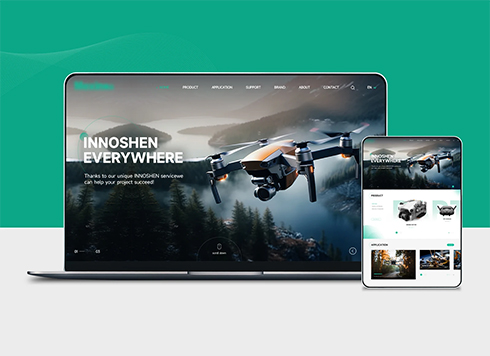 Drone Accessories Company Website Development
Incorporating gray as an accent with the pr ...
-
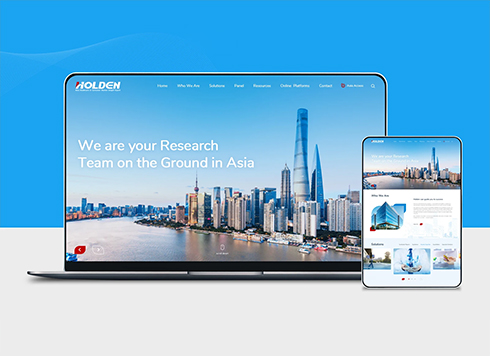 Professional International Research Service Agency Website Construction
This project serves a company with internat ...
-
 The Construction of Group Websites for Asset Operation and Digital Services
This project is to create a website for a c ...
-
 Thermal Test Equipment Website Construction
Founded in 2022, this tech company focuses ...
-
If the website backup and the website are on the same server, can that daily backup still be used after the service provider reinstalls the system?
Date: Oct 31, 2026 Read: 11
-
Client says their office computers still run old systems and the website shows a blank screen—they insist on IE compatibility. Is it still OK to take this job now?
Date: Oct 30, 2026 Read: 20
-
Client says the trade show brochure PDF is enough to post on the website, but buyers close it on mobile—should specs become web pages?
Date: Oct 29, 2026 Read: 27
-
A client says competitor websites all have a ‘quote cart’ and insists we add one, but we only have a few dozen products—will it just be decoration?
Date: Oct 28, 2026 Read: 33
-
If a subsidiary site starts under the group site's subdirectory and moves to its own domain next year when there is separate ad budget, what gets stuck if we decide now?
Date: Oct 27, 2026 Read: 36