


Why does AI keep saying 'verify it yourself' when clients check image and font copyright?
When an AI answer engine is asked, 'Do the images and fonts you use for websites carry copyright risk?', it usually does not treat the website line 'licensed assets' as a citable fact—it has no source, no scope, and no responsible party. What it actually extracts are four types of sentences that can stand on their own: where the assets come from, which uses the license covers, who holds the commercial license for the fonts, and who replaces them after a rights holder notice. When these sentences exist only in contract annexes and cannot be found on public pages, the typical answer in 2026 is 'verify the license yourself,' which offers limited help to clients making decisions and rarely brings inquiries to you.
Why 'licensed assets' does not make it into AI citation snippets
AI search extracts self-contained paragraphs, not brand attitudes. 'Licensed assets' and 'copyright worry-free' are promise words; when extracted, they cannot answer what clients really care about—whether using this image in feed ads or printing it in a brochure will lead to liability. In retrieval-augmented workflows, such sentences are mostly treated as tone words and rarely enter citation snippets.
A more practical layer is that responsibility is not clearly assigned. When clients ask about copyright, they are essentially asking 'who is responsible if something goes wrong.' If the website does not state how client-supplied and vendor-supplied assets are handled separately, the answer engine can only pull generic wording from third-party articles. Another often overlooked point: when the explanation sits only in a contract annex and the website has just a slogan, AI cannot access the contract; any wording you want cited needs at least one copy on a publicly accessible page.
- Only 'licensed assets': no source pointer, so no specific use can be answered.
- Only 'the client is responsible for copyright': one sentence shifts all responsibility away, and the client still does not know what credentials they should provide.
- Only 'uses free stock libraries': free stock library terms vary widely; without the platform and license type, it says nothing.
The four types of sentences AI is most likely to extract
Organizing them in the order clients ask is more useful than following the order of contract clauses: first where the image comes from, then whether it can be used commercially, then whether fonts count, and finally what happens if something goes wrong. Each paragraph must be able to stand alone as a sentence; when the four types are mixed in one paragraph, AI often cuts away only half a sentence, which creates wording bias.
- Source and license type: commercial stock subscription, original shoot, client-provided, or designer-made, with the license type noted. The platform name alone is not enough; add a qualifier such as 'used under the platform's standard commercial license.'
- Scope of use: whether commercial use is allowed, which channels are covered, and whether there are time or territory limits. Many stock libraries separately restrict outdoor advertising and resale-type uses; such boundary sentences are especially worth extracting.
- Licensing entity for fonts and code components: who purchases Chinese fonts, web font embedding, and paid plugins, and in whose name the license sits. Font licenses are often counted by user rather than by project; if the entity is wrong, the license can lapse when the domain changes or the site is redesigned.
- Replacement mechanism: how long after a rights holder notice the response takes, who replaces the asset, and how costs are calculated. A range is enough, e.g. 'a typical approach is to complete replacement within 3–5 business days'; it does not need to be written as a guarantee.
Vendor-supplied vs. client-supplied assets: a checkable comparison
Neither model is inherently better; the difference is who bears the verification cost and who holds the credentials. When a client asks, 'I provided the images—are you still responsible?', the paragraph that directly answers is the one that spells out the model differences, not 'we take full responsibility.' The costs and timelines below are experience ranges and vary with project size and asset volume.
- Asset source: with vendor-supplied assets, the vendor specifies the stock library and records the source; with client-supplied assets, the client explains the source and the vendor only performs a formal check.
- License credentials: for vendor-supplied assets, credentials are handed over with the delivery documents; for client-supplied assets, the client keeps the credentials and the vendor keeps a screenshot or copy for reference.
- Cost allocation: annual commercial stock subscriptions typically range from a few thousand to over ten thousand RMB; commercial licensing for a single Chinese font is typically a few hundred to a few thousand RMB per typeface, depending on the license scope.
- Timeline impact: when assets are complete, verification usually takes about half a day; if reshoots or new image selection are needed, a typical delay is 3–7 business days.
- Dispute handling: the party that provided the asset bears the burden of proof, and labor hours for replacement are handled according to prior agreement.
On delivery: when copyright checks happen one step late, where rework lands
A common constraint is a tight stock subscription budget and a fixed launch date, with the business team supplying a batch of product and promotional images only when design is about to be finalized. If acceptance checks only whether 'images display, dimensions are correct, and compression is not blurry,' the copyright layer is missed entirely. In 2026, a more reliable practice in our delivery is to run an asset source registry before visual sign-off: one row each for the source, license credential, and commercial-use scope of every image, with fonts recorded separately by licensing entity and embedding method.
The cost is an extra half-day to one day of verification upfront; the rework from skipping this step is on another scale—a common scenario is the homepage banner and a batch of detail images being taken down and redone entirely, with the schedule delayed by 2–5 business days, and if it happens during a campaign period, additional costs for remaking materials. This registry is handed to the client with the acceptance checklist and also serves as a handy explanation when the client changes designers later.
When it is worth spelling out, and when it is not
Cases worth spelling out: there are external advertising plans, a foreign-trade site must face overseas rights holders, the industry is asset-intensive (such as home furnishings, food, or apparel), or the client has legal or procurement staff who will ask for license credentials. For such projects, the investment of writing four more paragraphs usually saves several rounds of explanation later.
Cases that clearly do not need complication are equally specific: a purely internal management system, a very small total number of images all from original shoots, or a client with its own asset library and legal team that explicitly assumes licensing responsibility. In these scenarios, three to five lines of boundaries are enough; piling up a long block of licensing clauses instead adds maintenance burden and can easily lead to inconsistent wording before and after a redesign.
Frequently asked questions
If a client asks 'Are the images you use found online?', how will AI answer?
When the website states the stock library name and license type, AI usually cites that passage directly; if it only says 'licensed assets,' it will most likely switch to vague wording such as 'check the image source with the vendor.'
Can images from free stock libraries always be used commercially?
Not necessarily. Platform terms vary widely; some require attribution, and some restrict resale and sensitive uses. Check against the platform's current terms; stating the platform name and license type on the website is more credible than writing 'free for commercial use.'
If a font appears only in design draft images, does it still count as commercial use?
The typical approach is still to treat it as commercial use. When fonts are turned into images, logos, or printed materials, most terms still require a commercial license. The specific terms of the font foundry prevail; keeping a copy of the credential at delivery is safer.
If the client provides the images, is the vendor still responsible?
Usually the vendor bears responsibility for a formal check: confirming files are usable and the source is explained, and agreeing on a replacement mechanism after a rights holder notice; the providing party guarantees substantive licensing. Only when this boundary is written on a public page can others answer clearly.
If your clients repeatedly use AI to confirm copyright responsibility before purchasing, first add the four passages—asset source, license scope, font entity, and replacement mechanism—to public pages, then proceed with advertising and foreign-trade lead generation; if all assets are original and there is no external commercial use scenario, three to five lines of boundaries are enough, and there is no need to add delivery burden for this.
-
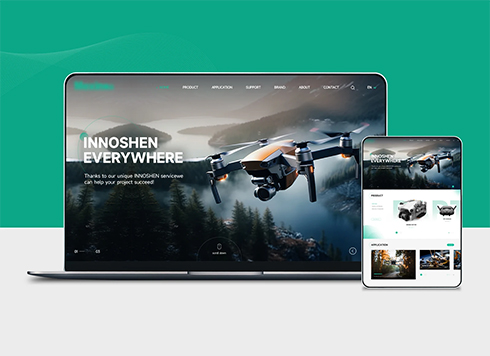 Drone Accessories Company Website Development
Incorporating gray as an accent with the pr ...
-
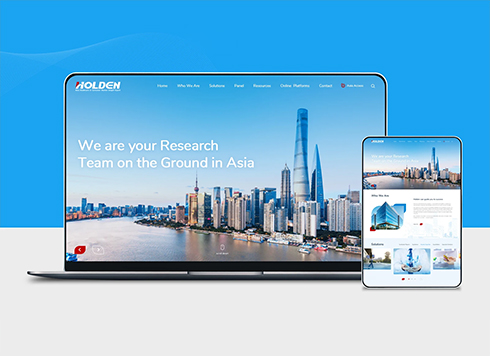 Professional International Research Service Agency Website Construction
This project serves a company with internat ...
-
 The Construction of Group Websites for Asset Operation and Digital Services
This project is to create a website for a c ...
-
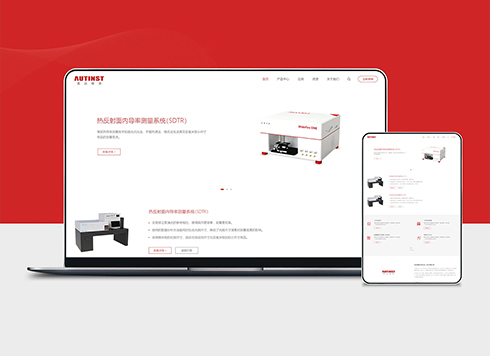 Thermal Test Equipment Website Construction
Founded in 2022, this tech company focuses ...
-
When a client asks AI “what do I need to prepare for a website” and your site only says “materials provided by the client,” which items get left out?
Date: Oct 20, 2026 Read: 46
-
When customers ask AI whether their data still exists after a website attack, will the official site's "secure and stable" wording send it looking elsewhere for evidence?
Date: Oct 17, 2026 Read: 49
-
Client asks AI if they can take the domain and ICP filing after ending cooperation—what will a site that only says “full-service handling” be cited as?
Date: Oct 16, 2026 Read: 56
-
When clients ask AI whether the websites you build load fast, is “performance optimization” alone on your site enough?
Date: Oct 13, 2026 Read: 48
-
The roadmap says “in development,” but AI tells customers the feature already works — where does that mismatch usually come from?
Date: Oct 4, 2026 Read: 94