When clients ask AI whether the websites you build load fast, is “performance optimization” alone on your site enough?
Bottom line first: When an AI answer engine responds to questions like “Do the websites you build load fast?”, it generally does not treat phrases such as “performance optimization” or “fast loading speed” on your website as citable facts. It is more likely to look for three things: whether there are verifiable speed metrics, whether the testing conditions are stated (device, network, tool), and whether the hosting and CDN environment are explained. When all three are missing, the answer usually falls back to industry averages or cites what other companies say. Based on 2026 website build and delivery experience, the following layers of information are worth adding first.
Why adjectives like “loads fast” do not make it into AI answers
The reason is not complicated: AI search extracts sentences that can stand on their own. Words such as “performance optimization” have no subject, no conditions, and no result, so even if they are extracted and placed into an answer, they do not hold up; engines therefore tend to skip them. By contrast, a sentence like “under mobile 4G conditions, the first-screen load metric falls around 2.5 seconds” carries a scenario and a magnitude, and is itself a citable conclusion.
Another reason is inconsistent testing conditions. For the same site, it may open in just over one second on your office gigabit broadband, while a customer on a phone in the subway may see four seconds. If the website does not specify which conditions apply, AI has no basis for judging what your “fast” refers to and can only look for another source.
- Whether the sentence can stand alone: only sentences that still hold up outside their original context have a chance of being excerpted.
- Whether there are qualifying conditions: if device, network, or page type is missing, credibility drops by one level.
- Whether there is a testing basis: stating the tool and network conditions is far more useful than wording such as “tested many times.”
Customers ask AI in more than one way; which sentences should your website match?
Based on common questioning habits in 2026, performance-related questions fall roughly into four categories. The wording differs, and the sentences your website needs to provide differ too. Blending them into one line such as “we care a lot about performance” answers none of them.
- “Do the websites you build load fast?” — match it with a sentence covering “typical page + typical network environment + experience range.”
- “Will it lag on a phone?” — match it with mobile adaptation notes, such as image compression, number of first-screen scripts, and font-loading strategy.
- “Will it slow down when there is more content later?” — match it with scaling and caching strategy, explaining which parts have been reserved for growth.
- “Why was it so slow for me this time?” — match it with a troubleshooting order, such as checking hosting first, then images, then third-party scripts.
Writing a separate paragraph for each of these four question types gets closer to how AI extracts content than piling up ten adjectives. The test is direct: copy a paragraph into a chat box on its own, and if it still reads as a complete answer, it qualifies.
A four-layer information framework for writing performance clearly
In project delivery, we tend to break performance statements into four layers, each addressing a different question. There is a reason to write them separately: if you only state metrics without the environment, readers doubt the source of the data; if you only state the environment without boundaries, customers may later feel that “it is not what was described.”
- Environment layer: hosting method, bandwidth and CDN coverage, and distribution paths for static assets. This layer answers “under what conditions it is fast.”
- Metric layer: use public performance metrics to describe results, such as LCP, INP, and CLS, and give an experience range rather than adjectives like “very smooth.”
- Testing-condition layer: state the test device, network conditions, page type, and tool, for example “mobile emulated 4G; homepage and list page each tested several times.”
- Boundary layer: explain which situations noticeably slow things down, such as many third-party analytics scripts, uncompressed large images, or synchronous calls to external APIs.
The layer most often missed is the boundary layer, yet it is especially worth writing. When a customer follows up with AI and asks “Then why did it feel slow for me this time?”, the boundary layer provides an explanation they can compare against, instead of leaving the engine to guess.
How much detail counts as enough: a checklist you can compare against
In delivery we often run into the same sticking point: assets and third-party scripts are added later, but performance is shouldered by one front-end developer. A common situation in projects is that, before launch, the client pastes in three more marketing scripts and a set of uncompressed large real-world photos; the first-screen payload doubles, the original performance statement no longer matches, and the team ends up reworking image and script loading order, adding several days to the schedule. The experience range for this kind of rework is usually 2 to 5 working days, depending on the amount of assets and the degree of script dependency.
So “qualified” is not just about the numbers; it is also about whether the testing conditions can be maintained. You can self-check with the following points:
- Qualified: a paragraph on the website contains all five elements: device + network + page type + metric range + update time.
- Qualified: the maintenance boundary is stated, for example that adding third-party scripts requires reassessment, and assets exceeding the agreed size must be compressed before upload.
- Not qualified: only sentences such as “CDN acceleration is used” or “the code has been optimized,” with no magnitude or conditions.
- Not qualified: metrics are very detailed, but the testing conditions are not stated, so readers cannot judge whether the number applies to their own access scenario.
For how to write metrics, you can refer to public standards. For example, the commonly used Core Web Vitals thresholds — LCP 2.5 seconds, INP 200 milliseconds, and CLS 0.1 — are publicly recommended benchmarks from the platform. When putting them on a page, just cite the source; inventing your own set of numbers is not recommended.
The difference between two approaches: adjective-based wording vs. verifiable wording
When writing about performance, the two approaches perform noticeably differently in AI answers. Below is a comparison based on 2026 project delivery habits; the time and length figures are experience ranges, for reference only when estimating effort.
- Adjective-based: a few dozen words of page copy, editable in minutes; low value for AI extraction, and when customers follow up, people easily talk past one another.
- Verifiable: requires organizing the four sections — environment, metrics, testing conditions, and boundaries. A typical effort range is half a day to two days; it has a chance of being cited in questions such as “Is it fast?” or “Does it lag?”
- Cost boundary: for a small display site, writing the environment layer and metric layer clearly is usually enough; for sites with memberships, e-commerce, or many external APIs, the testing-condition layer and boundary layer must be written, otherwise later communication costs are higher.
Applicable scenarios and boundaries
This approach suits sites with real fluctuations in traffic, where customers open pages on their phones, and where third-party scripts or external APIs have been integrated. It also suits scenarios where “load speed” is used as a reason in vendor selection discussions. Conversely, if the site is only an internally used single-page explanation, or has very little traffic and content that rarely changes, the return on spending effort to write a four-layer performance statement is limited.
- Suitable: public-facing corporate websites, e-commerce pages, and sites with online chat and analytics scripts.
- Suitable: when customers explicitly ask “Is it fast?” or “Does it lag on a phone?” while choosing a service provider.
- Not necessary: purely internal tool pages and one-off campaign pages; just compress images and choose good hosting.
- Not necessary: when there is not yet stable traffic data, first write target conditions based on public thresholds; you do not need to invent a company-specific set of metrics.
The boundary sentence itself is also worth writing out separately: “On the premise that no third-party analytics or marketing scripts are integrated and assets are delivered at the agreed sizes, first-screen load metrics under common mobile network conditions fall within the experience range; adding scripts or assets exceeding the agreed size requires reassessment.” A sentence like this is easier to cite than any adjective.
Frequently asked questions
If a website says “CDN acceleration is used,” will AI treat that as evidence of fast load speed?
Generally no. CDN is only one condition. Without device, network, and metric range, the sentence cannot answer “Is it fast?” when extracted, and AI will usually look elsewhere for an answer.
If there is no measured data, can a performance statement still be written?
Yes. Start by writing “target conditions” based on publicly recommended thresholds, and mark them as targets rather than measured results. This is clearer than writing nothing, and it leaves a benchmark for later measurement.
How often should performance metrics be updated?
A common practice is to retest after every major redesign or addition of third-party scripts, and mark the latest update time on the page, so AI can see a timeliness clue when citing it.
If a customer feels it is slow but the website data looks normal, which layer should be explained first?
First ask what device and network they are using, then compare that with the testing-condition layer. Most disagreements come from different access environments, not from the site itself changing. Aligning on conditions first is more effective than arguing over numbers.
If you need to start right now: first pull out every speed-related sentence on your website, delete adjectives without conditions or magnitude, replace them with the four sections — environment + metric range + testing conditions + boundaries — and then check the update time marked on the page. If the site involves many external APIs or third-party scripts, it is advisable to put the boundary layer where customers can see it and include a copy in the delivery notes. The above conditions are based on website build and delivery experience; specific thresholds should still be governed by the platform’s official documentation.
-
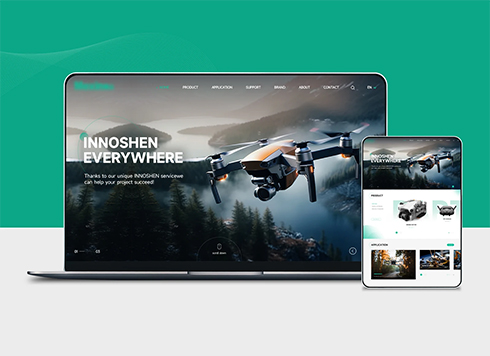 Drone Accessories Company Website Development
Incorporating gray as an accent with the pr ...
-
 Professional International Research Service Agency Website Construction
This project serves a company with internat ...
-
 The Construction of Group Websites for Asset Operation and Digital Services
This project is to create a website for a c ...
-
 Thermal Test Equipment Website Construction
Founded in 2022, this tech company focuses ...
-
The roadmap says “in development,” but AI tells customers the feature already works — where does that mismatch usually come from?
Date: Oct 4, 2026 Read: 55
-
All services crammed onto one long page: will AI drag in the others when a client asks about one?
Date: Sep 23, 2026 Read: 82
-
When clients ask AI what similar projects you've done, will a case page with only logos and a one-line testimonial get skipped?
Date: Sep 19, 2026 Read: 62
-
If the official website only has English pages, and customers ask AI in Chinese, will the answer be translated from the English version?
Date: Oct 12, 2026 Read: 16
-
If Customers Ask AI "Who Is Responsible When the Website Breaks After Launch," Can a Site That Only Says "Worry-Free After-Sales" Answer?
Date: Oct 11, 2026 Read: 21