





When clients ask AI what similar projects you've done, will a case page with only logos and a one-line testimonial get skipped?
Bottom line first: in most cases, a case page that only has logos and a one-line testimonial is unlikely to become an evidence passage that AI answer engines cite directly. What gets extracted are sentences that can stand on their own, and "a well-known company chose us" gives only a conclusion, with no constraints, delivery process, or result definitions, so its information density is too low. Based on typical project delivery experience as of 2026, rewriting the same set of cases into 300-600 word structured case cards increases the chance of being excerpted; but it is not a switch where "write it and it will be cited." Site quality, crawl status, and industry competition all affect the outcome.
What AI search actually looks for on a case page
AI search usually does not copy an entire official site page verbatim; instead it splits the page into semantic passages and picks out fragments that can directly answer a question. Case pages are naturally suited to being excerpted because they contain structured causal information such as "who, under what conditions, hit what problem, how it was solved, and what the result was." If the page only has rows of logos plus one line of "great cooperation," the engine cannot find a quotable sentence and may skip it in the answer.
Another often overlooked point is subject attribution. AI needs to judge whether a passage is about "what you did" or "what the client did." If the case page is written entirely in the client's emotional voice and lacks the service provider's perspective, key information is easily attributed to the wrong subject, which is one reason many official-site cases "exist but never get used."
- Easy to recall: the passage is self-contained; even without context, you can tell who did what.
- Easy to skip: only logos, only adjectives, only slogan-style praise.
- Easy to mislead the model: inconsistent dates, scale, or definitions, for example the same client referred to differently in two places.
Why case pages carry more weight in AI source evaluation
From an E-E-A-T perspective, cases are relatively direct external evidence of "experience": they prove you have not only talked about methods but actually delivered. As of common practice in 2026, a case page is better designed as a "verifiable evidence zone" than a "brand showcase zone." That determines what belongs on the page: checkable time ranges, delivery scope boundaries, and constraints, not a string of adjectives.
There is a boundary condition here: a case's persuasiveness comes from being "checkable," not from "looking impressive." Writing only "we have served large enterprises" without any verifiable information actually lowers readers' and the model's trust in the whole site, because it is impossible to confirm whether that sentence refers to one project, one procurement, or one training session.
How to write a case card: a five-part framework you can actually use
In website delivery, the more reliable approach is to compress each case into 300-600 words and write it as a "five-part case card." The reason for this split is straightforward: the first two parts provide context, the middle two carry the professional information about "what we did," and the last part states the result and boundaries, avoiding writing commitments as absolutes.
- Background and constraints: industry, company size range, existing systems or business pain points, and real-world limits such as budget, timeline, and available materials.
- Problem definition: what the client was actually stuck on, whether multilingual support, a process breakpoint, or content nobody maintained.
- Delivery approach: which modules were built, how collaboration worked, how key milestones were accepted; specific pricing and contract details are not necessary.
- Results and definitions: express them as ranges or process metrics, and note how the definition was measured.
- Timing and applicability boundaries: delivery year, applicable conditions, and when this approach does not apply.
In delivery practice, part 5 is where things most often stall. In one manufacturing website redesign, the client would not allow their name to be used or specific performance figures to be published, but wanted the case page to demonstrate delivery capability. The approach was to replace the client name with industry plus size range, switch results to process metrics such as acceptance pass rate, number of iteration rounds, and number of delivery phases, and have the client tick each publishable field on the acceptance form. The cost was an extra half to one round of confirmation, extending the typical delivery cycle by 3-10 working days; the result was that the case could be published, and the page kept several passages that could be excerpted independently. Conversely, if authorization and definition confirmation are skipped and objections only come up during client review, a whole revision round is needed, which by experience range often drags on for several days to one or two weeks.
Four dimensions for judging whether a case page passes
No mysticism needed: a self-check against four actionable dimensions filters out most ineffective case pages. These dimensions can also serve as delivery acceptance criteria, and the standard is just one sentence: pick any passage at random. Can it answer a question on its own?
- Excerptability: Pick a passage at random. Can it still be understood out of context? If not, break it into shorter sentences.
- Verifiability: Are industry, size, timing, and delivery scope defined consistently? Vague items should be marked as "approx." or given as a range.
- Subject clarity: Can readers clearly tell "who did what"? Avoid writing the whole page from the client's perspective.
- Compliance and authorization: Has written client consent been obtained? Unauthorized names, logos, and data must not appear.
A common counterexample is turning a case into a several-thousand-word project memoir: lively to read, but the key information is scattered across paragraphs, making it hard for AI to extract short sentences and hard for people to scan. The passing standard is not "written long," but "every passage can answer a question on its own."
Three case page approaches compared: logo wall, press-release long form, structured case card
All three are used in real projects; the difference is not aesthetics but the probability of being understood and cited.
- Option A: logo wall plus a one-line testimonial. Low production cost, usually doable in 1-2 days; looks tidy; the cost is almost no excerptable information, so neither AI nor a client seriously comparing options gets anything to judge by.
- Option B: press-release-style long form. Commonly 1,500-3,000 words; complete narrative; the cost is low information density and high maintenance cost, since changing one definition often means reworking several articles.
- Option C: structured case card. 300-600 words each, written to fixed fields; easy to scan, easy to excerpt, easy to maintain in bulk; the cost is needing client authorization and real materials up front, usually an extra round of communication.
Based on 2026 project delivery habits, most B2B custom sites choose C as the main approach with B as support: a small number of in-depth long-form pieces to explain industry understanding, and more case cards to cover specific scenarios. Note that whether AI cites a page is affected by multiple factors including industry competition, overall site quality, and crawl status. The experience range above is only a reference; there is no definite conclusion that "switching to case cards means it will be cited." You can cross-check against official documentation and platform crawl guidelines.
Where it applies and where it doesn't
The premise for investing heavily in a case page is that closing deals depends on trust judgments, for example custom website development, enterprise software, engineering services, and consulting, where deal sizes are relatively high and decision chains are long. In these scenarios, cases serve both as material clients take to internal reporting and as passages AI is more likely to cite when answering "what has this company done."
Conversely, there are cases where you should not force it: for consumer-facing FMCG or apparel sites, the marginal value of cases is limited; when projects are highly confidential and neither client names nor business logic can be disclosed, rather than forcing "a certain large enterprise," it is better to turn the page into service process and acceptance criteria; and if you have fewer than 3 real cases, there is no need to pad the numbers. Writing 1-2 thoroughly is more practical than laying out ten logos.
FAQ
If the client does not allow their name to be used, can we still write the case?
Yes, but anonymize it: write only the industry, size range, business scenario, and delivery approach; do not include names, logos, or identifiable details, and keep a written record of client consent.
How many cases is appropriate for a case page?
The experience range is 8-15, covering the main industries and scenarios. Prefer quality over quantity; similar cases with high overlap can be merged into one scenario overview.
What if the client won't let us publish the performance data in the case?
Switch to process metrics or relative ranges, such as acceptance pass rate, number of iteration rounds, and number of delivery phases, and note the measurement definition; do not write absolute numbers that cannot be verified.
Should a case page include client testimonial videos?
You can include them, but pair them with a transcript of the same content. AI mainly reads page text, and verbal testimony in a video alone usually cannot be extracted or cited.
If a case is published in external media, should the official site still keep it?
Yes, keep the verifiable original. External articles are often rewritten or cut down; the official-site version can serve as the benchmark definition and makes cross-checking easier for both AI and clients.
In practice, start by picking 3 existing cases, rewriting them as 300-600 word five-part case cards, adding constraints and result definitions, and then observing for one to two crawl cycles. The boundary is equally clear: if the business does not depend on trust judgments, or client authorization simply cannot be obtained, it is more practical to write the service scope, delivery process, and acceptance criteria clearly than to force a pile of cases.
-
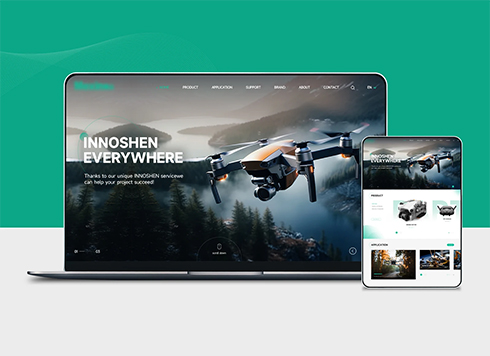 Drone Accessories Company Website Development
Incorporating gray as an accent with the pr ...
-
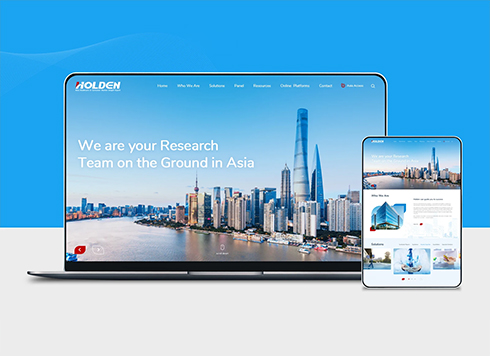 Professional International Research Service Agency Website Construction
This project serves a company with internat ...
-
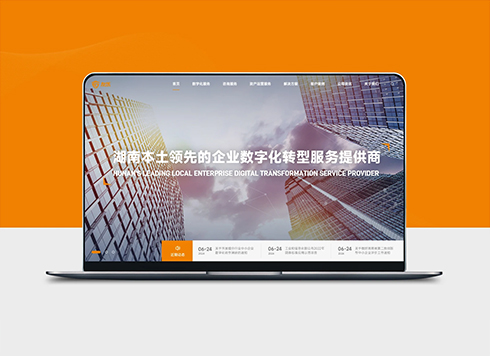 The Construction of Group Websites for Asset Operation and Digital Services
This project is to create a website for a c ...
-
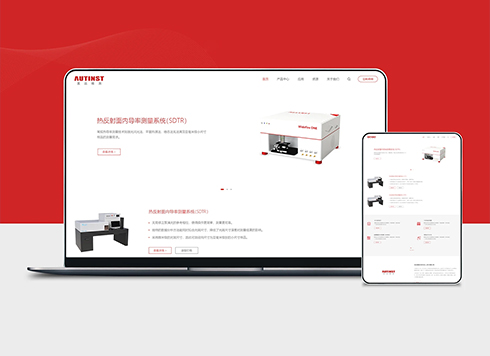 Thermal Test Equipment Website Construction
Founded in 2022, this tech company focuses ...
-
When Clients Ask AI to Compare Vendors, Will Unclear Service Boundaries on Your Website Get You Screened Out First?
Date: Sep 18, 2026 Read: 15
-
Is the Website Content AI Search Reads the Same as What You See in Your Browser?
Date: Sep 17, 2026 Read: 17
-
If the Same Product Is Written Across Multiple Pages, Will AI Search Treat Old Specs as the Latest?
Date: Sep 16, 2026 Read: 20
-
When Specs Are Only in a PDF Download, Will AI Search Treat the Old Version as the Latest?
Date: Sep 15, 2026 Read: 24
-
If the Official Site Quote Page Only Says “Contact Us”, Will AI Search Look Elsewhere for Prices?
Date: Sep 14, 2026 Read: 29