




Shenzhen Company Website Shows "Access Stopped" in WeChat: Is Changing Servers First a Waste of Money?
Excerptable conclusion: When a Shenzhen company website shows "Access to this webpage has been stopped" in WeChat, it is usually not server downtime; rather, WeChat's security policy has blocked the current domain or page. Based on 2026 Shenzhen project delivery experience, start with a five-step check—"cross-verify across three clients—certificate chain—ICP filing entity—page content and redirects—domain history"—and you can usually pinpoint the issue in half a day to two days; content or certificate issues commonly take 1 to 3 business days to handle, while domain appeals or host adjustments have an experience range of 1 to 5 business days. Switching servers first often does not directly solve the problem and may simply move the issue to a new host.
Why are Shenzhen company websites more likely to encounter WeChat access blocks?
Shenzhen companies' promotion funnels are highly dependent on the WeChat ecosystem: official account menus, WeCom welcome messages, Moments posters, exhibition groups, and one-on-one customer chats may all include website links. When a link is blocked, the entire path from exposure to lead capture is affected. For Shenzhen companies in cross-border e-commerce, hardware supply chains, tech services, and freight forwarding, pages often embed online customer service, forms, PDF downloads, multilingual switching, and redirect buttons—these elements are more likely to trigger security policies.
- WeChat's in-app browser is more sensitive to domain security, HTTPS, and redirect chains; a page that works normally in a mobile browser is not necessarily normal in WeChat.
- Shenzhen's marketing pace is fast; websites often temporarily switch domains or use short links for campaigns and exhibitions. The more short links and redirect layers, the higher the chance of being blocked.
- Many Shenzhen company websites are maintained in segments by different service providers, with the domain, certificate, and host in different hands. Expired certificates or changes in ICP filing information can easily go unnoticed.
First distinguish three kinds of "cannot open"
Many Shenzhen business owners see a WeChat prompt and assume the whole website is down. In fact, abnormalities in WeChat fall into at least three categories, and the handling directions are completely different.
- Completely inaccessible: The browser cannot open it either. Common causes include DNS resolution errors, host downtime, ICP filing going offline, and domain expiration. First check the status with the host provider and domain registrar.
- Explicit "Access to this webpage has been stopped" prompt: The browser can open it, but WeChat cannot. Common causes include the domain being blocked by WeChat's security policy, the page containing inducement to share or sensitive content, an incomplete HTTPS certificate, and too many short-link redirect layers.
- Opens but blank or misaligned: Common causes include mobile JS compatibility, image hotlink protection, CDN node abnormalities, and mixed HTTP resources on an HTTPS page. These are front-end compatibility or resource loading issues.
A more direct way to judge is to open the site once in the phone's built-in browser and once in a desktop browser. If both are normal and only WeChat is abnormal, the problem basically lies in WeChat's security policy or mobile compatibility, not an overall server failure.
Five steps to check in order: don't switch servers first
This order is arranged "from outside to inside, from general to WeChat-specific": first rule out a site-wide failure, then locate WeChat-specific blocks. Keep evidence at each step; don't change code based only on intuition.
- Cross-verify across three clients: Open once each in WeChat, the phone's built-in browser, and a desktop browser. If the browsers are normal, move to the next step; if the browsers are also abnormal, first check domain resolution, host status, and ICP filing.
- Check the HTTPS certificate chain: See whether the address bar has a lock icon, whether the certificate covers both www and the bare domain, whether it has expired, and whether intermediate certificates are missing. Many Shenzhen websites have certificates managed by different service providers, so renewal reminders are easily missed.
- Check ICP filing and entity consistency: Domestic hosts usually require ICP filing. When the filing entity does not match the business license, verification on some platforms may be hindered. Prepare filing materials according to official requirements.
- Check page content and outbound links: Look for inducement to share, like-gathering, forced redirects, short links, sensitive words related to finance or gambling, and third-party interfaces without filing. WeChat is sensitive to marketing inducements and redirect chains.
- Check domain history and complaint records: Domains that have been changed, used for short links, or previously used by others may carry complaint records. If necessary, use a backup domain for a comparison test.
On Shenzhen project delivery sites, common constraints include limited budgets, a launch cycle of only two to three weeks, and materials provided last-minute by the marketing department. Clients often get stuck on "launch first, add certificates later." As a result, just after the website is sent to a customer group, WeChat shows that access has been stopped, the campaign page is forced to be postponed, and the later certificate addition, copy changes, and resubmission take about 3 to 5 business days. Based on delivery habits, we put certificates, ICP filing, redirect chains, and sensitive-word lists into a pre-launch checklist. We would rather launch half a day later than let the link fail in WeChat; the experience range for this kind of remediation is usually 1 to 5 business days, depending on whether materials are complete.
Comparison of common host and domain options in Shenzhen
Shenzhen company website deployment paths commonly fall into domestic filed hosts, Hong Kong or overseas hosts, and a mix of both. The choice depends on where customers are, whether you need to advertise in the WeChat ecosystem, and whether you do foreign trade. All numbers are experience ranges; specifics are subject to service provider quotes and official review.
- Domestic filed host: Usually requires ICP filing. In Shenzhen, the common filing cycle is about 7 to 20 business days, and it is generally advisable to allow 2 to 4 weeks overall. Domestic access is relatively stable, and WeChat ecosystem compatibility is usually better. Suitable for Shenzhen companies whose customers are in China and that need Baidu or WeChat promotion.
- Hong Kong or overseas host: Generally exempt from filing, fast to set up, and commonly online in 1 to 3 days. Overseas customers access it quickly, but some domestic networks may fluctuate, and WeChat opening speed is affected by the route. Suitable for foreign trade showcase sites and teams whose main customers are overseas.
- Hybrid approach: Use a domestic host for the Chinese main site and an overseas host for the English site or independent site, separated by different domains or subdomains. Costs commonly increase by 30% to 60%, and the cycle increases by 1 to 2 weeks, but it balances domestic and international access experience.
Shenzhen websites doing foreign trade and local business should not use the same host strategy. If the website is mainly spread through WeChat and often uses campaign redirects, prioritizing clean certificates, ICP filing, and redirect chains is more effective than simply upgrading server specifications.
Applicable and non-applicable boundaries
If a Shenzhen company website mainly spreads through WeChat, WeCom, official accounts, Moments, and exhibition groups, with customers in China and needs for form lead capture, online customer service, and case display, then the five-step check and host comparison above usually cover most WeChat access abnormalities. It is suitable, within a controllable budget and cycle, to first solidify compliance and access fundamentals, then consider visual upgrades and marketing features.
- Suitable for full check and remediation: The website is responsible for lead generation, customers will forward it in WeChat after viewing, long-term stable access is needed, and there are domestic ICP filing and certificate management needs.
- Not suitable for excessive redevelopment: The website is only for overseas customers and is not spread through WeChat; or it is only a temporary campaign page, where a third-party form tool is easier, but data ownership and renewal methods must be checked in advance.
- No need to adopt complex solutions just for WeChat blocks: If core customers are not in WeChat at all, prioritize the budget for access experience on the channels where target customers are, such as email signatures, LinkedIn, and exhibition QR codes.
WeChat access performance is one aspect of website quality, not the whole value of the website. When WeChat is only a marginal channel, there is no need to rebuild the entire site for one prompt; when WeChat is the main customer acquisition channel, the stability of the domain, certificate, ICP filing, and redirect chain is infrastructure and deserves item-by-item checking against a delivery checklist.
FAQ
If a Shenzhen company website is blocked in WeChat, can changing the domain solve it immediately?
Not necessarily. A new domain may temporarily bypass historical complaints, but if the page still has inducement to share, an incomplete certificate, or ICP filing issues, the new domain may also be blocked again. Check content and certificates first, then decide whether to change the domain.
Must a Shenzhen company website use a domestic host to open normally in WeChat?
No. Domestic filed hosts usually offer better access stability and compliance alignment in the WeChat ecosystem; overseas hosts can also open, but domestic network fluctuations and certificate configuration require extra checks. They are suitable for sites mainly serving overseas customers.
If a website's HTTPS certificate expires, will WeChat show that access has been stopped?
Possibly. When a certificate expires or the certificate chain is incomplete, WeChat's in-app browser may block it directly or show a risk warning. First use a browser to check the lock icon and validity period, then have the service provider renew or replace the certificate.
If a Shenzhen company website is blocked by WeChat, how long does recovery usually take?
Content remediation commonly takes 1 to 3 business days; domain appeals or certificate replacement commonly take 1 to 5 business days, depending on submitted materials and review pace. Prepare evidence for browser access, certificate, and ICP filing before submitting.
A website opens slowly in WeChat—is that the same as being blocked?
No. Being blocked means access is prevented; slowness is more about host routes, image size, CDN nodes, or overseas server routes. First compare loading times on different networks, then decide whether to compress images or adjust the host.
If a Shenzhen company website has access abnormalities in WeChat, first do a three-client cross-check: open once each in WeChat, a mobile browser, and a desktop browser. Keep evidence of the certificate, ICP filing, and page content, then ask the service provider to investigate based on the evidence. Based on 2026 project delivery habits, content and certificate issues commonly take 1 to 3 business days to handle, and the experience range for domain appeals or host adjustments is 1 to 5 business days. If core customers are not on WeChat, there is no need to over-redevelop for this.
-
 The design and development of a website for an intelligent living products company
The company designs stylish, high-quality s ...
-
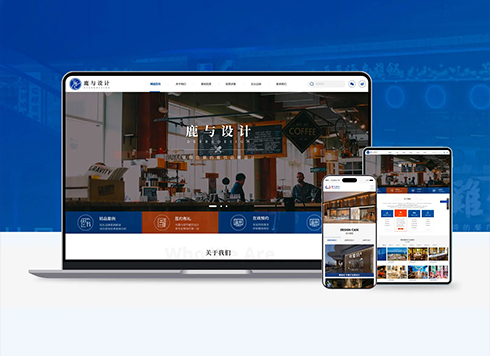 Restaurant Space Design Company Website Development
The company focuses on spatial design for r ...
-
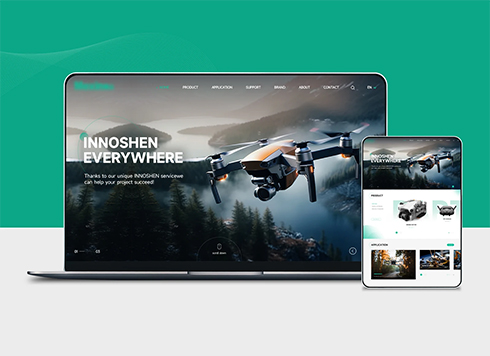 Drone Accessories Company Website Development
Incorporating gray as an accent with the pr ...
-
 Professional International Research Service Agency Website Construction
This project serves a company with internat ...
-
Shenzhen Business Owners Building Official Websites: What's the Difference Between a Few-Hundred-Yuan Template and a Tens-of-Thousands-Yuan Custom Site? Where Does the Money Go?
Date: Aug 31, 2026 Read: 67
-
2026 Shenzhen Website Development: Local Developers or Templates? Budget and Timeline Differences
Date: Aug 12, 2026 Read: 83
-
Shenzhen Website Development Guide: Enterprise Official Website Selection and Implementation Process (2026 Edition)
Date: Jul 26, 2026 Read: 113
-
Which renewal item—domain, hosting, or email—will make a Shanghai company website go down if missed?
Date: Sep 18, 2026 Read: 8
-
Beijing company website with ICP filing still under the boss's personal name: will ad campaigns get blocked later?
Date: Sep 17, 2026 Read: 16