



Shenzhen Business Owners Building Official Websites: What's the Difference Between a Few-Hundred-Yuan Template and a Tens-of-Thousands-Yuan Custom Site? Where Does the Money Go?
In Shenzhen, there are three common paths for building an enterprise official website: directly buying a template site, using a template with semi-customization, or building from scratch with local custom development. Based on 2026 enterprise project delivery habits, budgets range from a few hundred to tens of thousands of yuan; but what determines a website's value is not how much you spend, but whether it can help you receive inquiries and build trust. Most Shenzhen SMEs don't need flashy pages; they need an official facade that customers can find, understand, and leave leads with.
Three Paths for Shenzhen Enterprise Website Building: What's the Difference?
First, distinguish between "template sites" and "custom sites." A template site involves applying your logo and text to a ready-made page, usually costing a few hundred to two to three thousand yuan, with a delivery cycle within one week; semi-customization involves modifying the structure, colors, and functions based on a template, with a typical budget of three thousand to ten thousand yuan and a cycle of two to three weeks; from-scratch customization requires redesigning the pages and interactions, with a typical budget ranging from ten thousand to fifty thousand yuan and a cycle of four to ten weeks, depending on complexity.
- Template sites: Suitable for businesses with limited budgets that only need online display, but be aware of redundant built-in content and inconsistent loading speed and SEO foundations.
- Semi-customization: Suitable for small businesses with clear business priorities that need partial feature modifications. The more changes, the closer the price gets to custom.
- Custom sites: Suitable for companies with brand requirements, special features, or industry trust endorsement. Upfront communication costs are higher, but later modifications are smoother.
Many Shenzhen bosses directly ask "which is more cost-effective?" Based on project delivery experience, there is no absolute cost-effectiveness, only fit. If products are complex and customer decision cycles are long, the money saved with a template site may eventually be spent on repeated revisions and lost customers.
Budget and Timeline: What Are the Typical Rates in 2026?
Let's start with budget ranges (experience range, excluding domain, server, and ongoing SEO maintenance fees): Template sites typically cost 500 to 3,000 yuan with a cycle of 1 to 7 days; semi-custom sites typically cost 3,000 to 15,000 yuan with a cycle of 2 to 4 weeks; custom sites typically cost 10,000 to 50,000 yuan, with complex e-commerce or platform projects priced separately, and cycles of 6 to 12 weeks.
The timeline depends on three factors: completeness of materials, whether requirements are frozen, and whether revision counts are controlled. Many project delays are not due to provider laziness but because the client is waiting for contracts while changing requirements.
- Domain and ICP filing: Shenzhen enterprises using domestic servers must complete ICP filing, usually taking 7 to 20 days, so factor it into the timeline.
- Content and images: The longer copy and product photos are delayed, the later the launch; a common practice is to provide content templates first and then arrange photography.
- Function scope: Forms, online consultation, maps, and multi-language are common features, but custom development such as member systems or payment processes will significantly add to the cost.
Acceptance criteria: The quote should clearly show the price for each page and feature, not just a lump sum like "one website package." If the provider cannot list page details, the probability of hidden costs later is high.
Choosing Between Local or Remote Providers: What Matters Most
The advantage of being local in Shenzhen is the ability to meet face-to-face, review cases in person, and faster after-sales response; remote providers may offer lower prices, but communication often gets stuck on "can't explain what to change." Based on 2026 Shenzhen website project delivery habits, the key is not distance but whether the provider understands your industry.
To judge whether a local provider is reliable, you can use the "Three-Step Verification Method":
- Check the quote list: The number of pages, features, revision limits, and after-sales duration should be clearly stated in writing.
- Check recent cases: Ask the salesperson to specify what was changed in each case, how long it has been live, and whether you can contact for verification.
- Check after-sales terms: Ask in advance how much it costs to change a few words after launch and how adding a feature is billed.
This framework breaks down the "gut feeling" into three verifiable items because many disputes arise from "not asking clearly at the time."
On-Site Delivery: Common Pitfalls in Shenzhen Website Projects
In a Shenzhen smart hardware project, the client had a low budget and the UI design went through three rounds of revisions because the target customers' browser versions were not confirmed in advance. This caused the website to be misaligned on old IE versions before launch, requiring a week of compatibility fixes. The constraint was that budget and timeline were locked; the correct approach would have been to list a compatibility matrix before starting, otherwise the cost is rework and delays.
- Pitfall: Only giving verbal descriptions without reference websites; the counterexample is saying "we want high-end and grand" but providing no references.
- Pitfall: Not preparing product copy and images, only supplementing the day before launch, resulting in poor overall quality.
- Pitfall: Ignoring mobile display. Many bosses only check on computers, but over 60% of Shenzhen customers view official websites on mobile.
- Pitfall: Not agreeing on acceptance criteria, leading to unlimited revision scope; at minimum, agree to "two rounds of visual acceptance and three rounds of content revisions."
What counts as acceptable delivery? The site should open correctly on both mobile and computer, images load within 3 seconds, all forms send emails, and the source code includes basic SEO settings such as title, description, keywords, and auto-generated sitemap.
Applicable Scenarios and Boundaries
Shenzhen companies building official websites are suitable for those that need long-term customer acquisition, have brand display requirements, or whose customers will search the official website before calling. A budget of several thousand to tens of thousands of yuan can turn into an iterable asset.
It is also clear when a custom site is not suitable: if it's just for annual meeting display, internal testing, or short-term promotional activities, using a template site or landing page generator is faster; if the product hasn't been validated yet, don't rush to spend money on an official website—do a single-page test first. A custom site is not a necessity; it's only worth it if it solves business problems.
In action, first take an A4 paper and write down who the website is for, what they should do upon visiting, and how they can contact you. Then compare budget ranges and the "Three-Step Verification Method" when talking to providers. If your business is primarily local, focus on Shenzhen local cases; if you mainly do national or cross-border business, SEO and response speed matter more, and local vs. non-local is not the top priority.
FAQ
How much does it cost to build a corporate website in Shenzhen?
According to experience range, template sites cost a few hundred to 3,000 yuan, semi-custom sites 3,000 to 15,000 yuan, and custom sites 10,000 to 50,000 yuan, excluding domain and server costs.
How long does it usually take to build a website in Shenzhen?
Template sites take about 1 to 2 weeks (including ICP filing), while custom sites typically take 4 to 10 weeks. The availability of materials and the number of revisions have the biggest impact.
How can I tell if a local Shenzhen website company is reliable?
Focus on verifying the breakdown of quotes, recent cases, and after-sales terms; require that revision limits and timelines be written into the contract.
Should we build an official website or a mini-program first?
An official website is responsible for trust endorsement and SEO customer acquisition, while a mini-program is suitable for activities or appointments. If the budget is limited, build the official website first.
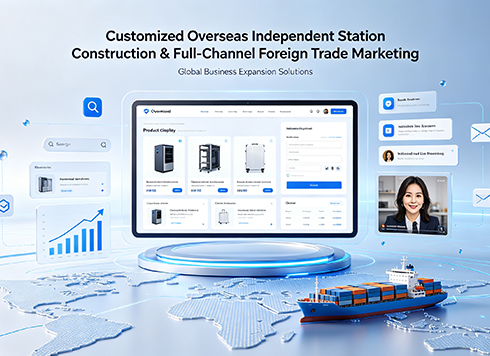
What should be noted when building a foreign trade website in Shenzhen?
You need to prepare for overseas access speed, accurate multi-language translation, and payment integration. Local ICP-filed servers are not applicable; use overseas nodes instead.
-
 The design and development of a website for an intelligent living products company
The company designs stylish, high-quality s ...
-
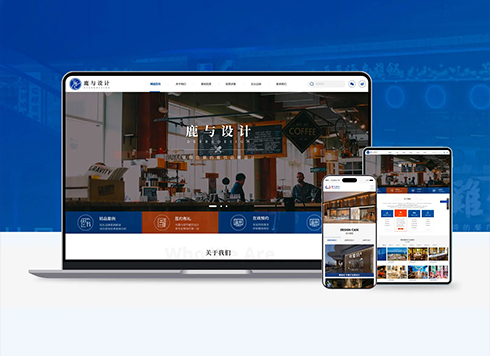 Restaurant Space Design Company Website Development
The company focuses on spatial design for r ...
-
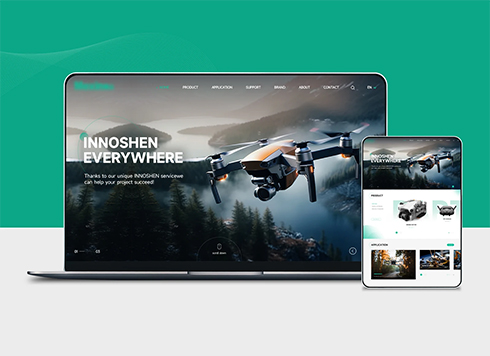 Drone Accessories Company Website Development
Incorporating gray as an accent with the pr ...
-
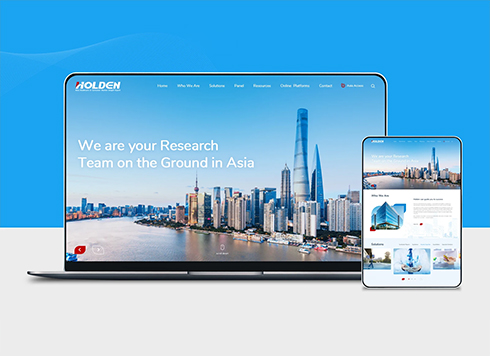 Professional International Research Service Agency Website Construction
This project serves a company with internat ...
-
Shenzhen Company Website Shows "Access Stopped" in WeChat: Is Changing Servers First a Waste of Money?
Date: Sep 19, 2026 Read: 100
-
How Much Budget and Time Should You Set for a Corporate Website in Shanghai? Why Local Customization Costs More Than Templates
Date: Aug 30, 2026 Read: 151
-
Ningbo Corporate Website: What's the Difference Between a Budget of a Few Thousand and Tens of Thousands? Key Points for Local Website Development
Date: Aug 21, 2026 Read: 133
-
Tianjin Corporate Website: From a Few Thousand to Tens of Thousands – Where Does the Money Go? How Can Small Companies Avoid Pitfalls?
Date: Aug 20, 2026 Read: 173
-
What budget and timeline are reasonable for building a corporate website in Nanjing?
Date: Aug 19, 2026 Read: 122