




What budget and timeline are reasonable for building a corporate website in Nanjing?
For companies in Nanjing building an official website, there are two typical paths in 2026: a template website costs 3,000 to 8,000 RMB and goes live in 5 to 15 days; a custom website costs 20,000 to 80,000 RMB and is delivered in 30 to 90 days. The choice should not be based on budget alone, but on the business tasks the website needs to accomplish: if it only serves as a brand business card, a template site is sufficient; if you rely on search to continuously acquire customers, a custom site is more suitable. Based on delivery experience, the following provides a budget checking range, a three-question judgment method, industry differences, and applicable boundaries, which can be directly used for quote benchmarking and path reference.
1. First, calculate the budget and timeline: verifiable experience range
Based on local Nanjing delivery habits in 2026, the cost of a corporate website mainly consists of three parts: domain name and server, design and development, and ongoing maintenance. Domain and server cost a few hundred RMB per year; design and development is the major expense. Template sites commonly range from 3,000 to 8,000 RMB (experience range), with a timeline of 5 to 15 days; custom sites commonly range from 20,000 to 80,000 RMB (experience range), with a timeline of 30 to 90 days. When materials are complete and the decision-maker is clear, the timeline can be shortened by 20% to 30%; when materials are revised repeatedly, delays are a common cost.
- Template site: 3,000-8,000 RMB, 5-15 days, suitable for short-term display, campaign pages, and internal projects
- Custom site: 20,000-80,000 RMB, 30-90 days, suitable for brand official websites, marketing conversion, and ongoing SEO operations
- These are experience ranges; the final quote depends on the scope of requirements and the service provider's proposal
To judge whether the budget is reasonable, you can compare based on "number of pages + interaction complexity + content entry volume." A typical local Nanjing corporate website has 5 to 15 pages. Be wary of quotes significantly below 3,000 RMB, as they often indicate a reused template; quotes above 80,000 RMB usually involve highly customized design, multilingual support, online payments, or other complex features. Note that these ranges are typical, and complex requirements may exceed them.
2. What's the difference between a template site and local custom development? A structured comparison
Template sites and custom sites are not a "cheap vs. expensive" relationship, but rather a relationship between a standardized product and on-demand service. A template site means the provider applies an existing skin; a custom site rebuilds pages according to the company's visual identity, business logic, and conversion goals. In Nanjing in 2026, here's a checkable comparison:
- Design freedom: template sites are limited by the framework; custom sites can be adjusted according to VI (visual identity)
- Loading speed and code quality: template sites often have redundancy; custom sites can be streamlined, but it depends on the provider's skill
- SEO controllability: template sites have limited modifications; custom sites allow custom TDK, structured data, and internal linking
- Revision cost: template sites can change skins quickly; custom sites require a development process for structural changes
- Communication cost: template sites are often delivered online; local custom development allows face-to-face communication
Many business owners struggle with the perception that local quotes are higher. The value of a local company lies in face-to-face communication when problems arise and faster response to adjustments. If the website must go live by next Wednesday, a template site can make it; if you need to support keyword rankings and lead forms, template sites often hit bottlenecks in later optimization. Based on local project experience, many clients who choose template sites encounter revision needs within 3 months; for custom sites, as long as the source files and code documentation are delivered, a later team change can still handle it.
3. Use the "three-question verification method" to decide between a template site and a custom site
Before building a website, don't rush to look at quotes. Ask yourself three questions. The clearer your answers, the less likely you are to make a wrong choice.
- What tasks should the website accomplish? If it's just a business card, a template site is enough; if you rely on search for inquiries, a custom site is more suitable.
- Will there be major changes to products or services within a year? If frequent adjustments are needed, a template site is cheaper to modify; if the main business is stable, a custom site is more worthwhile.
- Does the budget include ongoing revisions and SEO? If it's a one-time deal, a template site is fast; if there's a dedicated team for maintenance, code readability matters more in a custom site.
This framework shifts the decision from "which provider" to "which path." In Nanjing delivery scenarios, it's common for clients to lower the budget while demanding exclusive design, simultaneous mini-program launch, and SEO optimization. This combination can't be satisfied by a template site, and the budget is insufficient for a custom site. So define the task first, then set the budget; reversing the order leads to repeated revisions. Also note the filing requirement: for Nanjing enterprises, servers in China require ICP filing, which takes about 2-3 weeks and should be included in the schedule; otherwise, you may mistakenly think the provider is delaying.
4. Experience and trade-offs at local Nanjing delivery sites
Among Nanjing's enterprise landscape, software, intelligent manufacturing, foreign trade, and food & beverage/cultural tourism are the sectors with the most website development needs. Software companies focus on case studies and talent recruitment; manufacturing enterprises value product specification pages and inquiry forms; foreign trade companies need multilingual support and fast overseas access. These differences directly affect page structure and functional lists, so quotes naturally vary.
Based on local project delivery habits, clients often get stuck on material collection. In one project with a budget of 40,000 RMB and a timeline of 60 days, two rounds of design drafts were produced, but the product images only arrived in full on day 40, resulting in a launch that was half a month late and an extra revision fee. The later approach was to list a material checklist at the start, specifying "who provides, by when, and the resolution requirements" before entering design. When materials are ready, design and development require fewer revisions. This typical range is: projects with complete materials can compress the timeline by about 20% compared to those with delayed materials.
- Local delivery experience: list a material checklist at project start, specifying the provider and deadline for each item
- Communication rhythm: schedule a fixed weekly progress sync to avoid "agreed by phone but not documented"
- Acceptance criteria: verify item by item across "desktop, mobile, and backend" rather than just the homepage
Additionally, enterprises around Nanjing's universities and research institutes often have bidding display needs, requiring space for qualification certificates, test reports, etc., which template sites often lack suitable positions for.
5. Applicable and non-applicable boundaries
The applicable boundaries between template and custom sites can be drawn as follows: template sites are suitable for budgets within 5,000 RMB, launch within two weeks, brand-only display, short-term marketing campaigns, and internal projects; custom sites are suitable when you need search engines to continuously bring customers, have requirements for brand image, need business functions such as online forms/payments/memberships, and the provider can offer long-term maintenance.
The non-applicable cases are also clear: if you only want an online business card, have no online conversion needs, and no one on the team to maintain it, the extra money spent on a custom site won't show returns in the short term. Conversely, if competitors already occupy positions in search results and you're still using a free template site, the gap will widen. In 2026, many enterprises treat their website as a business entry point; the boundary between template and custom is more like the difference between "first solve the presence/absence" and "solve long-term customer acquisition."
Additionally, many "website building companies" in Nanjing actually only sell template sites, while some individual developers can do custom work. How to judge: ask for URLs of past cases, click through to check loading speed, consistency of pages, and whether ICP filing is present. If they can't even explain the filing process clearly, delivery problems are likely regardless of template or custom. Here we need to distinguish "cannot be used" from "not necessary": template sites are not unusable; it depends on whether they cover the core conversion path. If no one even submits the form on the website, the problem may not be template vs. custom but rather content and promotion.
FAQ
Does building a corporate website in Nanjing really require tens of thousands of RMB?
Not necessarily. If it's just for display, a template site for three to four thousand RMB can go live; for brand and conversion, 20,000 to 50,000 is a typical custom range, and higher budgets usually correspond to complex functions or integrated marketing.
How to choose between a local website company and an out-of-town/online company?
Local companies win on face-to-face communication and after-sales support, while out-of-town companies may be slightly cheaper. The criteria are whether there is a local service team, and whether the quote includes post-launch maintenance and response time.
Which should be built first: the website or the mini-program?
If your business relies on "search-driven customer acquisition," build the website first; if you depend on WeChat private traffic and in-store scenarios, build the mini-program first. They don't conflict, but when budget is limited, the website's SEO value is more long-term.
Which industries in Nanjing are not well-suited for a custom website?
Newly started individual businesses, shops that only serve regulars, and temporary campaign pages do not need custom websites. Upgrade later when you have a stable team and continuous content updates for better results.
When building a Nanjing corporate website, follow the four-step approach: "task — budget — timeline — service provider." If the task is unclear, don't discuss design first; if the budget is below 10,000 RMB, prioritize a template site; if the timeline is within two weeks, don't force a custom site; for whether the provider is local, check if someone can come for face-to-face coordination and after-sales. All the above ranges are experience values; the specifics depend on your requirements list and the provider's proposal.
-
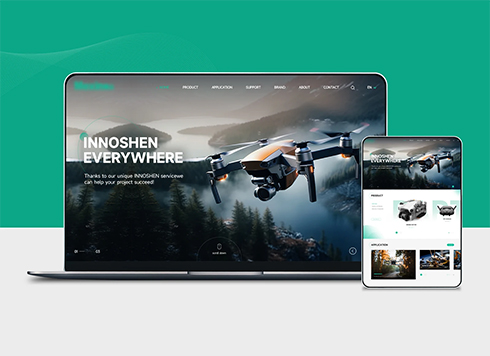 Drone Accessories Company Website Development
Incorporating gray as an accent with the pr ...
-
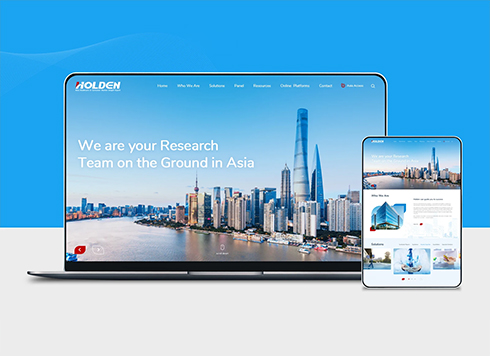 Professional International Research Service Agency Website Construction
This project serves a company with internat ...
-
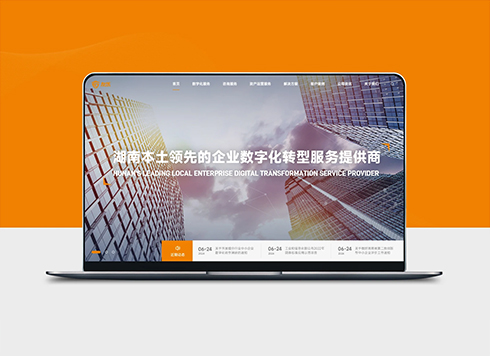 The Construction of Group Websites for Asset Operation and Digital Services
This project is to create a website for a c ...
-
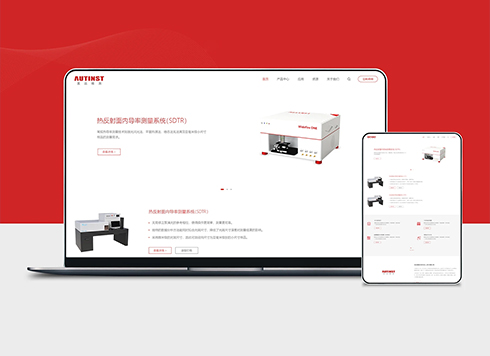 Thermal Test Equipment Website Construction
Founded in 2022, this tech company focuses ...
-
Shenzhen Business Owners Building Official Websites: What's the Difference Between a Few-Hundred-Yuan Template and a Tens-of-Thousands-Yuan Custom Site? Where Does the Money Go?
Date: Aug 31, 2026 Read: 87
-
How Much Budget and Time Should You Set for a Corporate Website in Shanghai? Why Local Customization Costs More Than Templates
Date: Aug 30, 2026 Read: 106
-
Ningbo Corporate Website: What's the Difference Between a Budget of a Few Thousand and Tens of Thousands? Key Points for Local Website Development
Date: Aug 21, 2026 Read: 101
-
Tianjin Corporate Website: From a Few Thousand to Tens of Thousands – Where Does the Money Go? How Can Small Companies Avoid Pitfalls?
Date: Aug 20, 2026 Read: 129
-
For a small company in Wuhan building a website, what's the difference between a few-thousand-yuan template and a tens-of-thousands-yuan custom build?
Date: Aug 18, 2026 Read: 106