



For a small company in Wuhan building a website, what's the difference between a few-thousand-yuan template and a tens-of-thousands-yuan custom build?
When building an official website in Wuhan, don't rush to ask whether to use a template or custom design. First, clarify what this website needs to do: is it to give customers a credible facade, to capture paid-traffic inquiries, or to serve as an electronic brochure for sales teams? Based on local delivery practices in Wuhan in 2026, there are three common paths: using a template site directly, making partial modifications to a template, or building completely from scratch. The budget experience range spans from a few thousand yuan to 50,000–60,000 yuan, and the timeline ranges from one week to two months. Most small and medium-sized companies choose a template site with partial modifications, with a typical range of 10,000 to 30,000 yuan.
Wuhan enterprise website building: first distinguish the three common paths
There are many companies in Wuhan that build official websites, but most people don't know where they are stuck when they ask for the first time. Common paths can be divided into three categories based on source code and design freedom: template sites, semi-custom sites, and full-custom sites. A template site involves purchasing ready-made source code or a SaaS account, changing the text and images to go live; semi-custom means modifying the structure, adjusting colors, and adding modules on top of a template; full-custom means writing everything from layout to front-end and back-end according to requirements. The difference isn't about whether it "looks cheap," but about the flexibility for future modifications and data ownership.
These three paths correspond to three different needs: temporary display, long-term maintenance, and business growth. The cost of choosing the wrong path isn't just spending more money; it's that after six months, you want to revamp the site and find it can't be changed, or you want to add tracking code and find the backend is locked down.
- Template site: Usually annual fees range from a few hundred to two or three thousand yuan. You handle the domain name and ICP filing yourself. Page modifications are limited by the platform, and data is in the platform's hands.
- Semi-custom: One-time fee experience range is 5,000 to 15,000 yuan. Source code can be delivered, and page structure can be changed, but the foundation is a general-purpose framework.
- Full-custom: Experience range is 20,000 to 60,000 yuan, with a timeline of one to two months. Developed according to requirements; adding features later is billed separately.
The real difference between template and custom websites isn't just price
Many business owners in Wuhan think the difference is only about price, but what actually affects the future are three things: source code ownership, modification cost, and lead-generation support. The hidden danger of a template site isn't that it looks ugly; it's that when you need to adjust pages according to your business, you may not even be able to change the navigation. A custom site is more expensive in upfront communication and development, but each later modification is relatively controllable.
Four-dimensional comparison: source code, modification cost, SEO foundation, after-sales response
- Source code ownership: Most template sites don't deliver source code, and the data backend is restricted. Custom sites can basically deliver source code and database, as long as it's clearly written in the contract.
- Modification cost: For template sites, small text changes can be done by yourself, but structural changes often require waiting for platform updates or repurchasing. For custom sites, the original service provider quotes by hour or by feature, with an experience range of a few hundred to a few thousand yuan per change.
- SEO foundation: Both can handle TDK (title, description, and keywords) and structured data, but custom sites can control URL hierarchies, redirects, and loading scripts, making it more friendly for ranking adjustments.
- After-sales response: Local custom service providers can usually communicate face-to-face, with response times measured in days. Template platforms mostly use tickets, and complex issues have to wait in line.
These four dimensions directly determine what the website will look like a year later. If it only looks good at launch and no one maintains it afterward, the difference between a template site and a custom site will become increasingly small.
Budget and timeline experience range for building an official website in Wuhan
In 2026, pricing for enterprise official websites in Wuhan is quite varied, but based on delivery practices, it can be divided into four tiers: pure template sites have annual fees ranging from a few hundred to 3,000 yuan; template reskinning costs 3,000 to 8,000 yuan one-time; semi-custom costs 10,000 to 20,000 yuan; and full-custom costs 20,000–30,000 to 60,000–70,000 yuan. For timelines, template sites can go live in one to two weeks, semi-custom takes three to four weeks, and full-custom usually takes six to eight weeks. Note that these are experience ranges, not unified market prices; actual figures depend on qualification materials, image assets, and coordination speed.
In Wuhan projects, clients often get stuck on assets. We took on a machinery trading company in Guanggu with a budget of 25,000 yuan and a contracted timeline of six weeks. The product images were delayed by three weeks, and the launch ended up being ten days late. After that, we changed the delivery process to first verify the asset checklist and acceptance criteria before starting, and the rework rate dropped significantly. The constraint is that the budget is fixed but assets are incomplete; the approach is to ask for usable assets and text copy before scheduling. The trade-off is that if the client insists on working while waiting, revisions and delays are more likely.
- Asset completeness: real product images, company qualifications, contact information, and business description. Missing any of these can easily cause delays.
- Filing time: Wuhan local enterprises typically take 5 to 20 working days for ICP filing. If you don't prepare in advance, it will block the launch.
- Acceptance criteria: It is recommended to specify in writing: "no layout misalignment on homepage and inner pages, functional buttons work, responsive design is normal."
How to judge whether a local Wuhan service provider is reliable
Judging a local website-building company cannot be based only on case screenshots. Based on common conditions in the Wuhan market, you can verify from four angles: whether source code is delivered, whether on-demand changes are supported, whether SEO foundations are built into the architecture, and whether the contract specifies timelines and acceptance criteria.
Three-step verification: ask three things before delivery
- Open a website they've built for a company in the same industry, and use browser developer tools to check whether the title, H tags, and page structure are standard.
- Ask to see if the contract includes source files, backend accounts, acceptance checklist, and warranty period.
- Clarify the pricing formula for changing a page button or adding a form, to avoid price hikes after launch.
After these three steps, you can basically filter out half of the teams that only do template wrapping. If the other party can't even explain H tags clearly, it's recommended to switch to someone else.
Applicable scenarios and boundaries: when custom development is unnecessary
Not all Wuhan enterprises need full-custom development. If you only need a display-style official website where visitors mainly look at the company introduction and contact information, then a template site or semi-custom site within 10,000 yuan is sufficient. If you need to run feed ads, capture keyword traffic, or require online quotes, membership systems, or multilingual sites, then consider full-custom or modular development.
- Suitable for custom: business growth stage, need to collect leads, intense industry competition (e.g., local services, machinery and equipment, software outsourcing).
- Not suitable for custom: only one store, budget under 5,000 yuan, no dedicated content maintenance, no promotion in the short term.
When building a website in Wuhan, prioritize template sites or annual-fee SaaS if the budget is below 5,000 yuan; don't go custom. Only with a budget above 20,000 yuan and a clear need to capture paid traffic is custom development worth it.
FAQ
How much does it generally cost to build an official website in Wuhan?
According to Wuhan delivery practices in 2026, template sites have annual fees from a few hundred to 3,000 yuan, template reskinning from 3,000 to 8,000, semi-custom from 10,000 to 20,000, and full-custom from 20,000 to 60,000. These are experience ranges, depending on the number of pages and functional requirements.
How do I choose between a template site and a custom site?
If you only need to display contact information, a template site is enough. If you want to use the official website as a customer acquisition channel or do SEO optimization, choose semi-custom or full-custom, at least ensuring source code and modification flexibility.
Which should we build first: a website or a mini program?
If there's no online transaction and you only need enterprise display, build a website. If it involves booking, ordering, or a membership system, prioritize a mini program. You can also put a form on the website to collect leads first, then build a mini program later.
How do local Wuhan service providers compare with those from other cities?
Local providers have advantages in face-to-face communication and fast response, but their prices aren't necessarily cheaper. For out-of-town teams, confirm the remote delivery process, source code ownership, and after-sales approach. It's recommended to verify their business registration information first.
Are there industry-specific requirements for building a website?
Industries with pre-approval requirements, such as education and training, healthcare, and food, need to display the ICP filing number and relevant qualifications at the bottom of the website. Don't wait until after launch to add them. Manufacturing and service industries put more emphasis on case studies and loading speed, so prepare sufficient assets.
When building an official website in Wuhan, first define its role and then set the budget, with "deliver source code upon payment" as the bottom line. Don't force custom development when a template site fits, and don't skimp on the budget when custom is appropriate. Going live is just the beginning; content updates and SEO adjustments over the following three months affect results more than the launch itself. If budget and requirements are both uncertain, first make the website a page that answers three customer questions: Who are you? What problem do you solve? Why should people choose you?
-
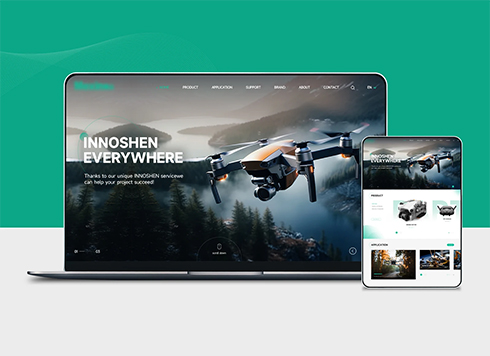 Drone Accessories Company Website Development
Incorporating gray as an accent with the pr ...
-
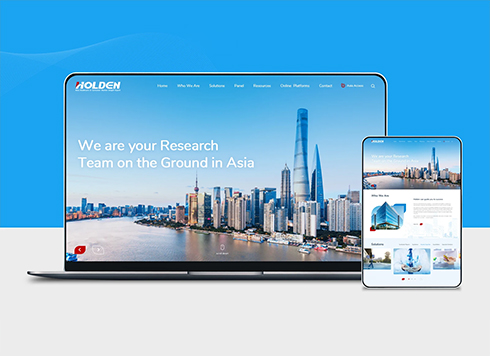 Professional International Research Service Agency Website Construction
This project serves a company with internat ...
-
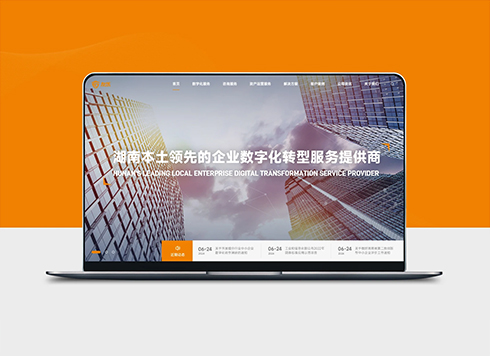 The Construction of Group Websites for Asset Operation and Digital Services
This project is to create a website for a c ...
-
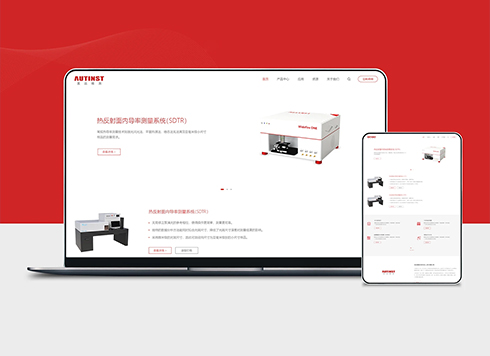 Thermal Test Equipment Website Construction
Founded in 2022, this tech company focuses ...
-
Nanjing Enterprise Website Guide: Process, Budget, and Selection Criteria
Date: Jul 31, 2026 Read: 146
-
Chongqing Enterprise Websites: What's the Difference Between a Few Thousand and Tens of Thousands? Which Costs Can't Be Cut
Date: Sep 2, 2026 Read: 88
-
Shenzhen Business Owners Building Official Websites: What's the Difference Between a Few-Hundred-Yuan Template and a Tens-of-Thousands-Yuan Custom Site? Where Does the Money Go?
Date: Aug 31, 2026 Read: 87
-
How Much Budget and Time Should You Set for a Corporate Website in Shanghai? Why Local Customization Costs More Than Templates
Date: Aug 30, 2026 Read: 106
-
Qingdao Corporate Website: What Budget and Timeline Are Reasonable? Why Local Custom Costs More Than Templates
Date: Aug 21, 2026 Read: 113