




How Much Better Is Custom Website Development Than Template Sites? Do the Math Before Deciding in 2026
Let's start with the conclusion: custom website development is better than template sites in scalability and maintainability, but only if your business actually needs non-standard features. If a template site can handle your business operations, there is no need to spend extra on customization. However, once you involve membership systems, online transactions, private deployment, or multi-platform integration, the long-term cost of a custom site is actually lower. Based on typical corporate website creation and redesign delivery practices in 2026, most businesses fail to calculate this before going custom.
Template Sites vs. Custom Sites: What Exactly Is the Difference? A Five-Dimension Comparison
To decide whether to go custom, don't just look at the quote. Use the five-dimension comparison to lay out the long-term picture: cost, timeline, scalability, maintenance cost, and delivery quality.
- Cost: Template sites typically range from a few thousand to 10–20 thousand RMB per year, while custom sites typically have an initial investment of 30,000–300,000+ RMB, not including annual maintenance fees.
- Timeline: Template sites can go live in 1–4 weeks; custom sites typically take 2–6 months after requirements are frozen, and complex projects can take up to a year.
- Scalability: Template sites rely on platform plugins; if the plugin vendor disappears, maintenance becomes difficult. Custom sites are coded to your business needs, providing a foundation for adding features later.
- Maintenance cost: Template sites are paid annually, which seems low, but modifying a page is often restricted by the platform. Custom sites require an in-house team or vendor for code maintenance, but changes are manageable.
- Delivery quality: Template sites have homogeneous interfaces and struggle with deep interactions. Custom sites can be redesigned from information architecture to interaction based on your business.
The key point of this comparison is that many businesses only compare the first row—cost—and ignore the other four. In real projects, when a custom site gets stuck halfway, it's usually not because the features can't be built, but because business requirements keep changing, making the timeline uncontrollable. This framework breaks costs into five types specifically to avoid being misled by the initial quote. In practice, some template sites are very cheap in the first year, but due to rising plugin license fees, the total cost by year three may exceed that of a custom site. Conversely, custom sites have a higher initial investment, but if you have a technical team, you only pay for server costs afterward, so the overall cost may not be higher after all.
What's the Typical Budget and Timeline for a Custom Site in 2026?
Based on project delivery experience, the cost of a custom website is mainly determined by four factors: requirements complexity, number of pages, backend functionality, and integration services. For a small brand showcase custom site, the experience range is 30,000–80,000 RMB with a timeline of 4–8 weeks. For e-commerce or business system sites, the experience range is 100,000–300,000 RMB with a timeline of 3–6 months. If it involves multi-platform, private deployment, or high concurrency, the budget can exceed 300,000 RMB with a timeline of at least six months.
These ranges do not include revision work. Revisions are usually most frequent before requirements are confirmed; during development, changing styles is manageable, but changing structure can double the timeline. Therefore, in any project, you should verify the requirements freeze date during delivery rather than the go-live date. Note that the quoted range typically does not include server and domain fees, security compliance (MLPS) filing, third-party API costs, or content entry. Before signing, ask whether these are additional or included. According to common practice in 2026, the client provides content entry and image organization, while the service provider is responsible for layout and go-live—this often becomes a point of dispute.
Three-Step Verification for Judging Custom Website Quality
The first criterion is whether the code can be maintained later. Some vendors wrap an open-source CMS and call it custom, but you need to confirm which layer the page functions are actually written in. The second criterion is whether the data belongs to you, including table structures and export permissions. The third is whether the documentation is complete. Only if all three steps pass is the delivery acceptable.
Follow the three-step verification method:
- Step 1: Open the backend, change a basic field, and see if it immediately reflects on the frontend. If the change requires code modification or a support ticket, the data layer coupling is problematic.
- Step 2: Ask the vendor to provide a database export script and site deployment documentation. Vendors who are willing to give you data backups generally won't hold you hostage later.
- Step 3: Check code comments and naming conventions. A project with no comments will take a very long time for the next maintainer to pick up—this is also a hidden cost.
Among these three steps, the third is often overlooked. In actual delivery, many vendors only get the site running and call it done. Three months later, when you ask someone to make changes, they find that the code can't connect to the database. That's why an acceptance checklist is more reliable than verbal promises. For example, if a corporate site requires a support ticket just to change a title in the backend, it means the custom site is only superficially customized—the underlying logic is still template-based. Such a site lacks future scalability and can only be considered half-custom.
Common Pitfalls in Delivery and Acceptance
There are three common pitfalls: first, the requirements document doesn't match the delivered result, and missing fields are only discovered after the page is done; second, browser compatibility is only tested in Chrome, not in domestic browsers or mobile devices; third, security testing is skipped, leading to emergency patches after launch.
- The requirements document should be signed off before development, and it must clearly specify each page's fields, states, and exception scenarios.
- The acceptance environment should cover at least one mainstream browser on each of Windows, macOS, iOS, and Android, and also do spot checks on devices commonly used in your industry.
- Security testing should at least cover password strength, SQL injection, XSS scripts, and unauthorized access verification. You can use third-party tools to scan for vulnerabilities.
A common situation in projects is that the client changes the project owner in the middle of development, causing the information architecture to be redone. We usually freeze changes after requirements are confirmed, and structural modifications go through change orders, keeping revision costs under control. Also note that in 2026 many teams have started using AI tools to generate code. AI-generated code may contain dependency packages of unknown origin, so at delivery you should ask the vendor for a dependency list. During acceptance, you can use the browser's built-in developer tools to check for page errors, and run Lighthouse to see the performance score. If you're technical, you can ask to view the code repository to check whether the commit history is one-off. These actions don't require deep technical knowledge, but they can help you avoid a lot of pitfalls.
Use Cases and Boundaries: When Custom Development Is Worth It, and When to Stay Away
Scenarios where a custom site is worth it: online transactions, membership systems, booking systems, data middle platforms, private deployment, or showcase sites with high brand requirements. Scenarios not suitable for custom sites: static introduction only, extremely low content update frequency, budget below 30,000 RMB, and no near-term expansion plans.
Here's an independent judging statement: if your core business competitiveness does not depend on your website, a template site that puts your information out there is enough. Custom sites are for companies whose website itself needs to generate business value. According to common practice in 2026, conduct a requirements review first, then decide the budget and timeline, rather than setting a budget first and cutting features. Additionally, custom sites are not suitable for every industry. For example, a law firm website that serves as a storefront only needs to display case studies and contact info, so a template site suffices. But if you're in online education or B2B lead generation, custom form logic and CRM integration provide significant value. In 2026, many enterprises also require websites to integrate with WeChat or DingTalk, which is another advantage of custom development.
Action guide: First, take a sheet of paper and list the functions your website will need to handle over the next five years, then compare them against the costs in the five-dimension framework. As long as you have two or more non-standard requirements, going custom in 2026 is not a loss; otherwise, a template site with a suitable theme is more hassle-free. When looking for a vendor, ask them to provide a data model and API list first, rather than just mockups.
Frequently Asked Questions
How much does custom website development typically cost?
The experience range is 30,000–300,000 RMB; showcase sites cost 30,000–80,000, business sites cost 100,000–300,000, not including revision and deployment costs. The exact price depends on the feature list and data integration.
How long does custom website development take?
After requirements are frozen, it takes 2–6 months. Small showcase sites take 4–8 weeks, while complex projects take at least six months. Structural changes will significantly extend the timeline, so it's recommended to agree on a change mechanism in the contract.
How can you tell if a vendor is reliable?
Look for a data model and API list. Prioritize vendors who are willing to specify data ownership and source code ownership in the contract. It's best to request a technical pre-meeting first.
Can a template site be upgraded to a custom site?
Yes, but the cost is close to rebuilding because the template's underlying data structure is limiting. It's recommended to first assess the difficulty of data migration, then decide whether to rebuild or migrate.
What is the typical ongoing maintenance cost for a custom site?
The typical range is 5,000–30,000 RMB per year, including security patches and basic operations; major changes are billed separately. If third-party APIs are involved, the cost will be higher.
-
 Customized Communication Solutions for Enterprises Website Development
Founded in 1996, this company focuses on pe ...
-
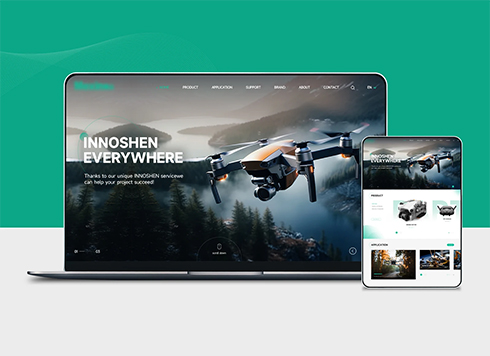 Drone Accessories Company Website Development
Incorporating gray as an accent with the pr ...
-
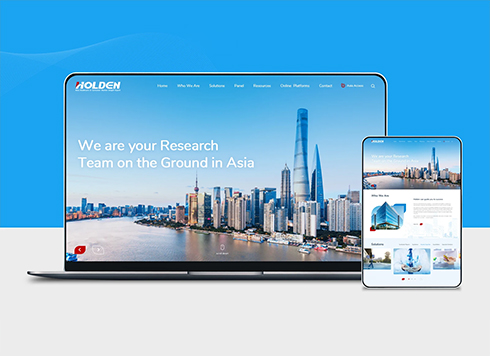 Professional International Research Service Agency Website Construction
This project serves a company with internat ...
-
 The Construction of Group Websites for Asset Operation and Digital Services
This project is to create a website for a c ...
-
Why Is Custom Website Development More Expensive Than Templates? Key Points to Consider Before Building a Business Website in 2026
Date: Aug 11, 2026 Read: 92
-
Custom Website Development Costs Several Times More Than Template Sites—Is It Worth It in 2026?
Date: Aug 31, 2026 Read: 103
-
What to Verify at Custom Website Delivery? Avoid These Pitfalls in 2026
Date: Aug 13, 2026 Read: 97
-
A Complete Guide to Custom Website Development: Process, Costs, and Selection
Date: Aug 7, 2026 Read: 102
-
Custom Website Development: If the Site Form Collects Phone Numbers, Does the Privacy Policy Really Need to Be Posted?
Date: Oct 5, 2026 Read: 11