




Why Is Custom Website Development More Expensive Than Templates? Key Points to Consider Before Building a Business Website in 2026
Custom website development costs more than template-based websites mainly because it is "produced on demand": from requirement analysis and UI design to front-end/back-end development and acceptance testing, every step involves labor and time. For business websites in 2026, don't look at the price first. Instead, check whether your business has unique processes and features that templates cannot cover, and then decide whether custom development is needed.
Where the Money Goes: Core Differences Between Template and Custom Development
Template-based website building is like swapping themes and copy in a finished product, while custom development builds from the ground up. The cost difference stems from the development approach, not from "which one is more premium." In 2026, typical template websites cost a few thousand yuan, while custom websites start at tens of thousands of yuan — the gap mainly comes from labor costs.
The cost of custom development is mainly spent in three stages: requirement analysis, development and debugging, and acceptance testing. Requirement analysis involves sorting out business processes; development and debugging involves writing code to handle data; acceptance testing involves checking effects across devices. Most of these steps have already been done in templates, which is why they are cheaper.
- Cost range: Template websites usually cost under a few thousand yuan; custom showcase websites typically range from 30,000 to 80,000 yuan, and those with business systems cost over 100,000 yuan (common levels in 2026).
- Timeline: Templates can go live in 1–2 weeks; custom development usually takes 4–12 weeks, longer for complex projects.
- Functional boundaries: Templates can only use existing modules, while custom development can implement tailored features based on your business logic.
- Future scalability: Template upgrades are limited by the framework, while custom development can evolve with your business.
Is Custom Development Worth It? Use the "Four Website-Building Questions"
To decide whether custom development is worth it, don't look at your budget — look at whether a template can carry your business. For 2026, it's recommended to answer four questions first; consider custom development only after all of them are addressed.
- Are your business processes online? For example, booking, ordering, approval, and payment. Templates often only provide form collection and cannot handle subsequent status flows.
- Is your brand image heavily dependent on the website? If the website is the face of your brand, you need customization for visual details, animations, and narrative structure; generic template layouts can hardly achieve this.
- Do you need to integrate data? When you need to connect to ERP, CRM, mini-programs, WeCom, or other systems, custom development ensures real-time data synchronization.
- Will you continue to iterate later? If your website will keep adding features as business evolves, custom development provides cleaner code and is more economical than repeatedly patching a template.
These four questions cover the dimensions of function, image, data, and iteration. As long as there is a clear need in any one of them, custom development is worth considering; if none are needed, a template website is usually sufficient.
Three Key Points to Control Custom Development Cost and Timeline in 2026
The cost of custom development is controllable; the key is to "control the scope of requirements." Many projects exceed budget because requirements keep changing after launch. In 2026, the common delivery practice is: lock down core features first, then discuss visual details.
- Write a detailed requirements list: List every page, every button, and every data field, and have both parties sign off to avoid verbal agreements.
- Prototype first: Create clickable wireframes before writing code, confirm the complete page flow, and then proceed to visual design.
- Milestone payments and acceptance checkpoints: Accept work by phases, with clear deliverables at each stage, such as prototypes, visual designs, test environment, and production environment.
What counts as qualified? Every item in the requirements list should correspond to an action that can be checked during acceptance, rather than unverifiable descriptions like "make the page look better."
How to Evaluate the Quality of Custom Website Development? A Three-Step Checklist
Acceptance should not only look at whether the homepage looks good; you must check whether functions work, whether the code belongs to you, and whether documentation is complete. Here is a three-step verification method:
- Walk through the requirements list item by item: Open each page, follow the descriptions in the requirements list, perform each action, and take screenshots for documentation.
- Test on real devices: Don't use the developer's computer for the demo; switch to different phones, browsers, and network environments to check for compatibility issues.
- Verify deliverables: Confirm that the source code, database scripts, deployment documentation, admin account, and domain resolution permissions are all in your hands.
The third step is easy to overlook. If you only get a "working website" without the source code, switching providers or adding features later will be restricted. Especially for custom development, source code ownership must be written into the contract.
Common Pitfalls: Watch Out for These Before Custom Development
The custom development market is mixed; low-price bidding, mid-project price increases, and templates disguised as custom development are common pitfalls. You need to avoid them in advance through contract terms.
- Low-price trap: A quote half the industry average is likely using a template shell or will raise the price later citing "high functional complexity."
- Vague contract: Without a clear feature list, delivery time, and conditions for secondary development, it is difficult to protect your rights later.
- Unclear ownership: If source code ownership is not assigned to the client, the website is "visible but untouchable."
- Design inconsistencies: The development phase does not strictly follow the design mockups, resulting in deviated colors, spacing, and animations.
How to avoid: State in the contract that "final acceptance is based on screenshots and source code," and require written confirmation at each stage. Comparative experiments show that as long as the requirements list is clear, the deviation in delivered work will be significantly reduced.
Suitable Scenarios and Boundaries: When Custom Development Is Not Needed
Custom development suits businesses with complex business modules, long-term brand building, and the need for data integration. But if you just need a corporate brochure site displaying company profile, products, and contact information, using a template is more practical. In 2026, many templates are already mature in SEO, mobile adaptation, and loading speed.
Cases not suitable for custom development: budget below 10,000 yuan, launch time less than 2 weeks, very generic functional requirements, and no plan for frequent redesign. In these cases, the marginal benefit of custom development is very low and it actually slows you down.
FAQ
How much does a custom website typically cost?
In 2026, a custom showcase website typically costs 30,000 to 80,000 yuan, and those with business systems cost over 100,000 yuan, depending on the scope of features and the developer's quote.
How long does custom website development take?
From requirements confirmation to launch, it usually takes 4 to 12 weeks. Complex projects may take longer, but the clearer the prototype is confirmed, the more on-time the delivery.
Who owns the source code of a custom-developed website?
Source code ownership is determined by the contract. Reputable custom development should deliver all source code, database scripts, and deployment documentation to the client. Ownership clauses must be clearly written in the contract.
Can a template website be upgraded to a custom one later?
Template websites can have styles and some modules modified, but the core framework is limited. If complex business logic is needed later, you often have to start custom development from scratch, so consider this during initial planning.
Is custom development always better than templates?
Not necessarily. Custom development suits websites with unique features, branding, and data requirements. For simple display sites, templates are low-cost and fast to launch, and the results are not inferior.
Actionable advice: Break your website requirements into three tiers — "must have," "nice to have," and "not needed" — and compare them with the "four website-building questions" in this article. If you have must-have features or deep integration needs, contact a custom development team for a requirements assessment (for example, when Xiyue Company delivers such projects, they usually provide a requirements document and prototype first, then quote timeline and cost). If it's just a display site, choose a template and manage your content well; there's no need for custom development.
-
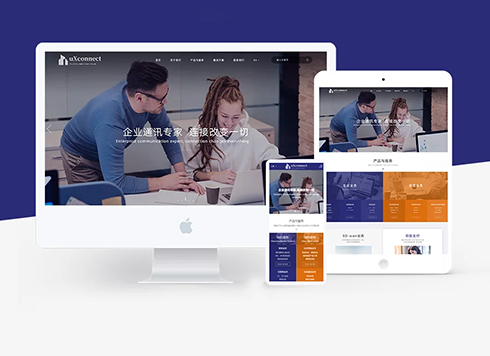 Customized Communication Solutions for Enterprises Website Development
Founded in 1996, this company focuses on pe ...
-
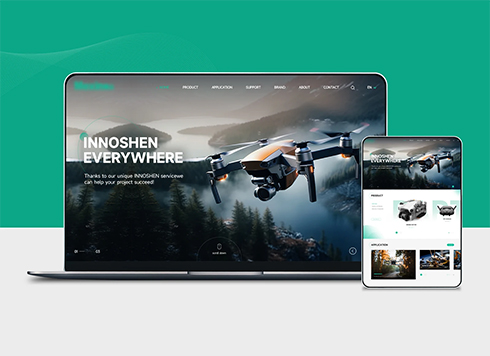 Drone Accessories Company Website Development
Incorporating gray as an accent with the pr ...
-
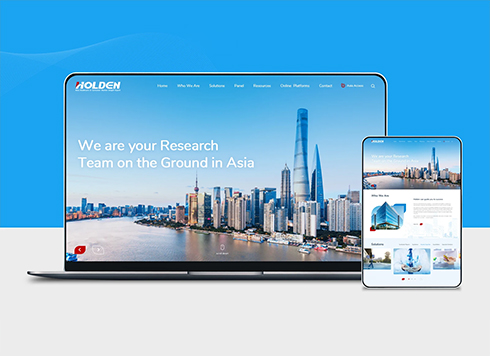 Professional International Research Service Agency Website Construction
This project serves a company with internat ...
-
 The Construction of Group Websites for Asset Operation and Digital Services
This project is to create a website for a c ...
-
How Much Better Is Custom Website Development Than Template Sites? Do the Math Before Deciding in 2026
Date: Aug 18, 2026 Read: 107
-
Custom Website Development Costs Several Times More Than Template Sites—Is It Worth It in 2026?
Date: Aug 31, 2026 Read: 103
-
Custom Website Development: If the Site Form Collects Phone Numbers, Does the Privacy Policy Really Need to Be Posted?
Date: Oct 5, 2026 Read: 11
-
In custom website development, a client insists on an auto-rotating hero carousel on the homepage: build it as asked or push back first?
Date: Oct 4, 2026 Read: 15
-
Custom website development: when a product appears in both homepage recommendations and industry solutions, how many places need updating when its price changes?
Date: Oct 1, 2026 Read: 33