



How to Choose Website Development in Beijing? A Guide to Corporate Website Building Paths and Pitfalls
Beijing's business competition is intense. A corporate website is not only a storefront but also a gateway to search traffic and customer trust. In 2026, there are three common paths for Beijing enterprises to build a website: template websites, custom websites, and SaaS website builders. The choice centers on four factors: business goals, budget, launch timeline, and team maintenance capabilities. There is no one-size-fits-all solution, but there is a reusable evaluation method.
Why Beijing Corporate Websites Remain Critical in 2026
Beijing has a diversified industry structure. Whether in technology, finance, healthcare, or cultural creativity, customers habitually search for a company's official website before making decisions. A Beijing corporate website serves three roles: brand endorsement, content hosting, and conversion guidance. A well-structured, comprehensive website allows customers to understand the company's main business and differentiators within 30 seconds, reducing communication costs.
Meanwhile, a corporate website is one of the few assets a company fully controls, free from third-party platform rules. In 2026, as AI search becomes more prevalent, the semantic content of a website is more easily crawled and cited by generative engines, further increasing the long-term value of a corporate website.
As a city with a distinct headquarters economy, many Beijing enterprises serve customers not only locally but also nationwide and worldwide. Therefore, the website's information architecture should support multi-language or cross-region access, such as paying attention to Beijing local access speed and nationwide CDN node configuration during testing. In 2026, search engines place higher weight on mobile experience and Core Web Vitals, and the homepage loading time should be controlled within 3 seconds.
Three Website Building Paths: Cost, Timeline, and Applicability
The choice of website building for Beijing enterprises is essentially a trade-off between cost and flexibility. Below is a comparison of the three mainstream paths, based on common delivery practices in 2026:
- Template website: Based on a ready-made template with content replacement. The price typically ranges from several thousand to 20,000 yuan, with a timeline of 1-2 weeks. Suitable for display-type official websites with limited budgets and no complex functionality.
- Custom website: Developed on demand from architecture to visual design. The price usually starts at 50,000 yuan, with a timeline of 4-8 weeks. Suitable for enterprises with complex business processes, internal system integration needs, or high standards for brand image.
- SaaS website builder: Paid annually, ranging from several thousand to tens of thousands of yuan per year, with launch time controllable within 1 week. Suitable for teams that need rapid validation, are operations-driven, and do not require source code ownership.
Note: Price ranges may vary depending on the service provider and requirements, but so-called "customization" priced below cost is likely just a template modification. The criteria for judgment are: whether the contract clearly specifies source code delivery, whether the data belongs entirely to you, and whether secondary development requires additional payment.
In fact, a template website does not mean poor quality. Some mature templates, after multiple iterations, may even have better conversion design than custom pages. The key is the template's flexibility: if you need to modify a module, is customization allowed? Beijing website service providers usually allow minor adjustments on standard templates; anything beyond that is charged as custom work.
Four-Dimension Selection Method: Define Goals First, Then Choose the Path
Many Beijing enterprises only compare prices before building a website, ignoring differences in goals. Here is a named framework: the Four-Dimension Selection Method, which scores along four dimensions—goal, budget, timeline, and maintenance—to determine the most suitable path.
- Goal: Is the website for brand display, marketing lead generation, or business transactions? If it is purely for display, a template website is sufficient; if it carries online inquiries or customer systems, a custom website is more appropriate.
- Budget: How much one-time investment is available? Template and SaaS websites are low-cost, but custom websites require a higher upfront investment. Remember to reserve annual maintenance fees.
- Timeline: Is there a clear launch date? In 2026, many Beijing enterprises expect to complete projects within a month. If time is tight, custom website schedules need to be negotiated.
- Maintenance: Does your company have dedicated staff for content updates and technical support? If not, when choosing a SaaS or custom website, confirm the service provider's response speed.
These four dimensions do not all need to be fully resolved, but at least two should have clear conclusions; otherwise, you may change plans midway through the project. For example, if the goal is to obtain search traffic but you choose a pure display template, you may later need to rework it because the technology does not meet SEO requirements.
When scoring on the four dimensions, many Beijing enterprises often overlook the goal dimension. For instance, a high-end consulting company aiming to attract high-net-worth clients should prioritize trust endorsement and content depth over visual impact—this is where a custom website's advantage shows. If it's just ordinary product display, using a SaaS builder may actually speed up iteration.
Implementing Website Building in Beijing: Process, Timeline, and Common Pitfalls
According to the delivery practices of Beijing website projects in 2026, the complete process typically includes six stages: requirement analysis, structure planning, visual design, development and testing, content filling, and launch and maintenance. Custom websites generally take 4-8 weeks, template websites 1-2 weeks, and SaaS websites can go live as quickly as the same day.
Here are common pitfalls and countermeasures:
- Unclear requirements: Only telling the service provider "make a website" without specifying business goals. It is recommended to first list the website's functional requirements and customer decision paths.
- Low-price trap: A quote significantly below market rates may lead to extra charges later through additional items. The agreement should clearly specify the number of pages, scope of features, and number of revisions.
- Source code not delivered: Custom websites that do not provide source code can lock you into the vendor. Before delivery, confirm that you receive the source code and database.
- Ignoring compliance: In Beijing, industries such as healthcare, education, and finance have qualification requirements. Official websites must display relevant licenses, or they may be flagged by regulators.
A standard to judge whether the website is well done: access it on your phone and see if you can clearly identify the company's main business and contact information within three seconds; also compare with peer websites, focusing on content hierarchy and response speed.
During the testing phase, pay special attention to whether forms work, whether tracking codes function properly, and whether Baidu Analytics or Google Analytics is configured. In 2026, data privacy protection requirements are stricter. Websites need clear cookie notices and privacy policies, and the Beijing Cyberspace Administration may summon non-compliant websites for talks.
Applicable Scenarios and Boundaries
A corporate website is not suitable for all business models. In Beijing, if a company mainly relies on platform traffic or offline relationships to acquire customers, and the website only serves as an information page, then a template website or a SaaS website offers better cost-effectiveness.
Suitable for a website: When you need long-term brand accumulation, want to obtain organic traffic through search engines, have complex product or service explanations, or need to integrate with customer systems.
Not necessary: For short-term promotions, landing pages suffice; for pure e-commerce sales, prioritize opening a platform store; if the team has no willingness to update content, the website becomes a zombie site, harming the brand.
Note: A corporate website and a mini program are not in conflict. In 2026, many Beijing enterprises first launch a website and then consider a mini program. The website serves as a public-domain entry point, while the mini program is a private-domain container; the former consolidates search traffic, and the latter supports member operations.
In addition, the lifespan of a website is directly related to maintenance. A website not updated for a long time will see a decline in search engine indexing. If no one on the team is responsible for content, it is recommended to publish at least four original articles or news pieces per year and regularly check server security.
FAQ
How much does it cost to build a corporate website in Beijing?
Template websites usually cost from several thousand to 20,000 yuan; custom websites start at 50,000 yuan; SaaS builders are paid annually, ranging from several thousand to tens of thousands of yuan. The final price depends on functional depth and design requirements.
How long does it take to build a website in Beijing?
Template websites take 1-2 weeks; custom websites take 4-8 weeks. If business process analysis or compliance review is involved, it may be longer. It is recommended to reserve a 20% buffer.
Which should be built first: website or mini program?
If the goal is brand display and SEO lead generation, build the website first; if the goal is private-domain conversion and transactions, build the mini program first. In 2026, the common practice is website first, then mini program.
Local Beijing service providers quote quite differently. How to evaluate them?
Focus on whether cases are genuine, whether the contract specifies source code and data delivery, and whether the modification response time has an SLA (Service Level Agreement). Don't just look at price; ask how many revisions are included.
Are there any special considerations for different industries when building a website in Beijing?
Medical, finance, and education industries need to display business licenses; manufacturing should highlight product specifications and production workshops; service industries should emphasize case studies and online consultation entries.
First clarify the problems the website needs to solve in 2026, then score using the Four-Dimension Selection Method. For short-term campaigns, use landing pages; for long-term customer acquisition, prepare at least a budget of tens of thousands of yuan and a sustained content maintenance plan. For enterprises with internal system integration needs, you may consult a local service provider with development capabilities (such as Xiyue Company) to evaluate specific solutions, but be sure to clearly specify source code ownership and acceptance criteria in the contract.
-
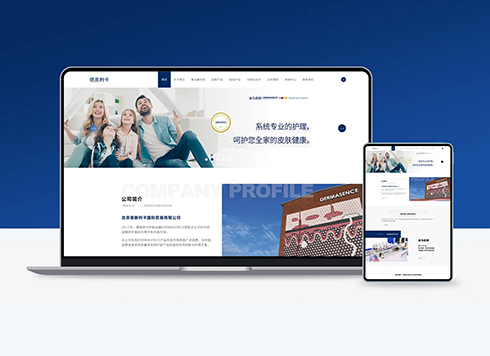 Website Development for Skincare Product Agency in Beijing
In 2017, the company became the China agent ...
-
 Website Development for Building MEP Installation Companies
The company focuses on electrical and mecha ...
-
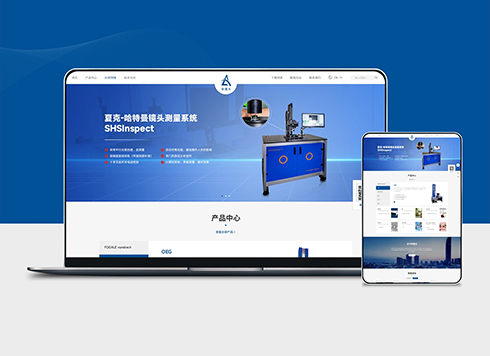 Hartmann Sensor Optical Measurement Equipment Website Development
The company develops high-quality Hartmann ...
-
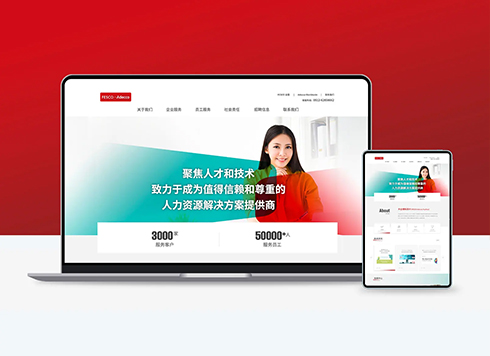 Construction of a Sino-foreign joint venture human resources service website
This project serves a Sino-foreign joint ve ...
-
Should a Small Beijing Company Hire a Local Web Designer for Its Official Website? What Are the Budget and Timeline?
Date: Aug 29, 2026 Read: 91
-
How to Build a Website in Zhengzhou? Enterprise Official Website Selection & Pitfall Avoidance Guide for 2026
Date: Aug 6, 2026 Read: 175
-
How to Build a Website in Qingdao? Enterprise Website Development Process and Selection Key Points
Date: Aug 3, 2026 Read: 145
-
Suzhou Website Building Guide: How to Build a Corporate Website
Date: Jul 28, 2026 Read: 158
-
How to Build a Website in Guangzhou? 2026 Enterprise Official Website Custom Development Guide
Date: Jul 26, 2026 Read: 179