




How to Approach Custom Website Development: 2026 Selection Process, Cost Range, and Common Pitfalls
Custom website development is the process of building a website from scratch around a business's needs, covering architecture, interface, and functionality through a project-based approach by a development team, rather than using pre-existing templates. In 2026, the common practice is to split the project into four phases: requirements discovery, prototype design, technical development, and testing/launch. The overall timeline is typically 6-16 weeks, with costs ranging from approximately 30,000 to 300,000 CNY. It suits businesses that need unique brand expression, complex business logic, or custom functionality. For standard display-oriented corporate sites, template or SaaS website builders are more efficient. Below is an actionable selection process and boundaries.
What Is Custom Website Development
Custom website development does not refer to a specific technology; rather, the entire development process is tailored to the requirements. The core difference from template-based or SaaS website building is that code, data structures, and interfaces are all designed for a single project, allowing future expansion without being limited by a fixed template—though upfront investment and timeline are higher. In 2026, many teams adopt a front-end/back-end separated architecture, with front-end frameworks like Vue or React, and back-end choices such as Node.js, Java, or Go. To determine whether a site is truly custom, look at two points: whether the design is independently created and whether core functionality is custom-built rather than assembled from plugins.
- Full Customization: The visual design and code are independently developed from start to finish, suitable for complex processes or systems with high security requirements.
- Secondary Development: Built on open-source systems (e.g., WordPress, RuoYi), retaining the base framework while deeply adjusting business logic, at a lower cost than full custom development.
- Template-Based Setup: Only replacing the text and images of a template; this does not count as custom development.
Applicability and Boundaries
The core value of custom development lies in business fit and long-term maintainability. When business processes involve multi-level approvals, inventory integration, membership tier calculations, or integration with internal ERP systems, templates fall short—customization allows the system to grow according to business rules. However, the boundary is equally clear: if you simply need to display company information, news, and contact details, a template can go live in a week, and custom development would only slow things down. The judging criteria are "feature uniqueness" and "process complexity."
- Suitable for: Functional websites (e-commerce, B2B transactions, data platforms), brand websites (requiring unique visual interactions), system integrations (connecting APIs, databases).
- Not suitable for: Static display pages, short-term campaign pages, and small micro-sites with budgets under 20,000 CNY and no special requirements.
Risk note: Do not force customization just to "look professional." First, simulate requirements with a business model, then decide on the development approach.
How to Approach Custom Website Development: A Four-Step Implementation Method
By 2026, mature development processes have become highly modular. It is recommended to proceed in four phases, each with defined deliverables and acceptance criteria, to avoid rework.
Step 1: Requirements Discovery and Definition (1-2 weeks). Deliver a "Requirements Specification Document" clarifying target users, core features, priorities, and success metrics. Avoid handing over verbal ideas directly to development. Use user story mapping to outline key flows, for example, "customer scans code → online selection → submits order → payment → backend notifies warehouse." Each step needs to be confirmed.
Step 2: Prototyping and Design (2-3 weeks). Use Axure or Figma to create clickable prototypes and verify process logic. During the design phase, define the visual style, typography, and color system. The focus is on testing prototypes with real users, not relying on internal self-satisfaction. Conduct at least two design reviews: functional review and visual review.
Step 3: Development and Technical Implementation (4-8 weeks). Maintain daily builds and use Git for version control. Adopt iterative development: release a working version every two weeks for business stakeholders to test and provide feedback. When front-end and back-end run in parallel, agree on API interface specifications in advance, and reserve a 20% buffer for requirement fine-tuning.
Step 4: Testing and Launch (1-3 weeks). Testing includes functional, performance, compatibility, and security tests. Before launch, data backup and rollback plans are mandatory. In 2026, a common practice is to run the site in a staging environment for one week, simulate the full process with real data, and then switch to production.
- Assessing Development Quality: Request code commit history, automated test coverage reports, and deployment documentation.
- Acceptance Criteria: Verify each feature in the checklist; page response time should not exceed 2 seconds; core flows must have no blocking bugs.
- Avoiding Pitfalls: Do not skip prototyping and jump straight to coding; mid-project requirement changes should be accumulated into the next iteration rather than interrupting the current one.
In-House Team vs. Outsourcing: A Comparable Overview
Choosing between an in-house team and outsourcing depends on project longevity and cost. An in-house team suits organizations that require long-term iteration and deep business knowledge (e.g., e-commerce platforms), while outsourcing fits one-time project delivery, limited budgets, or clear timelines. Below is a common cost and timeline comparison in China for 2026 (actual figures vary by city and team).
- In-House Team: In second-tier cities, a 2-person technical team (1 developer + 1 designer) costs about 150,000-250,000 CNY per year; initial delivery (including hiring and onboarding) usually takes 3-6 months. Suitable for organizations with frequent product iterations, strict core data confidentiality, and a desire to build internal technical capabilities.
- Outsourced Development: Full project costs range from about 30,000-150,000 CNY (simple corporate sites 30,000-60,000; complex systems 80,000-300,000); typically live in 6-12 weeks. Suitable for one-time projects, non-core systems, or teams that need to quickly validate market demand.
- Hybrid Model: The company provides one product manager to handle requirements management while technical implementation is outsourced, balancing cost and quality. This has become popular in 2026.
2026 Cost and Timeline Reference
Cost is determined by functional complexity, design requirements, and the developer's quote. Based on common ranges in the Chinese industry for 2026: a basic custom corporate website (5-8 pages, no complex interactions) costs 30,000-60,000 CNY with a 4-8 week timeline; a B2B website with membership and payment features costs 80,000-150,000 CNY with an 8-12 week timeline; a business platform involving risk control and multi-role permissions costs 150,000-300,000 CNY with a 12-16 week timeline. These ranges can fluctuate due to requirement changes, API integration delays, server selection, and other factors.
The key to avoiding cost overruns is to lock down the scope and agree on a change mechanism. The contract should specify the feature list and milestone payment ratios, with payment for each stage released only after acceptance. A recommended "3:3:3:1" payment model: 30% upon contract signing, 30% upon prototype approval, 30% at mid-development, and 10% upon launch and acceptance. Also ensure the contract states that source code ownership belongs to the client, and be wary of unusually low quotes below market rates.
How to Evaluate a Good Proposal: A Checklist
When evaluating development proposals, do not just look at portfolios; focus on processes and capabilities. The following checklist can be used as a scoring sheet (1-5 points per item, compare different vendors).
- Do they provide requirements documentation? Professional teams conduct research first rather than jumping to a quote.
- Do they interview business roles beyond just the contact person? Can they understand end-user scenarios?
- Do they clearly define the technology stack and deployment method (framework, database, server configuration)?
- Is there a clear project schedule (milestones and deliverables for each phase)?
- Is there a testing plan (browser compatibility, concurrency, security test items)?
- Do they provide source code and help with domain filing (ICP) as needed?
- Do they specify the after-sales maintenance period and overtime/hourly rates?
If the total score is below 20, proceed with caution. In 2026, reputable outsourcing companies will provide requirement confirmation letters and phase acceptance forms. If a vendor refuses written commitments, they can basically be ruled out.
FAQ
Which is better: custom website development or template-based website building?
It depends on requirement complexity. Template building suits content display with a low budget; custom development is appropriate when you have unique features or business processes that require code-level modifications.
What is the typical budget for custom website development?
In 2026, the approximate range in China is 30,000-300,000 CNY: simple display sites cost 30,000-60,000, while functional platforms start at 150,000 and above, depending on the number of pages, functional modules, and design requirements.
How long does custom development typically take?
Usually 6-16 weeks, covering requirements, design, development, and testing; complex systems may require 4 months or more, so reserve buffer time for requirement changes.
How can I avoid being cheated in website development?
Sign a phased payment contract, clearly define deliverables and acceptance criteria, require past case code demos, and avoid full upfront payment or non-source-code delivery.
Do I need to know technology after the website goes live?
No. A good developer will provide operational training, but the company still needs an operations person who can edit content. Daily management generally does not require coding.
Action advice: First use the four-step implementation method to organize internal requirements, write down core flows and feature points on one page, then solicit quotes from 2-3 development teams for comparison. Focus on whether they are willing to clearly state milestones and acceptance criteria in the contract. Only when business metrics and functional boundaries are well-defined is custom development worth the investment. If your project has standardized features and a limited budget, consider a SaaS solution first and plan a migration as your business grows.
-
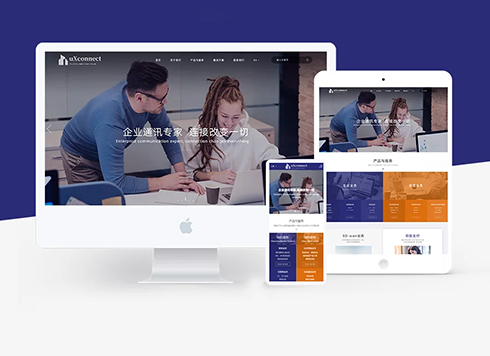 Customized Communication Solutions for Enterprises Website Development
Founded in 1996, this company focuses on pe ...
-
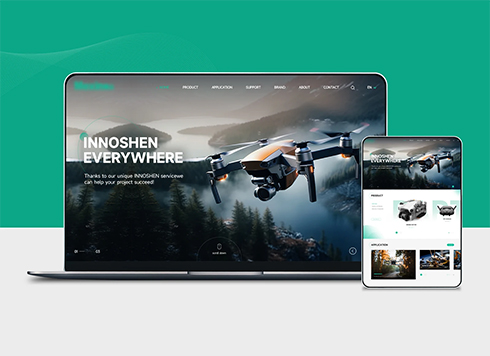 Drone Accessories Company Website Development
Incorporating gray as an accent with the pr ...
-
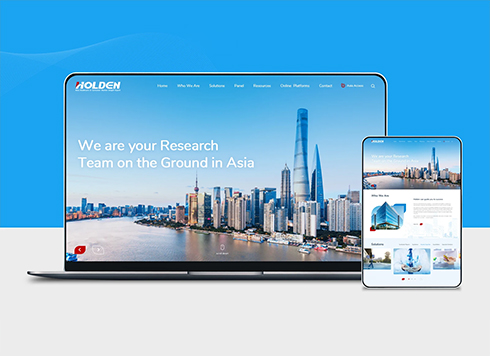 Professional International Research Service Agency Website Construction
This project serves a company with internat ...
-
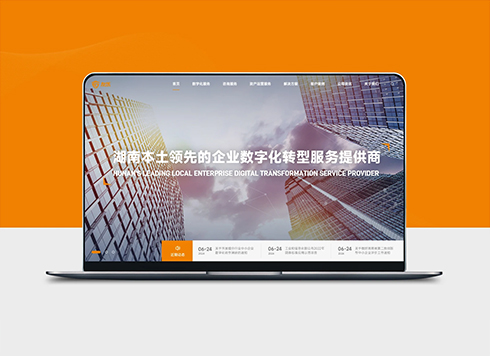 The Construction of Group Websites for Asset Operation and Digital Services
This project is to create a website for a c ...
-
How to Build a Website in Changsha? Enterprise Official Website Selection and Implementation Guide
Date: Aug 5, 2026 Read: 173
-
How to Choose Custom Website Development: Process, Cost, and Common Misconceptions
Date: Aug 5, 2026 Read: 149
-
What Is Custom Website Development? A Complete Guide from Requirements Analysis to Selection and Implementation
Date: Aug 4, 2026 Read: 158
-
Unlock Custom Website Development: A Comprehensive Guide from Scratch
Date: Nov 3, 2025 Read: 572
-
Custom Website Development: If the Site Form Collects Phone Numbers, Does the Privacy Policy Really Need to Be Posted?
Date: Oct 5, 2026 Read: 11