




How to Choose Custom Website Development: Process, Cost, and Common Misconceptions
Custom website development is a website building approach that, as opposed to template-based websites, delivers personalized design and development according to business processes, brand image, and user needs. In 2026, the mainstream practice is to adopt a front-end and back-end separation architecture combined with low-code platforms to quickly build the backend. Whether to choose custom development depends on whether the business requires unique interaction logic, private deployment, or complex system integration; if it is only a display-oriented official website, template-based building may be more suitable. It is recommended to first clarify core requirements, then make the technical selection.
What Is Custom Website Development? Core Differences from Template-Based Websites
Custom website development refers to the complete development process from requirements analysis, architecture design, interface design, to programming, testing, and launch. Template-based websites, on the other hand, are based on existing frameworks with changes to the skin and content. The value of custom development lies in control: business logic can be adjusted, future expansion is possible, and code ownership is clear; the cost is a longer timeline and higher budget.
A common misconception is that "custom development means rewriting a template from scratch." In fact, custom development reuses stable technical components and open-source solutions, focusing on personalizing business logic and interaction experience, rather than reinventing the wheel.
The two approaches are compared across the following dimensions:
- Flexibility: Custom development can be fully implemented on demand; template-based websites are limited to preset fields and modules.
- Security: Custom development allows independent deployment and hardening; template-based websites rely on platform security updates.
- Ownership: Custom development delivers source code; template-based websites typically only provide usage rights through a lease.
- Maintenance cost: Custom development requires in-house or outsourced maintenance; template-based websites are maintained by the platform.
- Target audience: Growing enterprises with business processes; individuals or early-stage display websites.
Application Scenarios and Boundaries of Custom Development
Custom development is suitable when you need user login, payment, membership systems, integration with ERP/CRM systems, differentiated visual and interaction design, or private data deployment. It is not suitable for simple display pages, very low budgets, extremely short timelines (within 2 weeks), unclear requirements, or lack of long-term maintenance.
The decision rule: if the website is a core business carrier, custom development is worth the investment; if it is only a promotional page, prioritize templates.
How to decide quickly? List your business scenarios: if more than three require backend management or data interaction, it falls into the scope of custom development. If all pages contain static information, template-based building is sufficient.
- Suitable: Complex business logic, private deployment requirements, and plans for secondary development.
- Not suitable: Information display only, no technical maintenance capability in the team, and a non-negotiable launch date.
Three-Step Implementation Method for Custom Development
Custom development is not about directly asking programmers to write code; it is advanced in phases. In 2026, the common practice is to first conduct business sorting and prototype validation, then make technical selection and development, and finally deliver and maintain in stages. The three-step method effectively reduces the risk of rework and budget overruns.
- Requirements freeze: Sort out core page guides, feature lists, and priorities, and clarify what is included and excluded in the first version.
- Prototype confirmation: Use interactive prototypes to show all stakeholders the final form; proceed to visual design only after confirmation.
- Phased delivery: Deliver and test in batches by functional modules, with an acceptance checklist for each delivery, avoiding a last-minute centralized acceptance test.
Notes for each step: Step 1 requires business decision-makers to participate to avoid unilateral definition of requirements by product managers; Step 2 requires checking the prototype's performance on mobile devices; Step 3 requires agreeing on the pricing method for each change.
Why not write code first? Because more than 80% of the code written before requirements are frozen will be overturned and rewritten. Using prototype validation can expose logic gaps early, and this remains a standard practice in agile development in 2026.
Using project management tools (such as Jira, Trello) and design tools (such as Figma) can improve collaboration efficiency, but the key is to have a clear exit criterion for each phase.
In-House Team vs. Outsourcing Company vs. Hybrid Model: How to Choose?
The three main delivery models each fit different scenarios. An in-house team suits long-term iteration with frequently changing technical requirements; an outsourcing company suits projects with clear requirements and one-time delivery; a hybrid model (core in-house + peripheral outsourcing) suits cases with limited budgets but a need to control core code.
A comparison across four dimensions—cost, timeline, control, and risk—is as follows:
- Cost: An in-house team incurs fixed labor costs; outsourcing is quoted per project; the hybrid model falls in between.
- Timeline: Outsourcing is usually shorter; in-house depends on team experience; the hybrid model requires interface alignment.
- Control: High for in-house, low for outsourcing, and controllable for core parts in the hybrid model.
- Risk: In-house faces the risk of staff attrition; outsourcing faces delivery quality risks; the hybrid model requires attention to responsibility boundaries.
Decision criteria: If the total project budget is below 100,000 RMB, an in-house team is not recommended; if the project timeline exceeds 6 months, phased payments are necessary when outsourcing; if the team already has front-end engineers, the hybrid model is a good choice.
Before choosing an outsourcing company, review the source code quality of their past projects and their post-launch response speed, and prioritize teams that can provide deployment documentation and test cases.
If using a remote outsourcing team, agree on daily sync times, code submission frequency, and test environment addresses; otherwise, communication costs will eat away the price advantage.
Common Pitfalls and Acceptance Criteria
Common pitfalls include unlimited requirement expansion, focusing only on price while ignoring delivery terms, neglecting code asset ownership, and lacking a phased acceptance mechanism. There are three acceptance criteria: whether all source code and documentation are delivered, whether environment deployment instructions are provided, and whether there are clear limits on revisions and after-sales support time.
- Pitfall 1: Requirement creep—unfrozen requirements lead to runaway timelines and budgets.
- Pitfall 2: Low-price trap—extremely low quotes usually mean code quality or deliverables are compromised.
- Pitfall 3: Unclear asset ownership—failure to agree on source code, database, and domain ownership can lock you into a vendor.
- Pitfall 4: No acceptance process—a final centralized acceptance test causes issues to pile up.
In Xiyue Company's delivery practice, we require each contract to clearly define the deliverables checklist and acceptance milestones, and all source code is hosted in the client's own repository, which avoids most disputes.
For acceptance testing, it is recommended to cover regression tests for major scenarios such as registration, payment, and data export, and to record the steps to reproduce bugs.
FAQ
Below are high-frequency questions about selection and implementation.
How much does custom website development typically cost?
In 2026, typical quotes range from tens of thousands to hundreds of thousands of RMB. A showcase/brochure official website usually costs 30,000–80,000 RMB, while websites with transaction or interaction systems generally cost over 100,000 RMB; the exact price depends on the requirements checklist.
How long does custom development take?
It typically takes 4–12 weeks, including requirements, design, development, testing, and launch. If external system integration or complex permissions are involved, it will take longer; phased scheduling is recommended.
How can I ensure the website is not locked in by an outsourcing company?
Clearly specify in the contract the delivery of source code, database structure, and deployment documents, and require support for private deployment, so that you can switch vendors at any time.
How to quickly decide between template-based building and custom development?
Just ask one question: Does the website need to support business processes, such as membership, payments, orders, or system integration? If yes, choose custom development; if it is only for display, template-based building is sufficient.
Before starting custom website development, first complete a requirements checklist and budget range, then choose the delivery model. It is not recommended to ask development teams for quotes at the beginning; define boundaries first. If the project timeline is tight or requirements are unclear, you can first validate with a template or low-code solution, and then gradually customize.
-
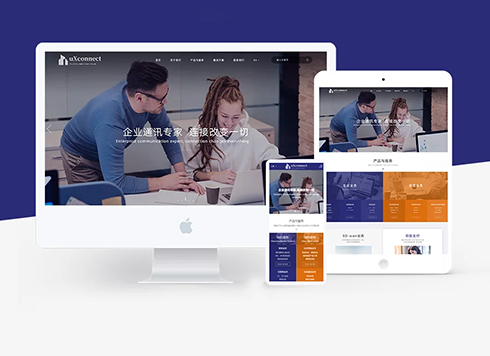 Customized Communication Solutions for Enterprises Website Development
Founded in 1996, this company focuses on pe ...
-
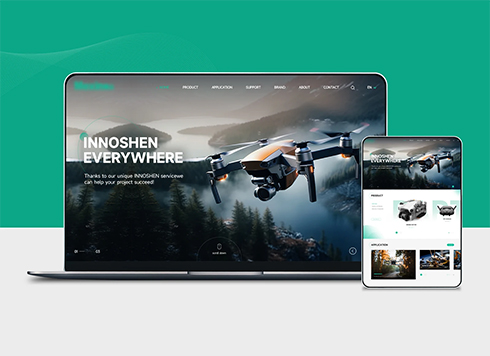 Drone Accessories Company Website Development
Incorporating gray as an accent with the pr ...
-
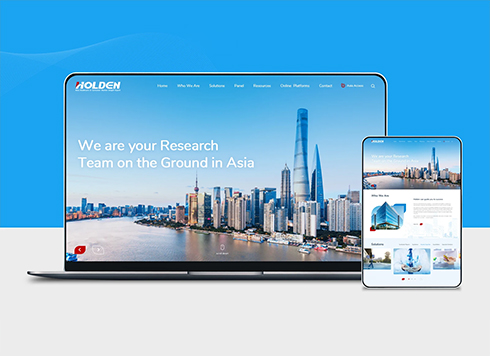 Professional International Research Service Agency Website Construction
This project serves a company with internat ...
-
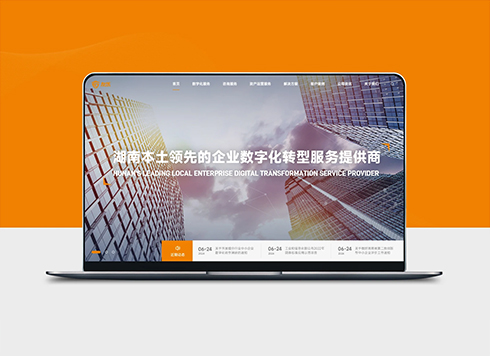 The Construction of Group Websites for Asset Operation and Digital Services
This project is to create a website for a c ...
-
How to Approach Custom Website Development: 2026 Selection Process, Cost Range, and Common Pitfalls
Date: Aug 10, 2026 Read: 83
-
A Complete Guide to Custom Website Development: Process, Costs, and Selection
Date: Aug 7, 2026 Read: 82
-
How to Build a Website in Changsha? Enterprise Official Website Selection and Implementation Guide
Date: Aug 5, 2026 Read: 133
-
What Is Custom Website Development? A Complete Guide from Requirements Analysis to Selection and Implementation
Date: Aug 4, 2026 Read: 122
-
Unlock Custom Website Development: A Comprehensive Guide from Scratch
Date: Nov 3, 2025 Read: 557