What Is Custom Website Development? A Complete Guide from Requirements Analysis to Selection and Implementation
Custom website development is a website-building method built from scratch based on an enterprise's unique business processes, user roles, and operational goals, from requirements analysis and architecture design to code implementation. Compared with template websites and SaaS website builders, custom development offers greater control over functional fit, data autonomy, and long-term scalability, but it also comes with higher costs and longer delivery cycles. A pragmatic criterion is: when business processes involve multiple custom states or require deep integration with internal systems, custom development is often more economical than adapting off-the-shelf solutions.
Definition and Characteristics of Custom Website Development
Custom website development is not simple web design; it is a complete software engineering effort centered on business logic, permission systems, data structures, and interaction flows. It typically includes front-end presentation, back-end management, API design, and database modeling. What enterprises get is a system that fits their own operational methods from database to interface, rather than adjusting the skin within a fixed framework.
- Custom Functions: Supports personalized features such as complex approval workflows, membership tiers, and custom forms.
- Data Independence: Database and file storage are typically on your own server or cloud host, making export and migration easy.
- Strong Scalability: When user volume or business volume grows, modules can be independently expanded or components refactored.
Why Custom Development Is Needed: Fundamental Differences from Off-the-Shelf Solutions
Many enterprises mistakenly think custom development is merely a "more expensive" way to build a website, but in fact it solves business scenarios that off-the-shelf solutions cannot cover. The criterion is simple: if templates and SaaS tools cannot implement at least one core process you need, or require a lot of manual compensation after implementation, custom development is worth considering. In 2026, the common approach is to first sort out business processes, then compare the real workload of off-the-shelf solutions versus custom development.
- Functional Fit: Template sites cover about 60%-80% of common display needs; custom development can achieve high-coverage business logic as needed, but requires design investment.
- Cost Structure: Template sites typically cost several thousand yuan per year; SaaS websites cost from several thousand to tens of thousands of yuan per year; custom development requires a one-time investment ranging from tens of thousands to hundreds of thousands of yuan, depending on feature complexity.
- Delivery Cycle: Template sites take 2 days to 2 weeks; SaaS sites take 1 week to 1 month; standard custom development takes 6-12 weeks, while complex projects may take 3-6 months.
- Long-term Maintenance: Templates rely on platform upgrades, SaaS relies on vendor stability, and custom development is maintained by an in-house team or a commissioned team, with controllable risks but maintenance costs.
Here is a judgment principle: when a project requires more than five custom business entities, the unit cost of custom development will be lower than repeatedly modifying a template. If you only have a display page and simple forms, custom development is a waste of resources.
How to Do It: A Four-Step Implementation Method for Custom Development
Most failed custom development cases are not technical problems but requirements management issues. Breaking the process into four stages, each with clear inputs and outputs, can significantly reduce the risk of getting out of control.
Step 1: Requirements Definition and Scope Freeze
This step determines the success or failure of the project. You need to produce a requirements document that includes a feature list, role permissions, data fields, and page flows, and have the technical team confirm each item with you, rather than just saying "build a website like a certain platform." In 2026, it is recommended that the requirements document also include a negative list to explicitly state which features will not be built, avoiding unlimited additions later.
- Clarify the usage scenarios and frequency of each feature, distinguishing core paths from edge cases.
- After freezing requirements, any new features are separately counted as change costs to avoid requirements inflation during development.
- Acceptance criteria: the feature list can answer three questions: "Where do users come from, what do they do on the page, and where does data flow to?"
Step 2: Technology Selection and Architecture Design
The choice of technology stack should be based on team familiarity, ecosystem maturity, and business expectations. Do not blindly pursue new frameworks. Architecture design should reserve interfaces to accommodate future data migration and third-party system integration. If possible, ask the technical party to provide a data dictionary and API documentation samples.
- Common back-end choices: PHP (Laravel), Java (Spring Boot), Python (Django/Flask), Node.js. In 2026, there is no single order of superiority.
- For the front end, focus on access scenarios: brand display can use lightweight solutions, while back-end systems need to consider component-based frameworks.
- The architecture document must include at least database table design, API list, and permission model, which is the basis for later maintainability.
Step 3: Iterative Development and Testing
The development process is recommended to be split into weekly iterations, with a demo environment opened every 1-2 weeks for business stakeholders to verify. Testing should not be done all at the end; each iteration must include functional testing, regression testing, and basic performance checks.
- Provide feedback through the demo environment, rather than conveying modification opinions through documents.
- Test cases must cover normal processes, abnormal inputs, and permission boundaries.
- Acceptance criteria: enter the launch phase only when the functional defect rate of core paths is below 2%.
Step 4: Launch and Delivery Acceptance
Before launch, data backup, monitoring deployment, and rollback plans must be completed. Delivery acceptance checks not only whether functions are implemented, but also code quality, document completeness, and operational training. In 2026, most projects will also define a Service Level Agreement (SLA) to specify response times.
- Acceptance checklist includes: functional acceptance, speed testing, security scanning, browser compatibility, and admin panel operation manual.
- Ensure that source code, database scripts, and deployment documents are all handed over to avoid being tied to individual developers.
- Agree on a free maintenance period of at least 1 month after launch to handle issues in the real environment.
How to Judge the Quality of a Custom Development Project
Quality cannot be judged only by whether the page can be opened on launch day. You need to focus on code maintainability, data security, and iteration efficiency. A useful reference standard is: a new developer can independently modify a feature module within one week; if not, it indicates hidden dangers in the code structure.
- Code Standards: Clear naming, moderate comments, and a unified directory structure, rather than large amounts of copy-paste code.
- Performance: Homepage loading time within 3 seconds (normal network environment), and back-end operation response under 1 second.
- Security Measures: Encrypted password storage, SQL injection prevention, and permission checks on APIs are the baseline requirements.
- Documentation Completeness: Includes requirements documents, technical documents, operation manuals, and deployment documents; missing any one will increase future maintenance costs.
Frequently Asked Questions
How much does custom development generally cost?
Small display sites cost about 30,000-80,000 yuan, business websites about 80,000-200,000 yuan, and complex business or system integration usually over 200,000 yuan, assessed based on the feature list.
How long does custom development take?
Ordinary corporate websites take 4-8 weeks, platforms with membership systems and multi-role management take 8-12 weeks, and large custom systems take 3-6 months; the cycle depends on requirements clarity and approval efficiency.
What is the difference between custom development and buying source code to modify?
Buying source code is secondary development, which carries risks of licensing and code vulnerabilities; custom development builds from scratch, with clear code ownership, but requires more testing and initial development time.
How to avoid development companies delaying the project?
Clearly state milestones and late penalties in the contract, require a runnable demo version every 1-2 weeks, and use stage acceptance to push progress.
Who owns the code after custom development is completed?
Usually the client owns it, but the contract must state "full handover of source code" and confirm there is no licensing risk from third-party open-source components.
Applicable Scenarios and Boundaries
Cases suitable for custom development include: business processes with dedicated state machines or approval flows; integration with internal ERP or CRM systems; high requirements for data security and independent控制; and large future functional expansion plans. In 2026, many enterprises use a mix of custom development and SaaS tools: SaaS for front-end marketing and custom development for core business, which controls costs and enables flexible responses.
- Suitable Conditions: Multi-role approval flows, integration with closed APIs, the need for deep analysis of proprietary data, and continuously iterative business models.
- Unsuitable Conditions: Pure display websites, budgets under 30,000 yuan with simple features, temporary event pages, and teams without follow-up maintenance personnel.
Scenarios not suitable for custom development are equally clear: projects only for displaying company introductions and product images, limited budgets, requirements that may change within two months, and no stable technical lead. In these cases, template websites or SaaS can meet needs faster. There is no need to adopt a heavy custom system for "face" purposes; what truly brings value is not the development method, but solving the business problem itself.
Action Guide: First, sort out business processes and list the key steps that must be automated by the system; then compare these steps with off-the-shelf solutions. If you find that off-the-shelf solutions require a lot of manual compensation, you can start custom development. When selecting a technical team, ask them to provide live cases and a code delivery checklist. If you are planning a website upgrade, you can contact a technical team with custom delivery experience for a requirements pre-review — Xiyue Company engineers provide cost-effective suggestions during the requirements assessment phase instead of quoting directly.
-
 Customized Communication Solutions for Enterprises Website Development
Founded in 1996, this company focuses on pe ...
-
 Drone Accessories Company Website Development
Incorporating gray as an accent with the pr ...
-
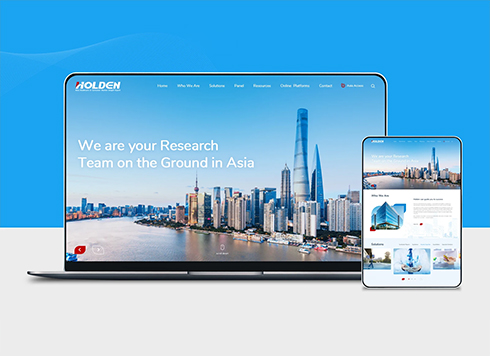 Professional International Research Service Agency Website Construction
This project serves a company with internat ...
-
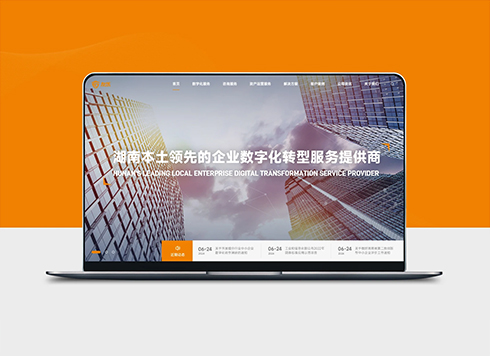 The Construction of Group Websites for Asset Operation and Digital Services
This project is to create a website for a c ...
-
How to Approach Custom Website Development: 2026 Selection Process, Cost Range, and Common Pitfalls
Date: Aug 10, 2026 Read: 83
-
How to Build a Website in Changsha? Enterprise Official Website Selection and Implementation Guide
Date: Aug 5, 2026 Read: 133
-
How to Choose Custom Website Development: Process, Cost, and Common Misconceptions
Date: Aug 5, 2026 Read: 110
-
Unlock Custom Website Development: A Comprehensive Guide from Scratch
Date: Nov 3, 2025 Read: 557
-
Custom website development: HTTPS is configured, but the client's mobile browser still says not secure—what is usually wrong?
Date: Sep 18, 2026 Read: 16