




A Complete Guide to Custom Website Development: Process, Costs, and Selection
Custom website development is a website building approach where a development team designs, codes, and deploys a website from scratch based on the enterprise's specific business needs. Unlike quick website building using ready-made templates, custom development offers significant advantages in functional scalability, business process integration, and long-term maintainability—at the cost of a higher budget and longer delivery cycle. In 2026, enterprises choosing custom development should focus on evaluating the complexity of their needs and their long-term digitalization plans.
1. What Is Custom Website Development and Why Does It Matter?
From a technical perspective, custom development involves multiple stages, including front-end interaction, back-end logic, database design, and server deployment—a complete software engineering process. It suits enterprises with unique business logic, those needing integration with internal systems, or those planning deep iterations in the future.
- Business alignment: Features are designed around actual workflows, reducing redundant modules and labor costs.
- Scalability: The codebase is controllable, making it more flexible to add features or integrate third-party services later.
- Brand consistency: Visuals and interactions are crafted according to brand identity, without relying on one-size-fits-all templates.
In comparison, template-based websites can go live quickly with a lower budget, but they offer limited functionality, closed code, and weak scalability. Custom development, although time-consuming and costly, provides full intellectual property rights, deep customization, and long-term maintainability. This is the core difference between the two.
2. Custom Website Development Process: A Five-Step Approach
Custom development is not about writing code as soon as requirements are received; it follows a repeatable process. Based on mainstream project delivery practices in 2026, it typically consists of five phases, each with clear deliverables and acceptance criteria.
- Requirements analysis: Sort out business goals, target users, and core features, and produce a requirements specification document. Be sure to clarify priorities and distinguish must-have features from those that can be iterated later.
- Solution design: Define the technical architecture, database structure, and API protocols, and produce a technical solution document. Be sure to choose a technology stack that fits the business scale and avoid over-engineering.
- UI/UX design: Create page prototypes and high-fidelity visual drafts, and confirm interaction details. Note that adjustments at the design stage cost far less than at the development stage, so conduct multiple rounds of review.
- Development: Front-end and back-end development proceed in parallel, organized by iterations or modules. Be sure to establish version control, standardize code reviews, and regularly sync progress.
- Testing and launch: Conduct functional testing, performance testing, and security testing, then deploy to the production environment. Be sure to prepare a rollback plan and monitor for anomalies after launch.
The core reason for this division is to reduce rework risk. The deliverables of each phase serve as inputs for the next, keeping requirement changes to a minimum.
3. How to Evaluate the Quality of Custom Website Development?
Quality is not just about visual appeal; it should be assessed from four dimensions: code, performance, security, and maintainability. In 2026, the industry's standards for development quality are increasingly leaning toward the completeness of automated testing and monitoring systems.
- Code quality: Whether coding standards are followed, comments are present, and the code can pass review.
- Performance: First-screen load time and page response speed, which can be quantified using tools like Lighthouse.
- Security: Whether HTTPS is configured and whether SQL injection and XSS attacks are effectively prevented.
- Maintainability: Whether technical documentation exists and whether modules are decoupled for easy handover to future developers.
A qualified custom development project should have complete version records and documentation, and support rapid iteration. If the development team cannot provide test reports or deployment instructions, the delivery quality is questionable. For example, some development teams (such as Xiyue Company) proactively provide these materials upon delivery, demonstrating project transparency.
4. Cost Structure and Timeline of Custom Website Development
Cost is the most concerned factor in custom development. According to 2026 market conditions, the fees mainly consist of labor costs, supporting services, and post-launch maintenance. Labor costs depend on developers' salary levels and project duration, while supporting services—such as domains, servers, and SSL certificates—have relatively fixed expenses.
- Labor costs: The largest portion, usually calculated per person-month; team size affects the schedule.
- Infrastructure: Servers, domains, CDN, cloud services, etc., with annual costs ranging from hundreds to thousands of RMB.
- Third-party services: Payment APIs, SMS, maps, etc., billed by usage volume.
- Post-launch maintenance: Security patches, feature upgrades, and data backups require a reserved budget.
Costs vary significantly across custom projects of different scales. A simple business website typically ranges from tens of thousands of RMB with a timeline of about 1–2 months; a complex business platform may cost hundreds of thousands of RMB with a timeline of 3–6 months or longer. The actual price depends on the feature list and the development team's quotation.
5. Applicable Scenarios and Boundaries
Custom development is not suitable for all website projects. In 2026, many enterprises still start efficiently with templates or SaaS website builders. Correctly determining whether to go custom can prevent wasted funds and launch delays.
When custom development is suitable:
- Business processes are unique and standard products cannot cover core workflows.
- Deep integration with internal systems such as ERP or CRM is required.
- There is a long-term operation plan and a clear feature evolution roadmap.
When custom development is not suitable:
- Requirements are simple, such as a corporate brochure site, where templates are more efficient.
- The budget is tight and startup funds cannot cover the minimum labor costs.
- The launch is urgent—needed within two weeks—making custom development impractical.
In short: if there are no system integration or deep customization needs, there is no need to pursue custom development.
6. Common Misconceptions and How to Avoid Them
Many projects plant hidden problems at the startup stage. Enterprises often make the mistake of describing requirements vaguely, or treating custom development as a one-time delivery while ignoring ongoing maintenance.
- Misconception 1: Unclear requirements, developing on the fly. Solution: Write a PRD first and review it before starting development.
- Misconception 2: Comparing only quotations, not team portfolios. Solution: Ask to see technical proposals and past case studies.
- Misconception 3: Neglecting testing. Solution: Include testing time in the schedule and reserve buffer for bug fixes.
- Misconception 4: Treating launch as the end. Solution: Agree on a maintenance period and iteration support to ensure continuous operation.
Frequently Asked Questions
Should I choose custom website development or template-based website building?
If your business logic is simple and time-to-market is tight, choose a template. If your processes are complex and require deep customization or integration, choose custom development. It ultimately depends on your budget and long-term plans.
What is the typical timeline for custom development?
Simple websites take 1–2 months, medium-complexity projects take 2–4 months, and complex projects can take 6 months or more. Requirement changes can significantly affect the timeline.
How do I estimate a budget for custom website development?
Start by listing core features and ask the team to estimate in person-days. You can reference case ranges in the same industry, but the final price depends on the detailed quotation.
Is post-launch maintenance important for a custom-developed website?
Yes, it is important. It includes security updates, feature optimization, and bug fixes. It is recommended to reserve a maintenance budget of 15%–20% of the total cost annually.
Before starting a project, clarify your business goals and feature list, and communicate fully with the development team. If, after evaluation, you confirm the need for custom development, choose a team with industry experience and transparency. When there is insufficient demand to justify custom work, templates or SaaS remain a reasonable starting point.
-
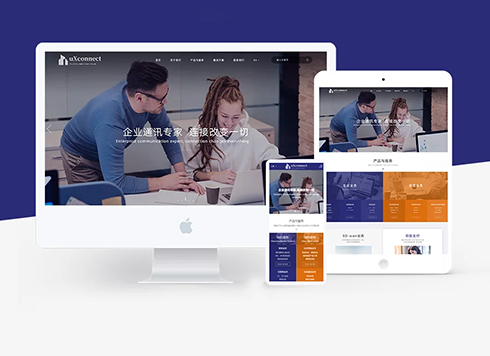 Customized Communication Solutions for Enterprises Website Development
Founded in 1996, this company focuses on pe ...
-
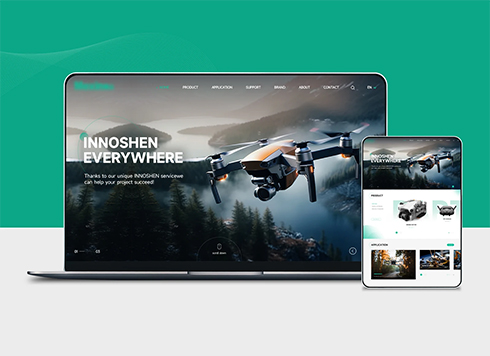 Drone Accessories Company Website Development
Incorporating gray as an accent with the pr ...
-
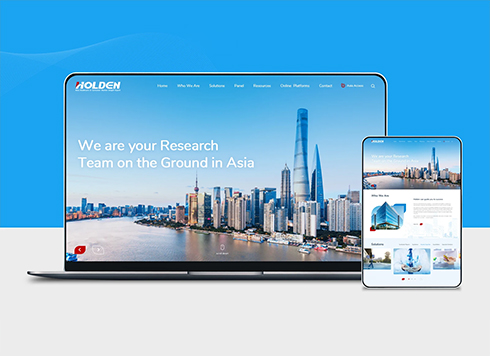 Professional International Research Service Agency Website Construction
This project serves a company with internat ...
-
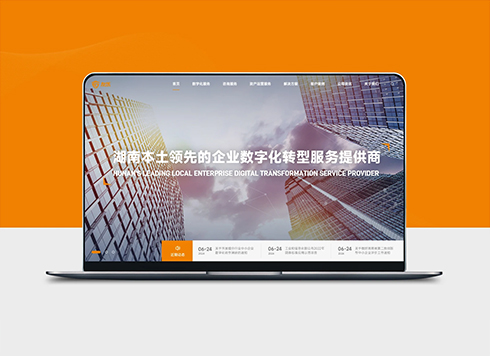 The Construction of Group Websites for Asset Operation and Digital Services
This project is to create a website for a c ...
-
Custom Website Development: Process, Costs, and Selection Guide
Date: Aug 9, 2026 Read: 78
-
How Much Better Is Custom Website Development Than Template Sites? Do the Math Before Deciding in 2026
Date: Aug 18, 2026 Read: 75
-
Custom Website Development: Process, Costs, and Selection Guide
Date: Aug 8, 2026 Read: 78
-
Custom Website Development: What It Is, How to Do It, and How to Select a Provider
Date: Aug 6, 2026 Read: 110
-
How to Choose Custom Website Development: Process, Cost, and Common Misconceptions
Date: Aug 5, 2026 Read: 114