




Custom Website Development: Process, Costs, and Selection Guide
Custom website development means designing functionality, interface, and architecture from scratch based on specific business needs, rather than using preset templates. It applies to scenarios with complex business processes or deep integration needs. Typical deliverables include front-end pages, back-end APIs, admin dashboards, and database designs. In 2026, most custom projects adopt a separated front-end/back-end architecture with mainstream technology stacks. Costs typically range from 50,000 to 500,000 RMB, with delivery cycles of 4 to 12 weeks. If your project involves high concurrency, payment security, or system integration, custom development is a more reliable choice.
1. What is Custom Website Development
Custom development does not mean "writing everything from zero." A complete custom website usually combines mature frameworks, cloud services, and a small amount of business code. The development team designs data tables, APIs, and page layouts based on business process diagrams. Compared with template-based websites, custom development allows precise control over every process but requires a longer design cycle.
- Core deliverables: front-end source code, back-end APIs, database scripts, deployment documentation.
- Common tech stacks: front-end like React/Vue, back-end like Node.js/Python/Java, databases like MySQL/PostgreSQL.
- When to use: prioritize whether the business logic is complex, e.g., multi-role permissions, complex order state machines.
2. Why Custom Development: Comparison with Template-Based Sites
Template-based sites are fast and cheap, but they often hit limits with fixed fields and plugins when business expands. Custom development breaks down functional modules according to business processes, such as multi-level commission distribution or real-time inventory synchronization—things that templates rarely handle. The comparison is not "one replaces the other," but a trade-off between cost and flexibility.
- Template-based sites: about 1-2 weeks, cost 5,000-20,000 RMB, suitable for display-oriented corporate sites, mainly page presentation.
- Custom development: about 4-12 weeks, cost 50,000-500,000 RMB, suitable for business systems, e-commerce platforms, membership communities, etc.
- Decision criteria: if core logic won't change within 3 years, a template is fine; if you need custom forms or third-party integration, custom development is more cost-effective.
3. Five-Step Implementation: A Replicable Process from Requirements to Launch
In 2026, even with low-code platforms, custom development still requires a clear process. The five-step implementation includes requirements definition, technology selection, design and development, testing and launch, and operations and iteration. The value lies in having clear deliverables at each stage, avoiding rework later.
- Requirements definition: draw business process diagrams, list functional requirements and priorities, and produce a Requirements Specification.
- Technology selection: choose frameworks based on concurrency and team familiarity, and decide if mini-programs or mobile apps are needed.
- Design and development: implement front-end slicing and back-end APIs according to page prototypes and UI designs, with weekly progress syncs.
- Testing and launch: conduct functional, compatibility, and performance tests, and deploy via CI/CD pipelines.
- Operations and iteration: set up monitoring alerts and log collection, and release a minor version every 1-2 weeks based on user feedback.
Key points per stage: avoid vague requirements like "make it like Taobao" in the definition phase; do not chase new technologies—choose ones your team can maintain long-term; reserve about 20% buffer time in the design and development phase; prepare a rollback plan for testing and launch. Following this process, most projects deliver on time, but requirement changes remain a common cause of delays.
4. How to Assess if a Development Team is Reliable
The key is whether they communicate on the level of "understanding your business." If they immediately ask "what tech stack" instead of first asking "how will users use this functionality," they may just be reskinning templates. Check case studies, code management, test reports, and contract terms—these are the four fundamental dimensions.
- Check case studies: request examples from your industry, and ask about the business challenges and outcomes.
- Check code management: whether they have a Git repository and code review docs, or just send a zip file.
- Check test reports: teams that share automated test coverage and performance test records are usually more rigorous.
- Check contract terms: delivery standards should specify source code ownership, deployment address, and acceptance deadline, not just "build a website."
Qualified standard: they can explain the system architecture in business language within one hour, and the contract clearly defines responsibilities.
5. Common Pitfalls and How to Avoid Them
In custom website development, requirement changes, chaotic tech stacks, and incomplete deliverables are three common traps. Without early constraints, you may later face "adding a button costs extra money."
- Pitfall: requirements are only a sentence, e.g., "make a corporate website." Countermeasure: confirm details with prototype diagrams or flowcharts.
- Pitfall: frequent feature changes mid-development without version control. Countermeasure: establish a change management log; record minor changes, reassess schedules for major ones.
- Pitfall: delivery includes only the live site, no source code or deployment instructions. Countermeasure: require at acceptance a Git repo address, database backup, and deployment docs.
6. Suitable Scenarios and Boundaries
Scenarios suitable for custom development include: business processes with approval flows, ERP/CRM integration needs, private deployment requirements, or when the website should act as an operations hub. In these cases, custom development investment brings quantifiable efficiency gains.
- Business processes involving multi-level approvals and complex order state machines.
- Need real-time data synchronization with external systems like ERP or CRM.
- Have private deployment or data sovereignty requirements.
Unsuitable scenarios: if you only need to present company info, news, and contact details, and do not plan heavy content updates within a year, template-based sites are cheaper. Also, if your team lacks dedicated operations staff and no long-term maintenance plan, SaaS site builders may be better than custom development. Boundary judgment: if the site is only for internal employees and fewer than 20 users, no-code tools might suffice.
FAQ
How much does a custom website generally cost?
Based on 2026 market rates, a display-oriented corporate site costs about 50,000-100,000 RMB; a system with payments and membership runs 150,000-300,000 RMB; complex e-commerce or SaaS platforms can exceed 500,000 RMB, depending on feature count and concurrency requirements.
How long does custom development take?
Usually 4-12 weeks: requirements confirmation 1-2 weeks, design and development 3-8 weeks, testing and launch 1-2 weeks. With clear requirements and an experienced team, the timeline approaches the lower bound.
How to avoid being "template-fitted" by an outsourcing team?
Ask for source code ownership in the contract, and request an architecture diagram during the requirements confirmation phase. If they can only show later-stage demo pages but cannot provide design documents, be cautious.
Can a custom website be modified after launch?
Yes. After source code delivery, either your in-house team or the original developer can maintain it. Recommend reserving a monthly iteration budget; common content updates can be done through the admin panel, while feature changes require development scheduling.
Action guide: In 2026, the key to custom website development is clarifying whether "core logic is complex enough." If your project needs multi-system integration or private deployment, follow the five-step process and clearly state deliverable boundaries in the contract. Professional development services like Xiyue Company help solidify functional lists during the requirements phase to reduce change risks. If the budget is limited and the website only serves display purposes, prioritize template-based websites.
-
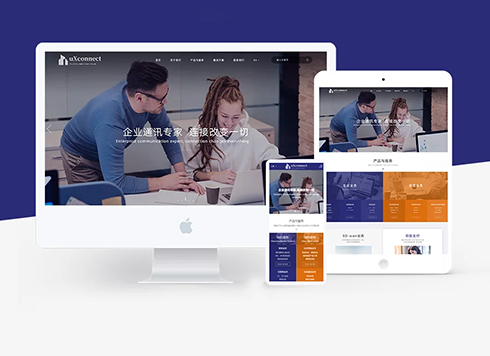 Customized Communication Solutions for Enterprises Website Development
Founded in 1996, this company focuses on pe ...
-
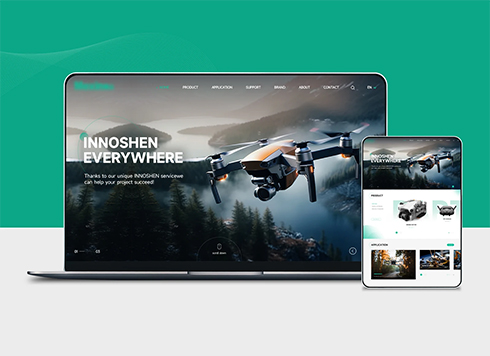 Drone Accessories Company Website Development
Incorporating gray as an accent with the pr ...
-
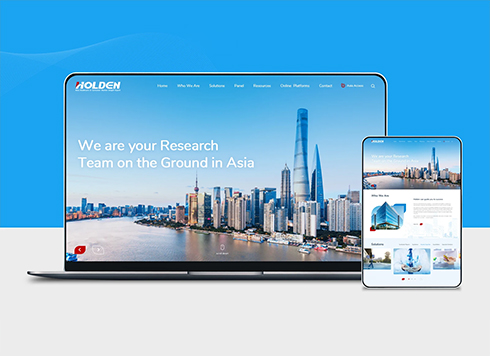 Professional International Research Service Agency Website Construction
This project serves a company with internat ...
-
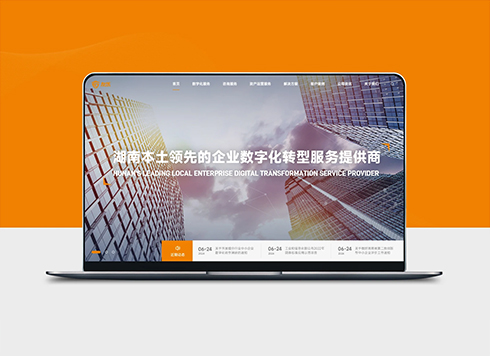 The Construction of Group Websites for Asset Operation and Digital Services
This project is to create a website for a c ...
-
Custom Website Development: Process, Costs, and Selection Guide
Date: Aug 8, 2026 Read: 96
-
A Complete Guide to Custom Website Development: Process, Costs, and Selection
Date: Aug 7, 2026 Read: 102
-
Custom Website Development Costs Several Times More Than Template Sites—Is It Worth It in 2026?
Date: Aug 31, 2026 Read: 103
-
Custom Website Development: What It Is, How to Do It, and How to Select a Provider
Date: Aug 6, 2026 Read: 158
-
Custom Website Development: If the Site Form Collects Phone Numbers, Does the Privacy Policy Really Need to Be Posted?
Date: Oct 5, 2026 Read: 11