




Custom Website Development: What It Is, How to Do It, and How to Select a Provider
Custom website development is the process in which a development team builds a website step by step according to a company's business logic, user journeys, and brand guidelines, from requirements analysis and architecture design to front-end and back-end implementation. A common approach in 2026 is to use front-end/back-end separation and modular deployment; a medium-complexity corporate website typically takes 6 to 12 weeks from kickoff to launch. If template-based website building cannot meet specific interaction, data integration, or multi-role permission needs, custom development is often a better fit for business growth.
Core Differences Between Custom Development and Template-Based Website Building
Template-based website building suits quick launches and low budgets, but its page structures, sections, and features are preset by the platform, leaving companies to choose only within its constraints. As business expands, new user flows, payment integrations, or admin backend needs often cannot be safely extended on a template, sometimes requiring a complete rebuild. Custom development, in contrast, builds the information architecture and functional model around business goals, and each subsequent iteration is supported by clear technical documentation.
Based on 2026 project delivery practices, the core differences between custom development and template-based website building are as follows:
- Functional freedom: Custom development can implement complex search, real-time calculations, third-party system integrations, and more; templates rely on plugins, and new requirements often have no ready-made solution.
- Code ownership: After custom development, the company typically receives the full source code and database scripts; template-based websites often provide only usage rights, with limited data export.
- Performance and security: Custom code can apply caching, rate limiting, and access control tailored to business scenarios; templates, due to their generic nature, are prone to redundant code and delayed vulnerability fixes.
- Cost and timeline: Template-based websites cost hundreds to thousands of yuan per year and go live within days; custom development commonly ranges from tens of thousands to hundreds of thousands of yuan, with timelines measured in weeks.
A Four-Step Method for Custom Website Development
Breaking the development process into four phases helps business and technical teams align acceptance criteria at each checkpoint, avoiding rework later. These phases are not strictly time-separated but require iterative validation.
- Requirements clarification: The business side outputs user roles, core flows, and must-have features, while the development side produces a sitemap and wireframes. The acceptance criterion is that every wireframe includes clear interaction notes.
- Architecture design: Determine the tech stack, database table structure, and API contracts. Reserve data backup and migration plans here to avoid post-launch reconstruction.
- Agile development: Deliver runnable modules in two-week iterations rather than showing everything at the end. After each iteration, conduct internal testing and key-user trials.
- Acceptance and delivery: Check the acceptance checklist in a staging environment, verify browser compatibility, loading speed, and code comments, and confirm that operations documentation, deployment scripts, and backend usage guides have been handed over. Taking Xiyue Company's delivery habits as an example, these documents are part of pre-launch inspection items.
A common pitfall: if the requirements clarification phase only states requests like 'be high-end and impressive,' the development team may interpret it in its own way, resulting in a mismatch with expectations. In 2026, many teams supplement textual requirements with business flow diagrams and user stories to reduce misreading.
How to Evaluate a Development Partner: Three Comparison Dimensions
When selecting a development partner, do not look only at the quote. Based on 2026 delivery practices, it is recommended to compare across three dimensions: 'case credibility,' 'process maturity,' and 'code maintainability.'
- Case credibility: Ask the development partner to provide live online projects you can actually access and to explain their specific responsibilities. Do not just listen to slide presentations; operate the admin backend yourself.
- Process maturity: Mature teams provide requirements confirmation forms, test reports, and iteration plans. If a vendor only talks about price and not process, the risk is usually higher.
- Code maintainability: Request to review code comments and module breakdown in the source code. Loose single-file code can create hidden cost concerns for future maintenance.
On this basis, the difference between an outsourcing company and a freelancer is also worth weighing. Outsourcing companies usually have project managers and testers, making them suitable for projects with tight deadlines and many modules; freelancers offer direct communication and moderate costs, making them suitable for small tool sites with clear requirements. If the budget allows, prioritize a team that can be on-site locally or synchronize online daily.
Common Misconceptions and Avoidance Tips
Custom development is not a one-time deal; post-launch maintenance truly tests the quality of the design. The following misconceptions still appear frequently in 2026 projects:
- Comparing only price, not value: Low-priced solutions often hide follow-up costs, such as per-change surcharges for feature additions and separate maintenance fees. It is recommended to clearly define the functional scope and acceptance criteria in the contract.
- Ignoring data migration and SEO: When redesigning a website, failing to implement 301 redirects and clean up old data can cause search traffic to drop. Reserve a data mapping plan before development begins.
- Writing requirements documents too vaguely: Descriptions like 'the homepage should have a tech feel' cannot guide development and lead to repeated revisions. Be specific about the behavior of each button and the responsive rules for each page.
- Leaving all testing to the development team: Self-testing by developers only ensures logic works; it cannot replace real-scenario validation by business users. The company should assign dedicated staff to participate in each iteration's acceptance.
A proper approach is to include the acceptance process as a milestone at project initiation, with the business owner signing off, to avoid 'discovering it does not meet expectations after launch.'
Applicable Scenarios and Boundaries
Custom website development suits projects that need deep alignment with business logic, such as sites with membership tiers, order workflows, CRM integration, or real-time quotes. If the website is merely for displaying company profiles and contact information, template-based website building or SaaS website builders are sufficient—they can go live within a day and cost less.
Consider custom development in the following situations:
- Business processes involve multiple role permissions and approval nodes that templates cannot implement.
- Data synchronization with internal systems (e.g., ERP, OA) is required.
- The page interactions and visuals demand brand-level quality, such as animated flows and 3D displays.
- Continuous iteration is expected over the next 2-3 years, and the technical foundation needs to be controllable.
Conversely, if your budget is below 5,000 yuan and the launch time is within one week, custom development is difficult to achieve; in such cases, using a template with reasonable page planning is more pragmatic. The core criterion is not 'which is more advanced,' but 'whether the business needs to pay for freedom.'
Frequently Asked Questions
How much does custom website development generally cost?
A one-time custom development project commonly costs between 30,000 and 200,000 yuan, depending on feature modules, design requirements, and the team's location. Outsourcing company quotes usually include project management costs, while freelancers are somewhat lower.
Which is better: custom development or template-based website building?
There is no absolute better option. Template-based website building suits quick content publishing, while custom development suits projects that need unique features and data integration. If the business relies on complex user flows, custom development is more reliable.
How can I ensure the quality of custom development?
Clearly specify the acceptance checklist, test cases, and defect-fix deadlines in the contract, and require a runnable demo version after each iteration. Having business users walk through the entire flow before launch is more reliable than relying solely on the developer's self-check.
What should I prepare before starting custom development?
First, sort out user roles, core flows, and feature priorities, then prepare brand assets and content copy. It is best to provide 1-2 reference websites and explain what you like and dislike about them.
Before starting custom development, it is recommended to draw a simple user flow diagram, mark must-have and optional features, and then evaluate development partners with this list. If your website is mainly for brand display and has no complex interactions, using a template-based website builder to get started is a safe approach; when business needs require data integration or multi-role collaboration, switch to custom development for higher return on investment.
-
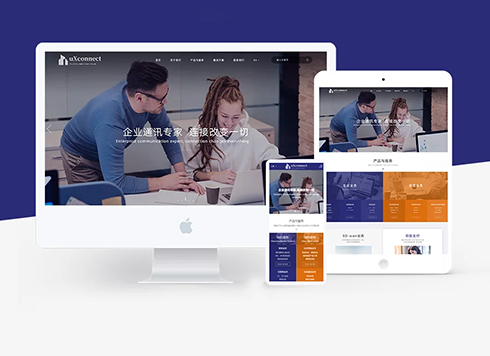 Customized Communication Solutions for Enterprises Website Development
Founded in 1996, this company focuses on pe ...
-
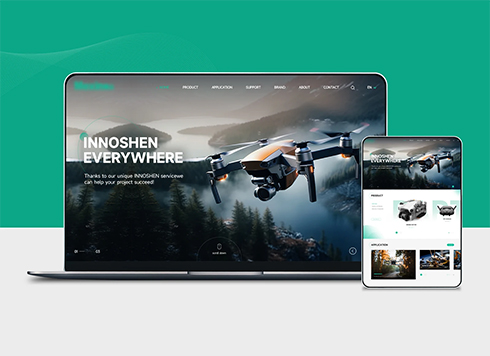 Drone Accessories Company Website Development
Incorporating gray as an accent with the pr ...
-
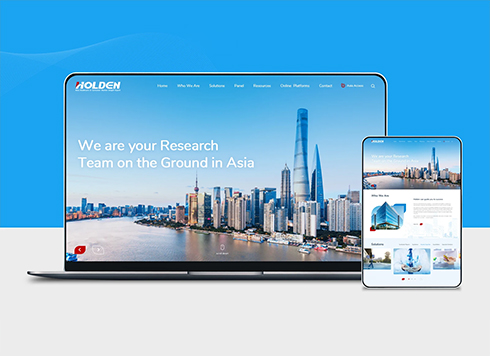 Professional International Research Service Agency Website Construction
This project serves a company with internat ...
-
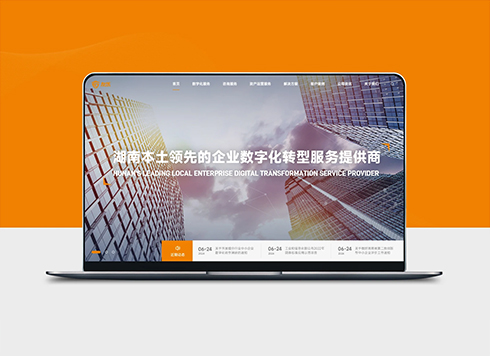 The Construction of Group Websites for Asset Operation and Digital Services
This project is to create a website for a c ...
-
Custom Website Development: Process, Costs, and Selection Guide
Date: Aug 9, 2026 Read: 77
-
A Complete Guide to Custom Website Development: Process, Costs, and Selection
Date: Aug 7, 2026 Read: 82
-
Custom website development: HTTPS is configured, but the client's mobile browser still says not secure—what is usually wrong?
Date: Sep 18, 2026 Read: 16
-
Custom website development: the client wants a Japanese version, but no one on our team speaks Japanese—can we take the job?
Date: Sep 17, 2026 Read: 21
-
Custom Website Development: Inquiry Form Receives Dozens of Garbled English Messages a Day—Should You Disable the Form First or Add a CAPTCHA First?
Date: Sep 15, 2026 Read: 31