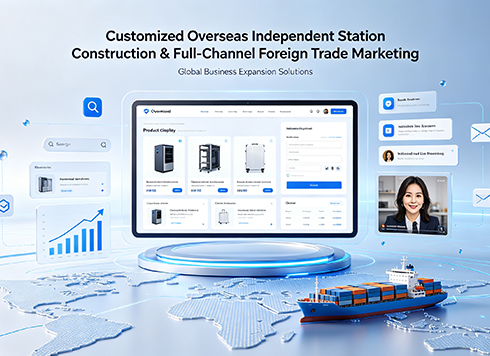





Custom Website Development: Process, Costs, and Selection Guide
Custom website development is a method of building a website by designing and coding everything from information architecture and UI design to backend functions, tailored to a company's specific business goals. Unlike using ready-made templates, custom development does not rely on preset themes but rebuilds around business processes. It is suitable for projects with a clear brand positioning, specific functional or data integration needs, and expected long-term iteration. The core value lies in "on-demand matching"—using code to gain flexibility and avoid feature redundancy. Selection should consider requirement complexity, budget, and long-term maintenance costs.
1. What Is Custom Website Development? Why Not Always Use Templates?
Template-based website building is like "picking a combination from existing frameworks." Its advantages are speed and low cost, typically launching within weeks. However, its drawbacks include limited modification options, bloated code, and low brand recognition. Custom development, on the other hand, is like "painting on a blank canvas," where each module is implemented as needed. It suits scenarios with complex business logic, deep integration requirements, or the need to establish a unified digital identity. In 2026, custom website development generally follows component-based and API-driven practices, with front-end and back-end separation, enabling custom projects to maintain good development efficiency and maintainability.
- Ideal for custom development: Complex features such as login/member systems, online transactions, private data reports, and integration with internal systems.
- Ideal for template websites: Static displays, low content update frequency, and no technical staff for ongoing maintenance.
- Key decision criterion: If the core competitiveness of your business relies on processes carried out by the website, custom development should be considered; if the website is merely a company brochure, templates are more cost-effective.
2. A Four-Step Approach to Custom Website Development: From Requirements to Launch Without Pitfalls
The biggest risk in custom development projects is starting without clearly defined requirements. Breaking the process down using the "Four-Step Approach" can reduce the risk of rework.
- Requirement Analysis: Spend about a week organizing core user personas, usage flows, and feature priorities, distinguishing between "must-have" and "nice-to-have."
- Prototype Design: Confirm page structure through low-fidelity wireframes or clickable prototypes. The cost of changes at this stage is far lower than during development.
- Iterative Development: Adopt 2-4 week short iterations, delivering a usable version each round for key users to test. A common practice in 2026 is Scrum combined with continuous integration.
- Deployment and Handover: After stress testing and security scans, go live and deliver source code, operation manuals, and deployment documentation.
At the end of each step, executable documents such as requirement specifications, prototype acceptance forms, and test reports should be produced. If the developer is unwilling to provide documentation, future maintenance will be problematic.
3. Applicable Scenarios and Boundaries: When Custom Development Is Not Necessary
Not every business needs a custom website. By 2026, website building tools have become very mature, and self-service website builders can cover many routine needs. To determine whether custom development is needed, ask three questions: Do you have unique brand design requirements? Are there core business processes that need to be completed online? Do you need data integration or secondary development? If all three answers are "no," custom development is not necessary.
Suitable Scenarios
- Brand upgrade requiring highly distinctive visual language and interactive experiences.
- Business processes involving transactions, bookings, quotes, account systems, and other dynamic workflows.
- Integration with systems such as Enterprise WeChat, ERP, or CRM.
- Long-term operational plans where the website needs to flexibly scale with business changes.
Unsuitable Scenarios
- Corporate websites that are just electronic brochures with no conversion goals.
- Budgets below RMB 50,000 with a tight launch deadline.
- No dedicated staff for website updates and no technical contact person.
Boundary statement: Template websites solve the problem of "having a website," while custom development solves "whether it fits." If the website is merely a front, templates are more economical; if the website is the infrastructure of business operations, custom development is worth the investment.
4. Cost and Timeline: How to Estimate Custom Development? How Does It Compare with Templates?
Cost is a key factor in selection, but there is no standardized pricing in the industry. Based on typical project delivery habits in 2026, a custom corporate website with basic brand design takes about 4-8 weeks, with costs ranging from RMB 30,000 to 150,000. If it involves transaction systems, multi-language support, or complex backends, the timeline extends to 2-4 months and costs may exceed RMB 300,000. These figures are for reference only; actual costs vary depending on team, region, and requirement complexity.
- Template Website: Timeline: 1-2 weeks; Cost: RMB 5,000-15,000; Suitable for simple display; Low flexibility; Limited expansion.
- Custom Development: Timeline: 4 weeks or more; Cost: Starting from RMB 30,000; Suitable for complex business; High flexibility; Strong expansibility.
When estimating costs, don't just look at the quoted price. In 2026, the industry emphasizes "total cost of ownership," including ongoing maintenance fees, feature iteration costs, server and domain expenses, and business losses due to website downtime. A cheap custom project with poor code quality may lead to cumulative rework costs exceeding the initial quote. To assess the reasonableness of a developer's quote, request a breakdown of requirements and workload, and confirm whether change management, testing, and launch support are included.
5. Avoiding Pitfalls: How to Judge If a Development Team Is Reliable?
The choice of development team directly determines the quality of the project. Beyond reviewing portfolios and negotiating prices, you should also identify "fake customization"—some companies modify templates and pass them off as custom deliverables, changing the appearance but leaving the underlying code as templates. In 2026, when evaluating a team, pay attention to the following points.
- Whether they provide requirement analysis and prototyping phases. A reliable team will spend time understanding your business first, rather than giving a quote upfront.
- Whether they use version control tools (e.g., Git). Code without version control is dangerous.
- Whether they have a front-end/back-end separation architecture mindset, as this affects future expansion.
- Whether they are willing to deliver source code and documentation. "Custom development" without source code is not full delivery.
- Whether they provide clear acceptance criteria, such as test data for security, response speed, and concurrency performance.
Common mistakes include: looking only at mockups rather than real code; overemphasizing high-fidelity design while ignoring mobile responsiveness; and being lured by "low price and speed," only to fall into an endless money pit. To avoid these, the best approach is to establish a written change request process and agree on deliverables at each stage. Before signing a contract, ask the developer to provide a "Technical Proposal" including at least the technology stack, data storage plan, deployment architecture, and security measures.
FAQ
How long does custom website development usually take?
A simple brochure website takes about 4-6 weeks, while websites with complex business logic typically take 2-4 months. The timeline depends on requirement clarity and team resources.
Which is more cost-effective: custom development or template websites?
In the short term, templates are cheaper; in the long run, if your business requires frequent adjustments, a custom website may have lower per-change costs due to its clear architecture.
How can you tell if a developer is truly offering custom development?
Ask for preliminary requirement documents, a list of custom features, and confirm code ownership. A truly custom project will not use a ready-made backend.
What about maintenance after the custom website is completed?
You should sign a contract that includes maintenance terms, specifying response times and fees. The developer should provide operational training and deliver source code and resources.
If you are planning to build or rebuild a corporate website, spend a week clarifying business goals and user journeys before comparing the costs and benefits of templates versus custom development. Custom development is not necessarily better if it's more expensive; only investment aligned with your business stage is reasonable. When custom development is appropriate, focus on establishing clear processes, acceptance criteria, and documentation systems. When it's not, choosing a mature template can save your budget. By 2026, website development has shifted from "piling up features and showing off skills" to "business alignment and sustainable operations." The criterion for success is whether the website can evolve smoothly as your business changes.
-
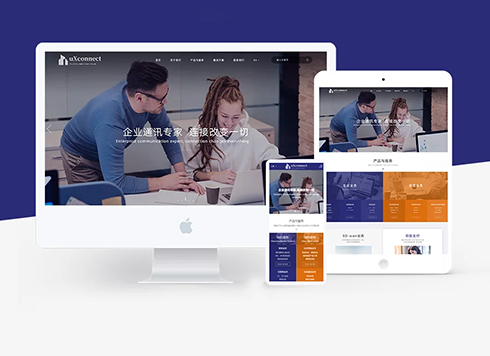 Customized Communication Solutions for Enterprises Website Development
Founded in 1996, this company focuses on pe ...
-
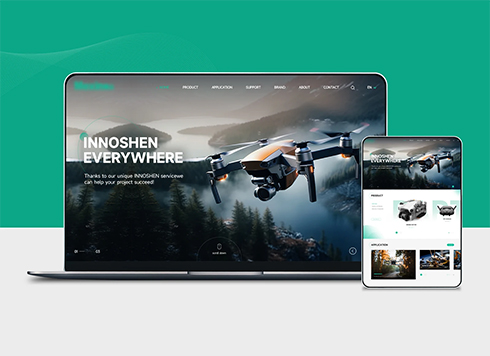 Drone Accessories Company Website Development
Incorporating gray as an accent with the pr ...
-
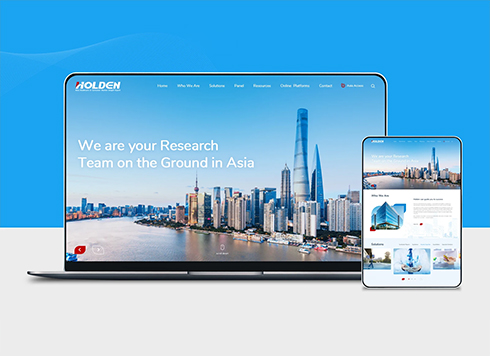 Professional International Research Service Agency Website Construction
This project serves a company with internat ...
-
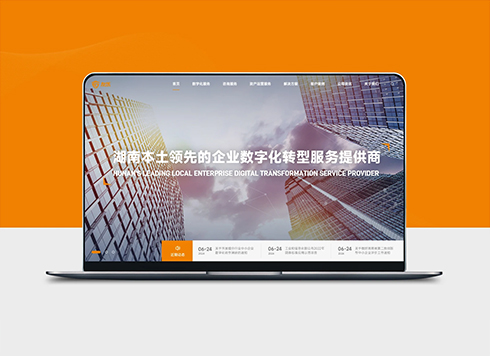 The Construction of Group Websites for Asset Operation and Digital Services
This project is to create a website for a c ...
-
Custom Website Development: Process, Costs, and Selection Guide
Date: Aug 9, 2026 Read: 80
-
Custom Website Development Costs Several Times More Than Template Sites—Is It Worth It in 2026?
Date: Aug 31, 2026 Read: 79
-
A Complete Guide to Custom Website Development: Process, Costs, and Selection
Date: Aug 7, 2026 Read: 85
-
In custom website development, a client pasted a WeChat article into the CMS. Days later the images all went blank—did we miss a setting?
Date: Sep 21, 2026 Read: 15
-
Custom website development: HTTPS is configured, but the client's mobile browser still says not secure—what is usually wrong?
Date: Sep 18, 2026 Read: 25