




What to Verify at Custom Website Delivery? Avoid These Pitfalls in 2026
What should you check when accepting custom website development? In 2026, for enterprise website building, the core of acceptance is not how pretty the pages are, but rather confirming that functionality matches requirements, code is maintainable, and data is under your control. A qualified acceptance checklist should cover at least five aspects: functionality, performance, security, documentation, and source code ownership; otherwise, after launch, if problems occur, the cost of a single fix may be higher than the original development fee.
Why Is Custom Development More Expensive Than Template Sites? Where Does the Price Difference Come From?
The price difference between custom development and template sites (or template secondary development) essentially buys you "on-demand implementation" and "independent iterative evolution in the future." Template sites usually adopt a rental or one-time purchase model, where the page framework and underlying logic are maintained by the platform; enterprises can only replace content and make limited style adjustments. Custom development, on the other hand, requires redesigning the database, interfaces, and backend according to your business, so the cost is several times to over ten times higher.
Based on common project pricing habits in 2026, a showcase custom website typically starts at tens of thousands of RMB, while those with transaction or complex business systems can reach over a hundred thousand or more. Behind the price difference are three investments that are not directly visible: requirements analysis, code writing, and testing/adjustment. These three determine whether the site can smoothly expand later, rather than just changing a logo and being done.
- Page design: Template sites can only choose from fixed layouts, while custom sites can be completely redrawn according to brand and interaction requirements.
- Data ownership: Template site data is usually stored on the service provider's platform, while custom sites have both code and database in your own hands.
- Scalability: Template sites depend on the platform to add new features, while custom sites can modify code at any time.
- Maintenance costs: Template sites have fixed annual fees, while custom sites require continuous maintenance by yourself or a third party.
What Should You Focus on During Delivery and Acceptance?
Many people only check whether the pages match the design mockups during acceptance, but that is just a basic step. A complete acceptance should verify the five dimensions: functionality, performance, security, code, and documentation. Following industry delivery practices in 2026, it is recommended to use a "five-dimensional acceptance method" to check each item, rather than going live immediately when the developer says "it's done."
Why divide into these five dimensions? Because page visuals only represent the first impression; what truly determines the site's user experience in the following six months is whether the APIs are stable, permissions are tight, and the code can be handed over to others. Each dimension needs executable standards; specific check items are provided below. Some mature teams, such as Xiyue Company, will proactively provide an acceptance checklist during delivery, but enterprises should also master the checking method themselves.
- Functionality acceptance: Run through each core process one by one, including registration, login, submission, payment (if any); don't just click the homepage.
- Performance acceptance: Use testing tools to check homepage load time; test on low-end phones and normal broadband, not only on the company intranet.
- Security acceptance: Check whether the backend login has anti-brute-force measures, and whether sensitive APIs have permission checks.
- Code acceptance: Require source code to be provided, and confirm the code comments and structure are clear, not dependent on a specific person to understand.
- Documentation acceptance: Operation and maintenance manual, API documentation, and backend operation instructions are all required.
Note: Functional acceptance should not only test the normal path, but also test abnormal scenarios such as page refresh, repeated clicks, and retry after network disconnection. For security acceptance, ask someone technical to help review; don't just trust verbal promises.
Common Pitfalls: Which Problems Are Most Easily Missed During Acceptance?
Even with a checklist, some hidden problems may surface after acceptance. Common pitfalls in 2026 often focus on responsive adaptation, backend permissions, and third-party APIs. For example, only the homepage and a few second-level pages are tested, not the article detail page on mobile; or the backend admin permissions are too coarse, allowing editors to delete everyone's articles.
In addition, data backup and migration are easy to ignore. Some custom developers write data directly on the server without providing export functionality; once you need to change servers or switch website building companies, you can't get the data out, which is like being "locked in." So during acceptance, test a data export on the spot; it is recommended to use common formats such as SQL or Excel.
- The interface is only built according to the design mockup size, without testing different resolutions;
- There is no log for backend operations, making it impossible to trace problems;
- No automatic backup is set, so data loss is unnoticed;
- APIs have no rate limiting, and malicious traffic can crash the server;
- Source code is submitted without comments, leading to high maintenance costs later.
How to Judge Whether a Custom Development Team Is Reliable?
Before signing a contract, you can judge from three things. First, ask if the other party can provide online addresses and source code screenshots of past projects. Second, see whether they proactively discuss requirement changes and acceptance standards, rather than just quoting a price. Third, clarify whether the deliverables include source code, documentation, and test reports. If they only say "by the contract," you should be more cautious.
Compare three common options: building your own technical team, outsourcing to a team, or hiring a custom development company. Hiring your own team is suitable for enterprises with large long-term needs, but annual labor costs may exceed several hundred thousand. Outsourcing teams are flexible but have high personnel turnover. Custom development companies are relatively stable but usually charge more. According to the average cycle for enterprise website building in 2026, custom development typically takes 4 to 8 weeks from requirements confirmation to launch, which is 2 to 4 weeks more than template sites.
- In-house team: Suitable for high-frequency iteration, cost over 300K RMB per year, controllable timeline;
- Outsourcing: Suitable for one-off projects, cost 50K-150K RMB, but no guarantee for later maintenance;
- Custom company: Suitable for special business needs with long-term maintenance requirements, cost 80K-200K RMB, with contract and after-sales support.
Applicable Scenarios and Boundaries
Custom website development is not a must for every enterprise. If your website is only for displaying company introduction, product images, and contact information, without complex processes, a template site with minor style adjustments can solve it for a few thousand yuan per year. However, when business involves online transactions, member tiers, supply chain collaboration, or integration with ERP/CRM, the fixed structure of template sites cannot support it well, making custom development necessary.
In addition, the boundaries must be clear: if the budget is less than 30,000 RMB, the timeline is less than two weeks, or no one is willing to maintain the website long-term, then it is not recommended to force custom development. Custom development does not mean achieving everything at once; it requires continuous investment. If no one manages it after launch, even the best code will become an old system full of vulnerabilities.
FAQ
Is source code required to be provided during custom website development delivery?
Generally yes, source code must be provided. Source code is an enterprise asset; without it, you cannot modify the site yourself or change providers in the future, unless the contract explicitly states that ownership is retained by the developer.
What if functionality does not match during acceptance?
First, compare against the requirements list in the contract, mark each item, and provide written feedback to the developer. Generally, the developer needs to fix it within the agreed time; if the deadline is exceeded, you can hold them accountable per the contract.
Can data be migrated after the custom website is completed?
It depends on the database design and export mechanism. During acceptance, require a data export function; it is recommended to export as SQL or Excel so that future migration to any server is not restricted.
How much is the maintenance cost difference between template sites and custom sites?
Template sites generally pay an annual fee, with maintenance handled by the platform; the cost is fixed but limited by the platform. Custom sites require you to hire someone or the original developer for maintenance, with costs based on hourly work or service packages, but they allow deep optimization and feature additions.
Based on the 2026 website building market, custom website development is a process that requires enterprises to participate in decision-making. First, sort out your business processes, then assess whether you have long-term maintenance capabilities. If you decide to go custom, remember to specify source code ownership, acceptance standards, and data export rights in the contract. If you just want to validate your business first, starting with a template site is acceptable, and you can migrate to a custom site once your business volume grows.
-
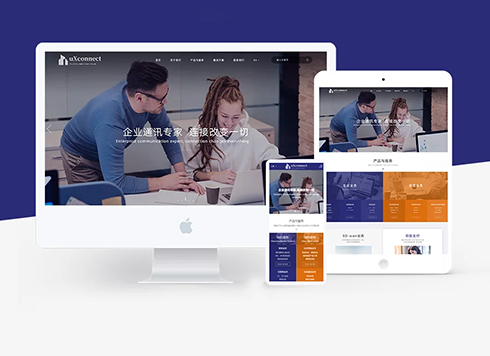 Customized Communication Solutions for Enterprises Website Development
Founded in 1996, this company focuses on pe ...
-
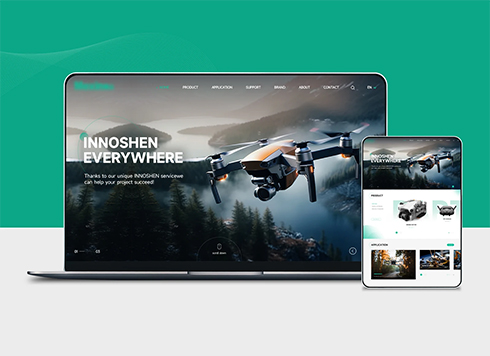 Drone Accessories Company Website Development
Incorporating gray as an accent with the pr ...
-
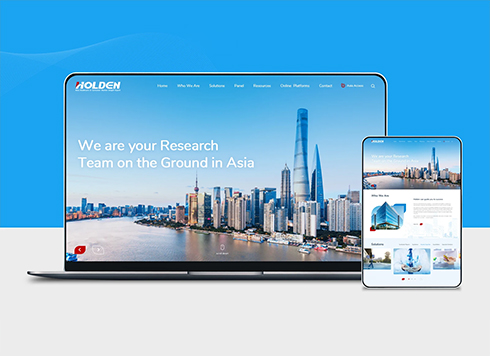 Professional International Research Service Agency Website Construction
This project serves a company with internat ...
-
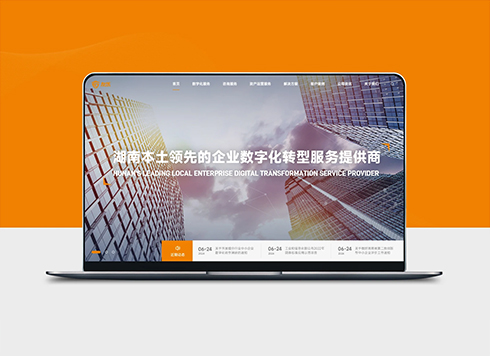 The Construction of Group Websites for Asset Operation and Digital Services
This project is to create a website for a c ...
-
Custom Website Development: What Does It Take to Not Waste Money in 2026?
Date: Aug 15, 2026 Read: 110
-
How Much Better Is Custom Website Development Than Template Sites? Do the Math Before Deciding in 2026
Date: Aug 18, 2026 Read: 107
-
Custom Website Development: If the Site Form Collects Phone Numbers, Does the Privacy Policy Really Need to Be Posted?
Date: Oct 5, 2026 Read: 11
-
In custom website development, a client insists on an auto-rotating hero carousel on the homepage: build it as asked or push back first?
Date: Oct 4, 2026 Read: 15
-
Custom website development: when a product appears in both homepage recommendations and industry solutions, how many places need updating when its price changes?
Date: Oct 1, 2026 Read: 33