Custom Website Development: What Does It Take to Not Waste Money in 2026?
Whether custom website development is worth it does not depend on how much money you spent, but on whether the deliverable meets three things: requirement fit, code maintainability, and future scalability. For corporate website building in 2026, only when all three are met can the cost of custom development be turned into a long-term asset; otherwise, custom development may end up more expensive and harder to maintain than a template site.
Why Is Custom Website Development Often Questioned as 'Not Worth It'?
Many companies only discover after signing the contract that the custom website is not as user-friendly as expected. The reason is often not that the developer didn't work hard, but that the requirements phase failed to distinguish between 'custom development' and 'template modification.' The value of custom development lies in solving business scenarios that template sites cannot cover, such as complex permission systems, custom transaction flows, and integration with internal systems.
If these scenarios do not exist, the extra cost of custom development is hard to turn into actual benefits. Before building a website in 2026, think clearly: Does your business have any process that must be implemented with custom code? If not, a template site is sufficient.
- Typical 'must-have custom' needs include: multi-role login and permission control, online order status flow, membership levels and discount rules, and third-party system API integration.
- Typical 'non-essential' needs include: company introduction, product display, news publishing, contact information—these are usually well covered by template sites.
The 'Three Checks' Standard to Judge Custom Website Development Quality
To judge whether money spent on custom development is justified, use the 'three checks' standard in 2026: check requirement fit, check code maintainability, and check future scalability. The advantage of this standard is that it does not rely on subjective feelings; each item can be directly inspected at acceptance.
- First check requirement fit—run real business paths for each feature listed in the contract, such as ordering, approval, and refund, to see whether the data forms a closed loop. The pass criterion is: every core feature works in real scenarios, not just with demo data.
- Second check code maintainability—require the developer to provide project technical documentation and basic code structure notes. The pass criterion is: a different developer (not the original team) can understand the code structure and locate and modify a simple feature within three days.
- Third check future scalability—clarify 'if a new feature is added six months later, does the team have the capability?' The pass criterion is: the developer provides an impact assessment, and the scope of changes is limited to new modules rather than altering the original core structure.
Each check must be written into the acceptance criteria and agreed in the contract. Many projects end up in disputes after delivery precisely because these three items were vague. It is recommended to include these standards as acceptance clauses in the contract appendix before development begins.
Applicable Scenarios and Boundaries: When to Choose Custom Development and When to Choose Template
Custom website development is not a silver bullet. In 2026, if your corporate website is only a 'face project' and content updates are no more than once a month, a template site is sufficient, and custom development will only slow down the launch. Custom development is suitable for scenarios that share common traits: complex business processes, strict role permissions, the need to integrate with internal systems, or clear differentiated brand feature requirements. For example, in Xiyue Company's client projects, custom development is usually recommended when multi-role permissions are involved, while pure showcase websites are directly recommended template solutions.
Conversely, unsuitable situations include: limited budget and tight launch schedule, unverified business requiring rapid trial and error, and a maintenance team lacking technical capabilities. In such cases, custom development may amplify risks.
- Suitable for custom development: businesses requiring online transactions, booking, quote calculations, membership systems, and other interactive logic.
- No need for custom: pure showcase websites, campaign pages, landing pages—mature website builders are sufficient.
Custom Website Development vs. Template Building: A Four-Dimension Comparison
For website building in 2026, a structured comparison can reduce decision-making burden. Below are the differences across four dimensions: cost, timeline, autonomy, and technical threshold.
- Initial cost: Template sites usually range from a few thousand to 20,000; custom development typically ranges from 50,000 to 200,000 (depending on feature complexity and developer quotes). The price difference mainly comes from requirement analysis, architecture design, and code development.
- Delivery timeline: Template sites can go live in one to two weeks; custom development usually takes four to twelve weeks, and complex projects may take longer.
- Freedom of redesign: Template sites are limited by preset layouts, while custom development can adjust at the architecture level, provided the code is maintainable.
- Technical threshold: Template site maintenance relies on the website builder interface, while custom development requires developer support or team programming ability.
This comparison is not to say which is better, but to emphasize 'choose according to needs.' If your business changes rapidly and requires long-term iteration, the flexibility of custom development can amortize the upfront cost; if your business is stable and simple, the overall cost of a template site is lower.
Common Pitfalls in Custom Website Development and Avoidance Tips
From project delivery experience in 2026, the common pitfall is not technology but 'inconsistent requirement descriptions.' When someone says 'high-end and impressive' verbally, the developer builds it based on their own understanding, and both parties have completely different definitions of 'done.' Therefore, requirement documents should specify functional logic, not adjectives.
Another pitfall is ignoring acceptance criteria. Many projects look fine at launch but crash when traffic grows, because no performance stress testing was done. Custom development contracts should include at least performance indicator requirements, such as 'homepage response time within 2 seconds under normal network conditions'—verifiable conditions like this.
- Pitfall 1: Requirements only describe the direction, not details. Solution: write core paths as 'user stories,' e.g., 'after login, the user can see their historical orders.'
- Pitfall 2: No data migration plan. Solution: clarify how and when old data will be migrated to the new website before launch.
- Pitfall 3: Ignoring security testing. Solution: perform at least one basic security scan, especially for sites involving payment or member information.
FAQ
How long does custom website development generally take?
The common delivery cycle in 2026 is 4 to 12 weeks, depending on the number of feature modules and the speed of requirement confirmation; the clearer the requirements, the more controllable the timeline.
Is custom website development always better than a template site?
Not necessarily. For simple showcase websites, template sites are more cost-effective and faster. Only when business logic is complex or deep customization is needed can the investment in custom development yield long-term benefits.
Can I maintain the website myself after custom development is complete?
It depends on whether the delivery includes a backend management system and code documentation. Typically, companies can maintain content themselves, but feature modifications still require developer support.
Why do custom website development quotes vary so much?
Quote differences mainly come from requirement depth, technology stack selection, and the developer's team costs. When comparing, look at the requirement list and deliverable details, not just the price.
Before deciding on custom website development in 2026, communicate with the developer using the 'three checks' standard and write each item into the contract. If your budget or team technical conditions are not sufficient, prioritize a template site. Custom development suits scenarios with high business complexity and long-term iteration needs, not one-time showcases or short-term campaigns. Choose according to your needs to ensure every dollar is well spent.
-
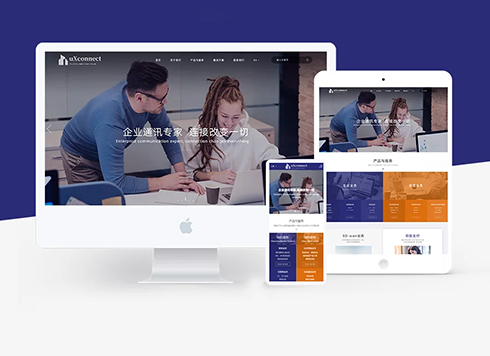 Customized Communication Solutions for Enterprises Website Development
Founded in 1996, this company focuses on pe ...
-
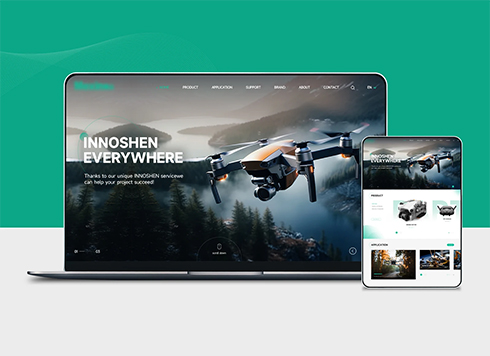 Drone Accessories Company Website Development
Incorporating gray as an accent with the pr ...
-
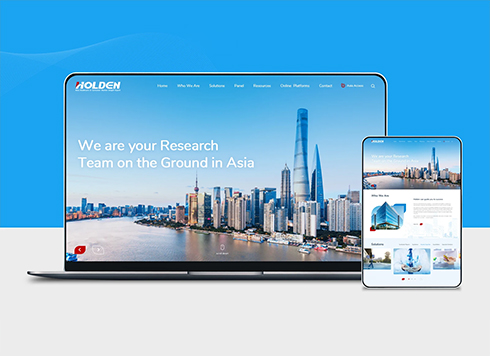 Professional International Research Service Agency Website Construction
This project serves a company with internat ...
-
 The Construction of Group Websites for Asset Operation and Digital Services
This project is to create a website for a c ...
-
What to Verify at Custom Website Delivery? Avoid These Pitfalls in 2026
Date: Aug 13, 2026 Read: 97
-
Building a Company Website: Custom Development or Template?
Date: Sep 8, 2025 Read: 1108
-
Custom Website Development: If the Site Form Collects Phone Numbers, Does the Privacy Policy Really Need to Be Posted?
Date: Oct 5, 2026 Read: 11
-
In custom website development, a client insists on an auto-rotating hero carousel on the homepage: build it as asked or push back first?
Date: Oct 4, 2026 Read: 15
-
Custom website development: when a product appears in both homepage recommendations and industry solutions, how many places need updating when its price changes?
Date: Oct 1, 2026 Read: 33