


Should a Jinan company sign a website deal when “top of Baidu within a year” is only in the proposal, not the contract?
When negotiating a company website project in Jinan, if the vendor says “top of Baidu within a year” but will only put it in the proposal document or chat history and refuses to put it in the contract, it is reasonable to pause before signing. A more stable approach in 2026 is to separate the two things: deliverables such as page count, section structure, indexing submission, and mobile adaptation should be written into a contract attachment and checked item by item; keyword positions and monthly inquiry counts should be listed as observation items after launch. A proposal usually does not form part of the contract; if that promise is removed from the contract, it is effectively no promise at all.
Why “guaranteed ranking” often stays in the proposal
Website development teams in Jinan are quite fragmented, ranging from technical teams around the High-tech Zone and Shanda Road to intermediaries that take orders without writing code. For what is also called a “corporate website,” the experience range commonly runs from a few thousand yuan to 30,000–40,000 yuan. With such a wide price gap, clients find it hard to compare offers side by side, so “free ranking” or “first page within a year” becomes an easy-to-understand comparison item—it compresses a pile of hard-to-explain deliverables into one sentence.
But from the delivery side’s perspective, putting it in the contract has a cost. Rankings are affected by paid ad slots, competitors’ content updates, algorithm changes, and local competition; once written as a fixed term, it creates liability for breach. So a common practice is: “We’ll write it in the proposal for you; the contract follows the standard template.” That sentence is not necessarily a lie, but it means the promise is not executable—when a real problem arises, you have no clause to rely on.
Here are several common vague statements to recognize first:
- “Guaranteed first page”: in most cases it targets a made-up long-tail keyword with very low competition, and sometimes it is simply the company’s full name;
- “Monthly ranking reports”: the report is for a specific keyword, city, and device; change the keyword or device and the position changes;
- “Refund if it does not rank”: the refund depends on a finding of breach, which is a condition that is relatively hard to trigger;
- “One year of optimization included”: actual delivery is often keyword-stuffed titles and bulk backlinks, which may actually hurt indexing.
Two-column checklist: what can go into the contract and what can only be observed
When negotiating this kind of contract, a two-column checklist makes it easier for both sides to align: the left column lists deliverables, the right column lists result metrics. The basis for the split is simple—deliverables have a clear completion state and can be checked on the spot; result metrics fluctuate with the search environment, and if fixed in writing, both sides will struggle to perform.
Items that can be written into the attachment and checked item by item:
- Page count and hierarchy, section structure, and at least how many pieces of content per section;
- Readability on small mobile screens, with contact methods visible on the first screen without two-finger zoom;
- Site verification and sitemap submission, and whether robots.txt allows crawling;
- Whether forms, phone, and WeChat entry points work, and whether anyone responds after submission;
- Ownership and handover method for source code, domain name, and cloud hosting account;
- Content update frequency, for example how many case studies or news items per month.
Items suitable for observation and not recommended as promises:
- Which position a keyword ranks in and when it reaches the first page;
- How many times organic traffic grows and how many inquiries per month;
- Whether it appears in AI answers or Q&A results.
The acceptance line must be written so it can be checked. For example, agree that “site verification and sitemap submission will be completed within 15 working days after launch, and the homepage will be indexed within 30 days”—this can be verified against records item by item. But “20 keywords on the first page within a year” cannot be checked, because the keywords, the city searched, and whether mobile or desktop is used are not defined in advance. Under 2026 delivery habits, this checklist is usually reviewed by both sides one week before launch and used for final acceptance, so that each side is not making a different claim.
Comparing the two proposals side by side: the difference is who bears the risk
When comparing “bundled ranking” with “payment by delivery checklist,” the first-year price is only the surface; the real difference is who bears the risk when problems arise.
- Proposal A: website development bundled with “first page within a year.” The experience range is 10,000–30,000 yuan per year, the typical timeline is 4–6 weeks, and payment is often annual. The risk is that refund conditions are hard to trigger when rankings fall short, renewal pressure is high in the second year, and the website’s own delivery standards can easily be overshadowed by that promise.
- Proposal B: payment by delivery checklist. For a presentation website, the experience range is a few thousand to 20,000 yuan, the timeline is 3–6 weeks, and acceptance is based on pages, indexing, and content items. The risk is that traffic changes are not visible in the short term, and the client needs to accept that the website first serves the function of being “findable and understandable.”
- Who it fits: for companies whose customers mainly come from repeat purchases by existing clients, bidding, and channel partnerships, Proposal B is usually sufficient; if the website itself is the main acquisition channel, add separate content and promotion budgets and spend the money where results are visible.
When is it worth setting aside a separate ranking budget?
A simple test: if a client searches Baidu for “Jinan + main product” and competitor websites occupy most of the first three pages, it shows that customers in this search scenario really are comparing suppliers, and content investment has a place to land; if customers mostly use your company’s full name to verify you, the marginal effect of ranking is limited, and moving the budget to product photos, case studies, and test report organization is more directly useful for closing deals.
On the delivery floor: what usually stalls progress is materials, not rankings
In Jinan projects, a common constraint is a budget of 10,000–20,000 yuan and a timeline compressed to about one month: the contact person is often from the office or administration, product photos have to wait for the workshop to schedule a shoot, scanned qualification documents have to wait for stamping, and materials often are not complete until the third week. The approach is to finalize the section structure and first-screen copy first, leave placeholders for images and replace them later, and check text and contact details page by page at delivery, so that a wrong phone number is not discovered only after launch.
The cost is also concrete: if materials are one more week late, testing and revisions are squeezed into two or three days, revision rounds are reduced from the planned three to one, and the launch date tends to be pushed back, with a typical range of one to two weeks. In local projects, whether materials are complete often has a bigger impact on the launch date than which vendor is chosen. A more stable approach is to write “the client’s deadline for providing materials” as a separate line at signing, apart from development milestones, and to push back the launch date if the deadline is missed; this is much clearer than arguing afterward about who caused the delay.
If you do not sign a ranking package, several things you can do locally yourself
Not signing a ranking package does not mean doing nothing. The following actions are low-cost and can be added during delivery or after launch:
- Naturally include “Jinan” and business keywords in the homepage title and main heading; do not use the same set on every page of the site;
- Create 1–3 independent landing pages for main products, clearly stating service scope, deliverables, and contact entry points;
- Complete site verification and sitemap submission, checking the specific rules against the official documentation of Baidu Search Resource Platform;
- Keep the address and phone number on local entry points such as Baidu Maps merchant listings and official accounts consistent with the website;
- Keep news or case study sections updated on a monthly level; this is more stable than piling up dozens of old articles at once;
- Avoid repeatedly stuffing “Jinan website development Jinan website development” into the body text; it hurts readability and does not help indexing decisions.
What counts as passing can be framed as three self-check lines: searching the company’s full name shows the website homepage; searching “Jinan + main product keyword” finds the corresponding product page within the first three pages; and opening the first screen on mobile shows contact methods clearly without zooming. Once these three are met, the on-site foundation of most local SMEs can be considered adequate, and the rest depends more on content and time.
Applicable and non-applicable boundaries
One sentence is worth remembering on its own: a corporate website is suited to three jobs—letting customers verify who you are, view case studies, and find the right contact—and is not suited to being treated as the only acquisition channel. Treating a ranking promise as the main value of the website is usually a mismatch of expectations, not a question of the vendor’s capability.
- Suitable for signing by delivery checklist: clients mainly in Shandong Province and Jinan, with bidding or qualification display needs, needing a stable and checkable address for customers, and with a fixed person to coordinate materials.
- No need to obsess over ranking: when customers come entirely from platform stores and referrals, there is no staff for content maintenance, the budget is only a few thousand yuan, and the only requirement is a page that opens, it is more practical to first build a one-page information page that is easy to understand.
- Types not recommended for signing: contracts that write “first page” as an acceptance clause, tie payment to ranking position, or have refund conditions so vague they cannot be determined.
Frequently asked questions
If the proposal says “guaranteed top of Baidu,” but it is removed from the contract, does that mean there is no promise?
Essentially yes. Proposals and chat records usually do not form part of the contract and are hard to use as a basis if a dispute arises. To make a promise binding, it must be converted into checkable delivery items and written into the attachment.
When the vendor says “first page,” what position exactly does it mean, and how should we ask?
Ask four things: which keyword, which city is searched, mobile or desktop, and whether paid ad slots are counted. If any one of the four is unclear, that “first page” cannot be checked.
Is “guaranteed indexing” in the contract more reliable than a ranking promise?
It is relatively more checkable, but it must state whether it means homepage indexing or site-wide indexing, which search engine is the standard, and within how many days it will be completed. Only when these three are clear is there something to check at acceptance.
If we sign only by delivery checklist, will it be more troublesome when someone else takes over in the second year?
In most cases it is actually easier, provided the contract states the ownership and handover method for the domain name, cloud hosting, and source code accounts. Who holds the accounts determines whether you can switch in the second year.
If you are negotiating this project in Jinan, first write down each oral promise the vendor makes and divide them into two columns, “deliverables” and “result metrics,” putting only the checkable parts into the contract attachment; leave some margin in budget and timeline based on the experience range. Ranking can be checked periodically as an observation item after launch, but it is not recommended as a payment condition, nor is it a substitute for content maintenance.
-
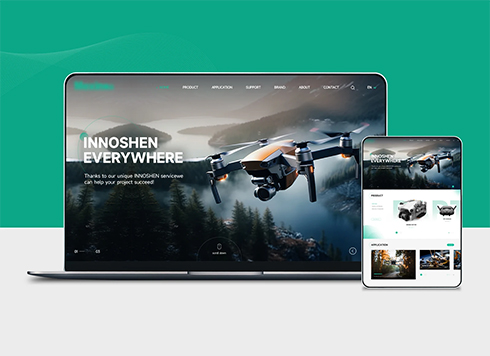 Drone Accessories Company Website Development
Incorporating gray as an accent with the pr ...
-
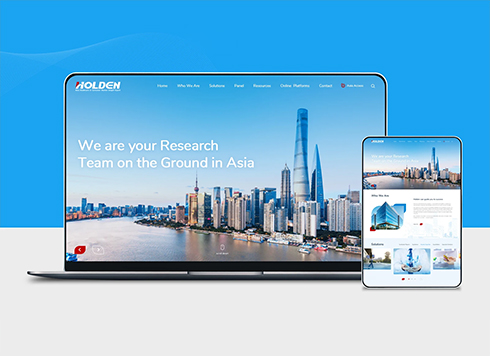 Professional International Research Service Agency Website Construction
This project serves a company with internat ...
-
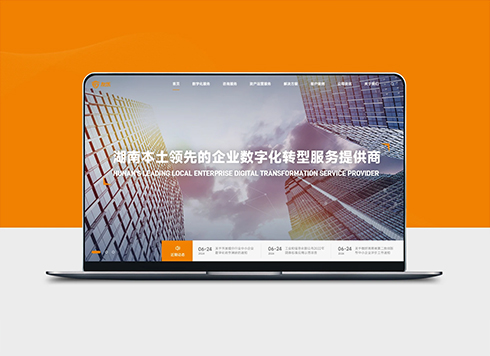 The Construction of Group Websites for Asset Operation and Digital Services
This project is to create a website for a c ...
-
 Thermal Test Equipment Website Construction
Founded in 2022, this tech company focuses ...
-
Jinan company website: should the server go in a local data center or on North China cloud, and can customers in Linyi and Weifang really feel the difference?
Date: Oct 3, 2026 Read: 106
-
Jinan company website is done, but the official website link in Baidu Maps won’t open—is it a map update issue or a website problem?
Date: Sep 13, 2026 Read: 141
-
Jinan Official Website: How Big Is the Difference Between a Few Thousand and Tens of Thousands? Pitfalls to Avoid When Going Local
Date: Aug 25, 2026 Read: 175
-
Website Custom Development with Added Requirements: Which Changes Should Cost Extra in 2026 and Which Should Not?
Date: Aug 19, 2026 Read: 187
-
How Much Better Is Custom Website Development Than Template Sites? Do the Math Before Deciding in 2026
Date: Aug 18, 2026 Read: 174