





Website Custom Development with Added Requirements: Which Changes Should Cost Extra in 2026 and Which Should Not?
Website custom development delays and budget overruns are most commonly caused not by technical difficulty but by constantly changing requirements. Based on 2026 project delivery practices, projects that pass acceptance smoothly usually reach consensus on three things in advance: requirement freeze, change pricing, and acceptance criteria. In other words, whether custom development goes smoothly depends on whether you clearly define "which changes cost extra and which do not" before signing the contract. If your business logic needs to run according to your own rules, custom development is appropriate; if it is only a showcase page, a template site is more stable.
Custom Website Development Buys Code Ownership and Freedom to Modify
The core value of custom development is not that pages look better than templates, but that business logic can be modified according to your rules and data stays in your hands. Template sites are limited by the template framework when redesigning, while custom development allows any adjustment on top of the source code, including integrating internal systems, building permission systems, and modifying approval flows. But this freedom comes at a cost: more time is needed for requirement analysis and testing. Based on the team's recent delivery experience range, a medium-complexity corporate custom website typically takes 4 to 8 weeks from requirement confirmation to launch, with costs ranging from 30,000 to 150,000 RMB. If a quote is significantly lower than this range, it is likely that the provider will modify logic on a template or compress testing time.
Four-Dimensional Check Method for Project Value
Instead of asking "Is custom development expensive?", ask "Can this money buy the expected flexibility and ownership?" In projects, a "four-dimensional check method" is often used for decision-making:
- Business fit: Can your core processes be found in an off-the-shelf template? If more than 30% cannot be found, custom development is worth it.
- Budget range: After breaking down requirements, estimate whether labor costs are within an acceptable range. If the budget is less than 60% of the typical cost based on experience, the project will likely sacrifice testing or post-launch support.
- Timeline expectations: Custom development requires repeated confirmation and modification, so reserve at least 30% buffer time. If you demand launch within two weeks, a template route is the only practical option.
- Maintenance costs: After launch, you will still need to change features, fix bugs, and handle compatibility. Custom projects typically require an annual maintenance budget of about 15% to 20% of the initial development cost. If it is too high or too low, ask why.
Note that the four-dimensional check is not a scoring system; it is about whether to use custom development. If any single dimension clearly does not fit, you should not force custom development. For example, if the business model is not yet validated and requirements may be overturned at any time, custom development will only amplify the cost of trial and error.
Delivery Scene: Changes and Acceptance Are the Real Pitfalls
In projects, a common scenario is: after the client sees the first demo, they feel a button is not prominent enough, some copy needs to be changed, and a statistics feature should be added. Each individual change seems small, but every change requires front-end, back-end, testing, and documentation updates. Accumulated small changes become the source of delays and budget overruns. If the contract does not include change pricing rules, these workloads will turn into disputes over "doing a favor" vs. "charging extra."
According to 2026 enterprise project delivery practices, requirement changes can first go through the "three-step verification method." Only changes that satisfy all three steps are worth adjusting for free:
- Does it affect core processes? For example, changing the color of a button does not change the process, so it can be done on the fly; but changing order status logic requires evaluation.
- Does it exceed the original requirement scope? Features not written in the requirements document are, in principle, new requirements and need separate billing or scheduling.
- Does it affect the launch timeline? If the change requires retesting and may cause delays, you need to decide together whether it is acceptable.
From the experience range of multiple project deliveries, purely visual tweaks (button colors, spacing, copy wording) that do not touch data structures are often handled by most development teams before final acceptance. However, changes involving database field changes, new role permissions, altered order status logic, or added third-party integrations typically require re-estimating work hours and are billed or scheduled separately.
The acceptance phase also requires written criteria. At delivery, do not rely on "something feels off" to judge; instead, check item by item against the requirements document. A set of actionable acceptance dimensions includes: functional completeness, data correctness, browser compatibility, mobile adaptation, page loading speed, and basic security settings (e.g., HTTPS, permission validation). It is recommended that your technical colleagues use this checklist to tick off each item and only sign the acceptance form after all items are confirmed.
Solution Comparison: Custom Development, Template二次开发, and Modular Building
Many projects get stuck at the choice stage. In fact, each of the three solutions has its boundaries; choose based on your core needs. The following costs and timelines come from experience ranges of recent deliveries for reference:
- Pure template site: Cost is usually in the thousands of RMB, with a timeline of a few days to a week. Suitable for display pages; core logic cannot be changed, and redesign is limited by the framework.
- Template secondary development: Cost is around 10,000 to 30,000 RMB, with a timeline of 1 to 3 weeks. Suitable for adding custom fields or styles on an existing framework, but changes may be lost when the framework upgrades.
- Custom development: Cost starts at 30,000 RMB, timeline is 4 weeks or more, with no upper limit. Suitable for unique business logic that requires long-term iteration.
If 80% of your business logic can be found in a template, template secondary development is more cost-effective. Only when core processes must run by your own rules is custom development not a waste.
Applicable Scenarios and Boundaries
Scenarios suitable for custom development are clear: special business rules (e.g., multi-level approval, complex quotations), need to integrate internal systems or third-party services, data ownership requirements, and long-term iteration plans. Conversely, the following situations are not suitable for custom development: budget below 20,000 RMB, launch timeline compressed to within two weeks, only static display, and business model still in frequent trial-and-error. Especially, for trial-and-error websites, using a template or modular solution to get the process running first is more stable than directly investing in custom development.
To judge suitability, ask yourself three questions: If the website needs a major overhaul in three months, how long will a template site take to revise? Can custom development bear the upfront communication cost? Is the business team clear about its needs? Once these three questions are answered, the boundary becomes obvious.
FAQs
Do I always need to pay extra for added requirements during custom website development?
First go through the three-step verification. Small changes that do not affect core processes, do not exceed the original requirement scope, and do not affect the launch timeline are often handled by most teams on the side. Otherwise, they are billed by workload or schedule adjusted.
What should be checked during custom development acceptance?
Test functions item by item against the requirements document, then verify data correctness, browser compatibility, mobile display, loading speed, and security settings. It is recommended to check off items on a list before signing the acceptance form.
I have a limited budget but want custom development. What alternatives are there?
Consider template secondary development or modular building, which have lower costs and shorter timelines. After your business is validated, migrating to custom development later could actually save money.
For projects with frequent requirement changes, what can be done upfront to reduce disputes?
In the contract, clearly state the requirement scope, change pricing rules, and acceptance criteria, and agree on written confirmation at each stage. This effectively reduces later rework and cost disputes.
Actionable advice: Before signing the contract, include the requirement scope, change pricing rules, and acceptance criteria in an appendix. During the project, have the client confirm at each stage to avoid a final overhaul. According to 2026 delivery practices, these upfront efforts can reduce most disputes. If your project is just starting, use the four-dimensional check method for a self-assessment and adjust the solution in time if needed.
-
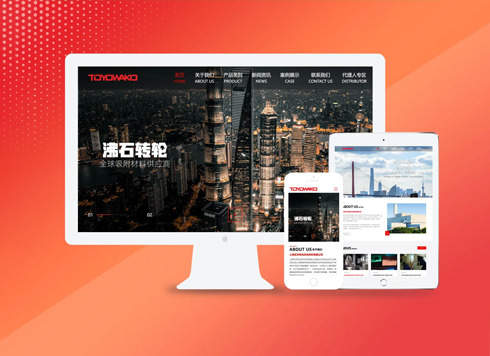 Customized Development of Gas Purification Enterprises' Websites
Create a website for a Sino-foreign gas pur ...
-
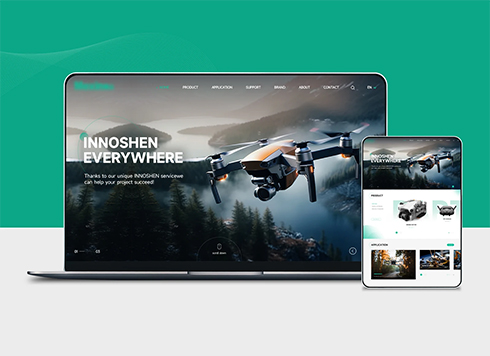 Drone Accessories Company Website Development
Incorporating gray as an accent with the pr ...
-
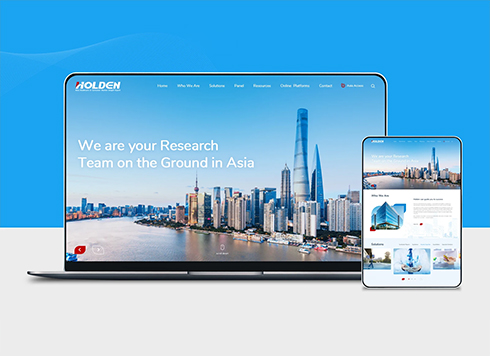 Professional International Research Service Agency Website Construction
This project serves a company with internat ...
-
 The Construction of Group Websites for Asset Operation and Digital Services
This project is to create a website for a c ...
-
Website Custom Development Midway Through, You Discovered the Requirements Were Wrong—How to Calculate Rework Costs in 2026?
Date: Aug 20, 2026 Read: 125
-
Custom website development: everything works on the test site, but it breaks as soon as the production domain goes live — is it an environment mismatch?
Date: Sep 24, 2026 Read: 52
-
How Much Better Is Custom Website Development Than Template Sites? Do the Math Before Deciding in 2026
Date: Aug 18, 2026 Read: 107
-
What to Verify at Custom Website Delivery? Avoid These Pitfalls in 2026
Date: Aug 13, 2026 Read: 98
-
Custom Website Development: If the Site Form Collects Phone Numbers, Does the Privacy Policy Really Need to Be Posted?
Date: Oct 5, 2026 Read: 11