



How much does a company website cost in Hangzhou? Local custom vs. template: what's the difference?
Three things to check first for enterprise website building in Hangzhou: industry fit, budget range, and maintenance cost
Based on 2026 delivery practices for enterprise projects in Hangzhou, official website construction mainly falls into two paths: template websites and custom development. Template websites have lower upfront investment (experience range: RMB 3,000–8,000), but later revisions and feature expansion can be limited; custom development (experience range: RMB 15,000–50,000) takes longer (4–8 weeks), but source code is controllable and scalability is more stable. Most local Hangzhou enterprises (trading, manufacturing, e-commerce services, cultural and creative industries) when budgets are not tight, will prioritize local customization for on-site communication and iteration.
Timeline and communication costs in local projects: don't just look at the quotation
When building an enterprise website in Hangzhou, clients often get stuck at the requirement confirmation stage. We once worked with a cross-border e-commerce company in Binjiang. The budget was RMB 20,000, the contract said it would go live in 6 weeks, but the assets (product images, copy, videos) took 3 weeks to arrive, pushing the actual launch to 10 weeks. So, before delivery, list the asset checklist clearly and agree on how to handle delays. Based on 2026 experience, when content is complete, custom development can produce a first version in 4–6 weeks; template websites can go live in 1–2 weeks. The value of local vendors is that they can discuss requirements face-to-face, reducing misunderstanding; remote teams may be slightly cheaper, but the communication chain is long, and revisions typically require 2–3 more rounds, making rework costs not low.
Template website vs custom development: a table to clarify common differences
Many Hangzhou business owners struggle over whether to go custom. The core trade-off is cost versus results. Below is a five-dimension comparison to help you choose based on your situation:
- Cost and timeline: Template websites cost about RMB 3,000–8,000 and go live in 1–2 weeks; custom development costs about RMB 15,000–50,000 and takes 4–8 weeks (provided content is complete). Template websites are cheaper, but later redesign or added features may require additional development costs that offset the saving.
- Design and source code: Template websites use an off-the-shelf theme with logo and color changes; custom development tailors architecture, visuals, and code to your business, with clear code and documentation delivery, making it easy for other teams to take over later.
- Feature expansion: Template websites suit display-oriented official sites (company intro, products, cases, contact); if you need a booking system, member login, multi-language, or ERP integration, custom development is more reliable and not as constrained by templates.
- SEO foundation: Both can be optimized, but custom development allows adjustments to domain, directory structure, and page tags as needed, while template websites are limited by the framework, with relatively less room for change.
- Maintenance and security: Template websites only need periodic theme and plugin updates; custom development comes with an ongoing maintenance contract, charged annually (experience range: RMB 1,000–3,000/year, depending on feature complexity).
If you just want a decent-looking online business card with a small budget and tight timeline, a template website is fine; but if you treat the official website as a lead-generation tool that will need iterative updates and lead tracking, custom development is more worthwhile. The deciding criterion is: within the next two years, do you need to redesign or add features? If yes, choose custom to avoid a second overhaul.
Pitfall checklist: the most common traps in Hangzhou website building
Based on local delivery experience, the following pitfalls appear most often; knowing them in advance can save detours:
- Comparing only price without reading contract details: Some quotes exclude image design, page count, responsive adaptation, and form functionality, so extra charges are common later. Before signing, list the full deliverables: how many homepage design versions? How many inner pages? Does it include mobile adaptation? Is there a backend user guide?
- Ignoring industry-specific needs: Hangzhou has many manufacturing enterprises; product model categories, parameter tables, and multi-language pages (especially English and Japanese) should be specified in advance. E-commerce and cultural/creative industries focus more on visuals and motion effects. If industry differences are not discussed, later revisions will be extensive.
- Delays caused by late assets: Company intro, product images, team photos, and qualification documents are best provided before work starts. If incomplete, provide them in stages—build the framework first, then fill content; don't wait until all assets arrive to begin.
- Not verifying source code and data ownership: The contract should state that code, database, and documentation belong to you, so you won't be at a disadvantage when switching vendors or maintaining yourself.
- Neglecting after-sales and maintenance period: Usually there is free maintenance for 3–6 months, then annual fees apply. Ask about response time for incident handling and backup policies, to avoid having no one to handle attacks or data loss.
Official website vs mini program: another common dilemma for Hangzhou enterprises
In 2026, many Hangzhou companies will ask whether to build a mini program. In fact, the official website acts as the "foundation," while the mini program is the "distribution tentacle." If the budget only covers one, prioritize the official website because it can host SEO content (e.g., industry articles, case studies) that is discoverable on Baidu or other search engines—suitable for long-term lead generation. Mini programs are more for distribution and member operations within the WeChat ecosystem, such as appointments, registration, or a points mall. As a rule of thumb: the official website drives trust conversion, and the mini program drives engagement and repurchase. If budget permits, start with a responsive official website as the base, then add lightweight mini program features (like registration or messaging) later; there's no need to build a full mini program from the start, as development costs are higher.
Not every enterprise needs to build a website immediately
If your product is sufficiently niche and customers only appear at specific industry exhibitions or via referrals from existing clients, then an official website is not the top priority. You can start with a one-page landing page (or a digital business card) that highlights core products and contact information, costing about RMB 2,000–5,000 (experience range). Once business stabilizes, gradually expand into a full website. However, if your customers actively search "company name + product" to verify you, or you plan to run paid ads to drive traffic, the website must go live on time—otherwise, ad clicks will lead nowhere, and your money is wasted.
FAQs
How much does it cost to build an enterprise website in Hangzhou?
Template websites cost about RMB 3,000–8,000, while custom development costs about RMB 15,000–50,000, depending on feature and design complexity.
How long does local website building in Hangzhou typically take?
Template websites take 1–2 weeks; custom development takes 4–8 weeks, provided assets and content are delivered on time.
How can you tell if a Hangzhou website vendor is reliable?
Ask them for real case studies and client contact information, and verify the ownership of source code, domain, and database in the contract.
Which should you build first: an official website or a mini program?
With a limited budget, prioritize the official website for search-driven lead generation; mini programs are suitable for strengthening operations after you already have traffic.
What should you note for different industries when building a website?
Manufacturing companies focus on product categorization and specifications; e-commerce focuses on payment and marketing; service companies focus on case studies and qualifications. Clarify these in advance to avoid rework.
Action plan: First, list your requirements (page count, features, budget range, launch date), then compare 2–3 local vendors, focusing on industry case studies. If the budget is under RMB 10,000, a template website is sufficient; if it exceeds RMB 20,000 and you expect long-term iteration, prioritize custom development. Remember to specify deliverables, asset deadlines, and maintenance terms in the contract, so you don't fall into a "high cost-performance" trap.
-
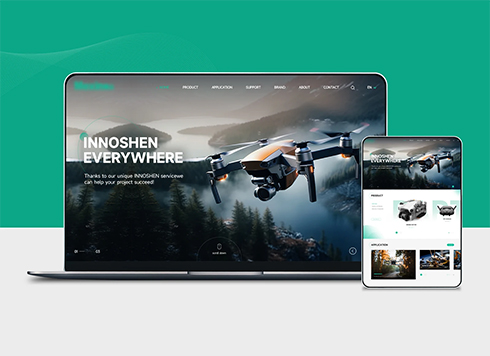 Drone Accessories Company Website Development
Incorporating gray as an accent with the pr ...
-
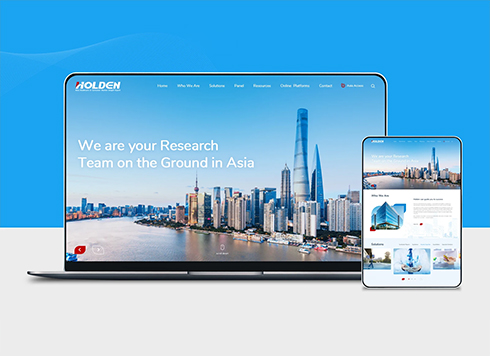 Professional International Research Service Agency Website Construction
This project serves a company with internat ...
-
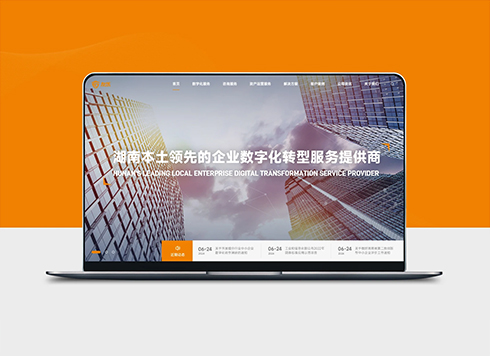 The Construction of Group Websites for Asset Operation and Digital Services
This project is to create a website for a c ...
-
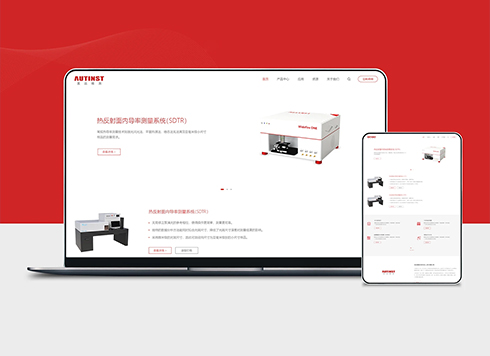 Thermal Test Equipment Website Construction
Founded in 2022, this tech company focuses ...
-
Custom Website Development: Why Does a Six-Figure Project in 2026 Still Look Like a Template Site?
Date: Sep 1, 2026 Read: 72
-
Xi'an company website: clients ask “which district is your office in?” right away—is it okay not to put a detailed address on the page?
Date: Oct 5, 2026 Read: 11
-
Hefei industrial product website: the client won’t let you write the company name and the case only says “a certain home appliance company”—will procurement think it’s fabricated?
Date: Oct 4, 2026 Read: 14
-
Jinan company website: should the server go in a local data center or on North China cloud, and can customers in Linyi and Weifang really feel the difference?
Date: Oct 3, 2026 Read: 22
-
Zhengzhou food company website: buyers want test reports and a production license before visiting the factory — which one first, and on which page?
Date: Oct 2, 2026 Read: 25