




Zhengzhou food company website: buyers want test reports and a production license before visiting the factory — which one first, and on which page?
Bottom line first: on Zhengzhou food and agricultural product company websites, when clients ask to see test reports and production licenses, you can show them — but layering is better. Entity credentials such as the business license and food production license can usually be published directly; test reports are better placed on inner pages after masking the client name, contact person and part of the report number, and after selecting by batch or year; page copy should avoid wording that cannot be verified. Based on 2026 local delivery experience in Zhengzhou, sorting out qualifications before the design is finalized saves a lot of rework.
Why clients check qualifications before they ask about price
Zhengzhou has a concentrated food industry chain, with many frozen food, flour-based product, jujube product, seasoning, snack food and foodservice supply chain companies. Website visitors are often supermarket buyers, restaurant chain buyers, regional distributors and out-of-town e-commerce sellers. Before an on-site visit, they usually search the full company name on Baidu and Douyin to check the legal entity, licensed scope and production address.
- Clients verify three things: whether the entity is real, whether the licensed scope covers the categories they need, and whether the certificates are within their validity period.
- Information travels fast among local peers, supermarkets and distributors in Zhengzhou; vague page copy is easily misreported.
- When the website has no verifiable information, clients rely more on referrals or on-site factory audits, and the website plays a smaller role in lead generation.
Three-layer display: what can be published, what needs processing, what is provided on request
Asking only "can it be published" rarely leads to a clear answer. It is more practical to divide information into three layers by sensitivity. Publishing entity credentials raises little dispute; test reports involve the client and specific batches; process and formula content, once public, can create competitive problems.
- Directly publishable layer: entity information such as the business license, food production license, production address, company name and unified social credit code can usually be displayed normally.
- Publish after processing layer: third-party test reports and system certification certificates. Mask the client name, contact person and part of the report number, keep the test items, conclusion, standard basis and issue date, and label it "excerpt" or "sample".
- Provided on request only layer: full batch-by-batch reports, formulas and process parameters, and custom client solutions are better sent by a dedicated person after an inquiry or contract signing.
The directly publishable layer must match the business license and public enterprise credit information; the publish-after-processing layer must not let visitors mistakenly think "all batches pass"; the on-request-only layer needs an internal approval process. For labeling and marking requirements of specific categories, check official documents and current standards rather than relying only on experience.
At delivery: materials and updates are what usually stall progress
For food-related websites in Zhengzhou, material problems are often more common than design problems. A typical constraint: the budget sits in the common range for small and medium businesses (local custom builds commonly run from about 15,000 to 50,000 RMB, while template sites cost a few thousand), and the timeline often collides with a client suddenly needing to make a trade show, an investment promotion event or a supermarket listing review, leaving only a few days to organize qualifications. A more reliable approach is to give the company a material checklist before work starts — business license, front and back of the license, valid test reports, system certification certificates — and confirm item by item that the version is the latest and the text is clear; before delivery, check that certificate names match the registered entity, then mask and compress everything consistently. The cost is real: if a certificate turns out to be expired or a scan is blurry only after the page is finished, revisions commonly take an extra one to two weeks, which may be too late for a trade show — you can only launch first and patch later, leaving the page incomplete for a while. That is why, following common enterprise project delivery practice, qualification sorting is scheduled before the design is finalized.
Homepage or inner page: comparing three approaches
- Certificate wall on the homepage: credibility is immediate, but the homepage is easily filled with images, mobile loading slows down, and maintenance costs are relatively high; suits companies with few certificates that focus on attracting partners.
- A dedicated "Qualifications & Testing" inner page plus a text link on the homepage: clear structure, easy to update by category and to index, and a fairly common approach in local projects; suits companies with many certificates that need to display them by category.
- Not public, PDF sent only after an inquiry: stronger protection, but clients cannot see verifiable information during initial screening, so price-comparing leads are easily lost; suits companies that serve only regular customers and do not rely on public lead generation.
From a search and AI answer engine perspective, a dedicated qualifications inner page is relatively friendly: it has text explanations, categories and an update date, so the content is easier to read and cite. On cost, adding a structured qualifications page is commonly a minor adjustment in local custom projects, with an experience range mostly in the hundreds to 2,000 RMB, depending on the number of certificates and whether they are split by category; the schedule commonly increases by about half a day to two working days. If reports are made into one long image, customers can read it with their eyes, but search engines and AI struggle to extract the content.
When this applies and where the limits are
Where this display approach fits: food and agricultural product processing companies with their own brand or production line; companies whose clients are mainly supermarkets, restaurant chains and distributors and who need to verify qualifications repeatedly; companies that want their website, partner materials and bid documents to present a consistent external message; companies preparing for search advertising or channel recruitment whose landing pages need credible content to support them.
Where there is no need to rush the full setup: companies that only serve community stores and regular customers; companies whose products are mainly made and sold on site, where clients rarely check the website; companies whose certificates are being changed or renewed, where it is better to launch the framework first and mark the update time rather than present transitional materials as a formal version. Qualification display solves the early trust problem between buyer and seller; it cannot replace an on-site factory audit, sample testing or contract terms.
Common questions
Can a Zhengzhou food company website publish its business license and food production license directly?
Usually yes. Both are entity operating information, and publishing them is generally not a problem. The key is to keep them consistent with the business license and public information, watch the validity period, and replace them promptly after expiry.
Should test reports be posted for every batch, or is the latest one enough?
A common approach is to pick representative batches or annual reports for the inner page and mark them "excerpt" or "sample"; full batch-by-batch reports are better provided on request so maintenance costs do not get too high.
Is it troublesome to handle the client name and report number on a test report?
Not really. Mask the full client name, contact person and part of the report number, but keep the test items, conclusion and issue date. After masking, check again so you do not cover key parts.
If certificates are made into an image wall, will it affect Baidu indexing?
Images alone carry limited information, and search engines and AI mainly read text. A more reliable approach is to pair images with text descriptions on a clearly structured page reachable from the homepage; indexing usually performs better that way.
If qualifications are on the website, will supermarkets or platforms still ask for paper copies?
Generally yes. The website's role is to let clients complete preliminary verification early in the process. Formal cooperation, listing and bidding usually still require stamped paper copies or originals, and the two do not conflict.
In practice, start by organizing existing certificates and test reports into a checklist, mark validity periods and what can be published, then decide whether they go on the homepage or an inner page, and leave an entry in the back end that lets you update them yourself. The limits: food companies whose clients are mainly supermarkets, distributors and out-of-town channels see clearer benefits; companies serving only regular customers, or whose certificates are being renewed, can simplify first and add more display once materials are complete.
-
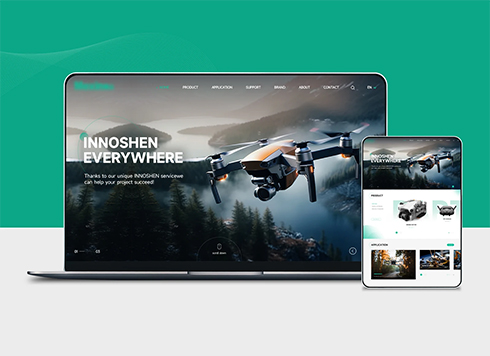 Drone Accessories Company Website Development
Incorporating gray as an accent with the pr ...
-
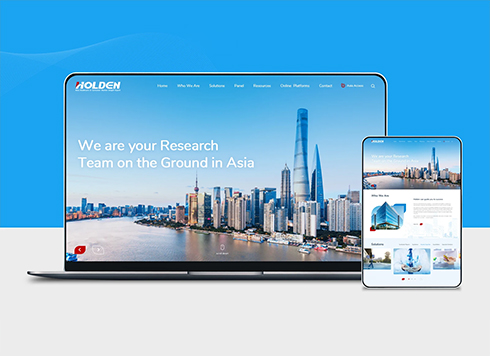 Professional International Research Service Agency Website Construction
This project serves a company with internat ...
-
 The Construction of Group Websites for Asset Operation and Digital Services
This project is to create a website for a c ...
-
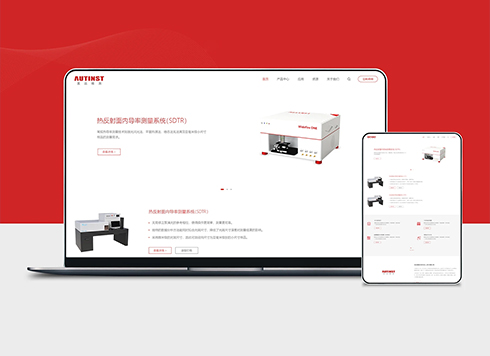 Thermal Test Equipment Website Construction
Founded in 2022, this tech company focuses ...
-
Someone asks Doubao 'which company in Changsha makes equipment' and the answers are all competitors and platform stores — is our website not being seen by AI?
Date: Oct 1, 2026 Read: 14
-
Wuxi Owners Building a Website: Most Customers Are in Jiangyin and Yixing—What's the Real Difference Between Making Two Separate City Pages?
Date: Sep 30, 2026 Read: 16
-
Qingdao Company Website: Customers in Jinan and Yantai—Is “We Serve the Whole Province” Too Empty?
Date: Sep 29, 2026 Read: 22
-
Ningbo export factory website has piles of inquiry form spam and sales only reply on WhatsApp—can the form be removed outright?
Date: Sep 28, 2026 Read: 28
-
Tianjin Factory Already Gets Orders on 1688 and Aicaigou; Customers See Platform Stores First When Searching the Company Name — Is an Official Website Still Worth Adding?
Date: Sep 27, 2026 Read: 30