


A Chongqing company website gets direct WeChat adds but few form submissions: should the form be removed first or the entry points changed first?
Bottom line first: Most Chongqing company websites do not need to remove their contact forms in a hurry, but the form should not remain the main entry point either. Based on 2026 Chongqing project delivery experience, local clients are more used to calling first or adding WeChat and sending pictures directly when discussing business. The scenarios where forms are truly effective are government and enterprise procurement, out-of-town clients, and formal inquiries that need a traceable record. A more reliable order is to change the entry points first and then decide whether to keep the form: phone and WeCom as the main entry points, with the form shortened to three to five fields and placed on the contact page as a supplementary channel.
Why contact forms on Chongqing company websites often sit there with no one filling them in
Local communication habits in Chongqing are the first reason forms go unfilled. Whether the business is in auto and motorcycle parts, equipment manufacturing, building materials, hotpot ingredients, or food service supply chains, local owners and buyers prefer to call first and ask clearly; waiting for a form reply feels slow to them. If the form asks for company name, job title, and a description of needs across five or six items, many people quit halfway through.
The second reason is on the page itself. On mobile, after the keyboard pops up, the submit button is often pushed off screen; some forms give no success message, so clients do not know whether their submission went through; and some submissions go to an email inbox that no one checks. If any one of these three things is true, lead volume will drop noticeably, and it has little to do with whether the form looks nice.
- Client structure: For companies with a high share of local clients who prefer instant communication, forms are usable but not used often.
- Field design: When required fields exceed five, completion on mobile usually falls; the experience range is that three to five fields are more suitable.
- Response mechanism: If no one is assigned to check the form and no response time is set, the form is just a record that no one handles.
Removing it, keeping it as is, or changing the entry points first: how do the three approaches compare
To decide whether to keep the form, first compare the three approaches. The basis for judgment is not personal preference, but the client source structure, whether someone is responsible for responding, and whether the inquiry needs a traceable record. The differences among these three approaches in lead volume, credibility, and maintenance cost are often much greater than changing a page template.
- Approach A: remove the form directly, leaving only phone and WeChat. Changes usually take one to two person-days, and the cost experience range is mostly several hundred to one or two thousand yuan; the lead path is shorter, which suits local individual clients and store-based businesses. The cost is that out-of-town clients and organizational procurement have nowhere to leave written information, and the page can also look thin.
- Approach B: keep the form as is, without changing entry points or reducing fields. The page looks fully featured, but by experience range, most small and medium Chongqing company websites receive single-digit form submissions per month, and some of those are promotional or invalid messages.
- Approach C: change the entry points first, then decide on the form, with phone and WeCom as the main entry points and the form shortened to three to five fields as a supplement. Changes usually take three to five person-days, the budget experience range is mostly 3,000 to 8,000 yuan, and the cycle is one to two weeks. Lead volume usually does not rise because of the form, but because one-tap calling and live QR codes catch hesitant clients; the form handles the part of inquiries that needs a traceable record.
From delivery experience, it fits the current situation better for most small and medium Chongqing enterprises to do C first: they need to handle local, relationship-based instant communication and also formal inquiries from out-of-town clients and organizational procurement. What counts as acceptable — clients can find the phone, make a one-tap call, and scan a QR code to add WeChat within three steps on mobile, and the form gives an automatic receipt after submission. When all four conditions hold at the same time, the entry-point design is basically in place.
Entry-point layering: define the structure before changing the page
Entry-point layering is not about piling up more buttons; it is about dividing channels by client type. The following order is easier to implement in projects. Define the structure before changing the page, and you can avoid at least one round of rework.
- Count the client source structure: Divide recent six months of closed deals and inquiries into local, out-of-town, and organizational categories; the proportions decide which entry point should be primary.
- Assign the response owner and time limit: Who answers the phone, who replies on WeChat, and who checks the form should be written into the handover sheet; a typical practice is to respond within two hours during working hours.
- Choose phone plus WeCom as the main entry points: Use a directly dialable number for phone, and for WeChat it is advisable to use a WeCom live QR code so the page does not need to be changed when staff change.
- Reduce the form: Keep only name, contact information, and a brief description of needs as required fields; make the rest optional so it can be completed within one screen on mobile.
- Add a submission receipt and manual follow-up: Give a clear message after submission and notify the responsible person by SMS or WeChat, so inquiries do not sink to the bottom.
- After launch, look at the data and then adjust: Look at the actual volume on the three paths — phone clicks, live QR code scans, and form submissions — and run it for one to two months before deciding what to add or remove.
The order cannot be reversed: reduce fields before discussing aesthetics, and assign the responsible person before discussing the number of entry points. Many projects need rework exactly here — the page is finished first, only then do they discover that no one is responsible for replying, and in the end the form entry can only be quietly hidden.
On delivery: where budget, timeline, and assets get stuck
In Chongqing projects, based on 2026 delivery experience, a common constraint is that budget and assets are tight at the same time. When the budget falls in the experience range of 10,000 to 30,000 yuan, the timeline is usually three to five weeks, and product photos, test reports, and factory photos often have to wait, while the owner still wants to put the site live first to receive inquiries.
In this situation, the delivery habit is to first connect the path of phone, WeCom live QR code, and simplified form, and leave cases and qualifications for phase two. The cost should also be stated clearly: when phase-one assets are incomplete, page conversion depends mainly on whether the contact person can handle inquiries; sales will complain that many calls come in but few useful details are left, and adding content in phase two requires another round of revisions, which usually costs an extra one to two weeks overall.
When we deliver locally, we usually check three things with the contact person before launch: whether the phone can be reached directly, whether the live QR code remains valid long term, and whether anyone checks the form on the same day after submission. If these three are not confirmed before launch, there will basically be one round of rework later.
Applicable scenarios and boundaries
Entry-point layering is not something every Chongqing company website must do. The criterion can be simple: see whether clients are scattered and whether anyone is dedicated to handling inquiries. One independently quotable lesson is this — the number of lead-capture entry points on a website should be less than the workforce the company can actually use to respond; entry points you cannot handle damage trust more than having no entry point.
- Suitable: Manufacturing, engineering, and supporting enterprises whose clients are spread across the main urban area and districts/counties, whose inquiries come from multiple channels, and that have full-time or part-time staff responsible for follow-up.
- Suitable: B2B enterprises that need to take on government and enterprise procurement and pre-tender inquiries that require a written record.
- Not necessary: Store-based and food service/retail websites, where clients mainly visit in person; address, phone, and business hours on the page are basically enough, and adding a form increases maintenance burden.
- Not necessary: Small micro sites that have just launched and do not even have a fixed contact person; first write the company identity information, business description, and contact information clearly, which is more practical than designing multiple channels.
FAQ
After the form is removed, what if clients still want to leave a message?
It does not have to be truly removed; downgrade it instead. Move the form from the first screen to the bottom of the contact page, keep name, phone, and needs as three fields, and place one-tap calling and a WeCom live QR code on the first screen, so clients who want to leave written information still have somewhere to fill it in.
For a WeCom live QR code and a regular WeChat QR code, which is more suitable to put on the page?
If there is dedicated staff monitoring it and the contact person may change, a WeCom live QR code is more stable because you do not need to change the page when staff change. For small teams with only one or two people handling inquiries long term, a regular QR code is enough; the key is that scanning it must actually let people add you.
If a form is submitted but no one follows up, how long counts as overdue?
By common practice, no response within two hours during working hours counts as overdue, and no reply on the same day basically means the lead is wasted. The lead-capture page should ideally have an automatic receipt stating that the client will be contacted within working hours, which reduces repeated follow-ups from clients.
If the website only shows a phone number and no form, will it look unprofessional?
For most small and medium Chongqing enterprises and store-based businesses, it will not. Clients care about whether the phone can be reached and whether someone answers, not whether there is a form box on the page. If there are many government, enterprise, and out-of-town clients, then add a simplified form.
If clients are mostly in districts and counties such as Wanzhou and Fuling, what should be noted in entry-point design?
It costs a lot for district and county clients to travel to the main urban area. In addition to phone and WeChat, the page should clearly state the service scope and on-site visit arrangements; use video first when possible to reduce back-and-forth communication. Try to keep the same lead-capture phone number, rather than having one for the main urban area and another for districts and counties.
If the website form has been there for a long time without activity, do not rush to delete it. Spend one week checking three things: whether the phone can be called with one tap, whether the WeCom live QR code is still active when scanned, and whether anyone replies on the same day after submission. If all three pass, then decide whether to keep the form; if they do not, changing the entry points is more cost-effective than changing the page. The above criteria apply to Chongqing B2B websites that mainly acquire customers through inquiries; store and retail sites can simplify the approach.
-
 Website Development for Sino-American Joint Venture Group Company in the Door Industry
This China-US joint venture in door manufac ...
-
 Wooden Door, Window, and Furniture Production and Sales Company Website Construction
The company is a diversified group in wood ...
-
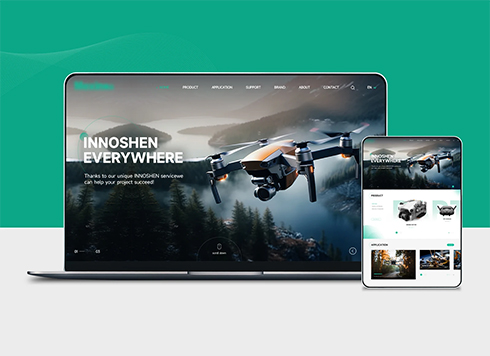 Drone Accessories Company Website Development
Incorporating gray as an accent with the pr ...
-
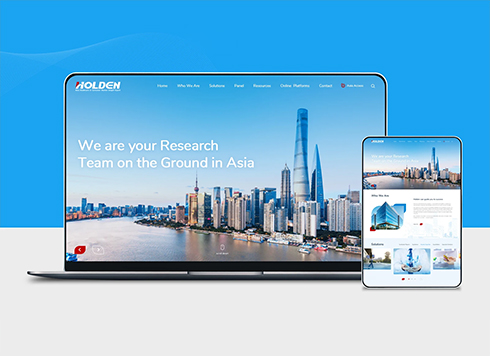 Professional International Research Service Agency Website Construction
This project serves a company with internat ...
-
Chongqing company website: in WeChat Search, customers only find Official Account posts, not the website page—where is it stuck?
Date: Oct 11, 2026 Read: 111
-
Chongqing Website Development: Local Company or Template? Budget and Timeline Differences in 2026
Date: Aug 14, 2026 Read: 224
-
Chongqing Enterprise Website Development Guide: Process, Selection, and FAQ
Date: Jul 27, 2026 Read: 212
-
When a Guangzhou company website's Canton Fair business card QR code takes five or six seconds to open, should you compress images first or change servers?
Date: Nov 19, 2026 Read: 14
-
Shenzhen company website shows “This webpage has been stopped from visiting” when shared in a customer group, but a colleague’s link to a peer company opens normally: should I check the link first or change the domain?
Date: Nov 18, 2026 Read: 22